Financial plumbing & market structure updates
Short updates on repo markets, collateral chains, clearing and settlement systems, and the core infrastructure that drives global liquidity.

gold did exactly this during the 2008 GFC
its share in collateral usage in global repo markets increased
and in 2025 we're seeing the same trend, with gold share in repo market collateral increasing
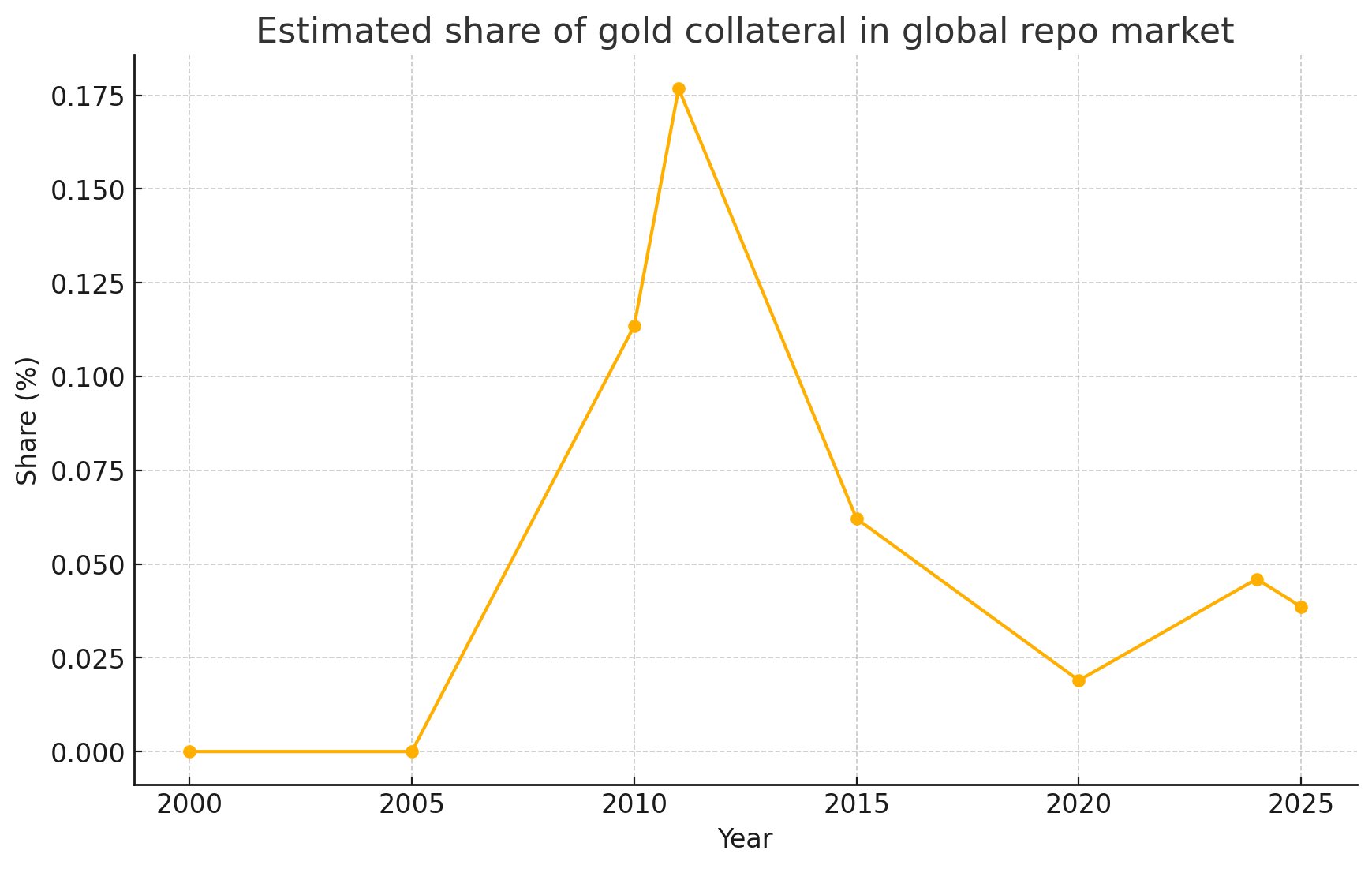
as more markets develop over gold - so will its usage as collateral in short-term/repo credit markets
it will likely become a more frequent choice for collateral/hedge during the multipolar transition. specially if bond yields continue to exhibit increased volatility
as more markets develop over gold - so will its usage as collateral in short-term/repo credit markets
it will likely become a more frequent choice for collateral/hedge during the multipolar transition. specially if bond yields continue to exhibit increased volatility
(re)monetization of gold is already in progress
central banks have been consistently buying gold for many years
this is especially true for Russia & China
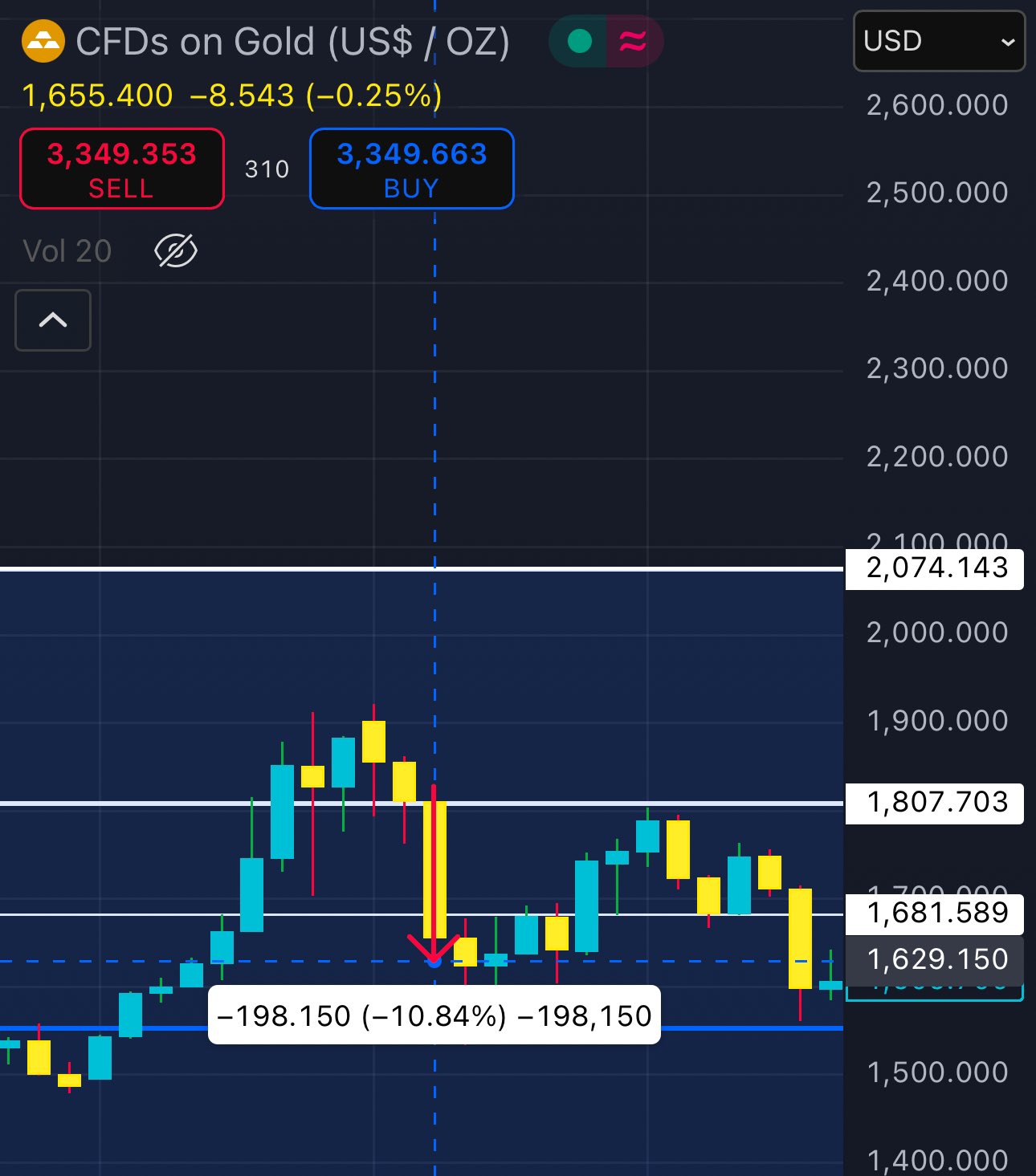
now you might think that gold would be a perfect collateral for repos, but currently:
it's too volatile - price may drop > 10% on systemic risks
there is no lender of last resort (you can't print gold or have swap lines for it 😀)
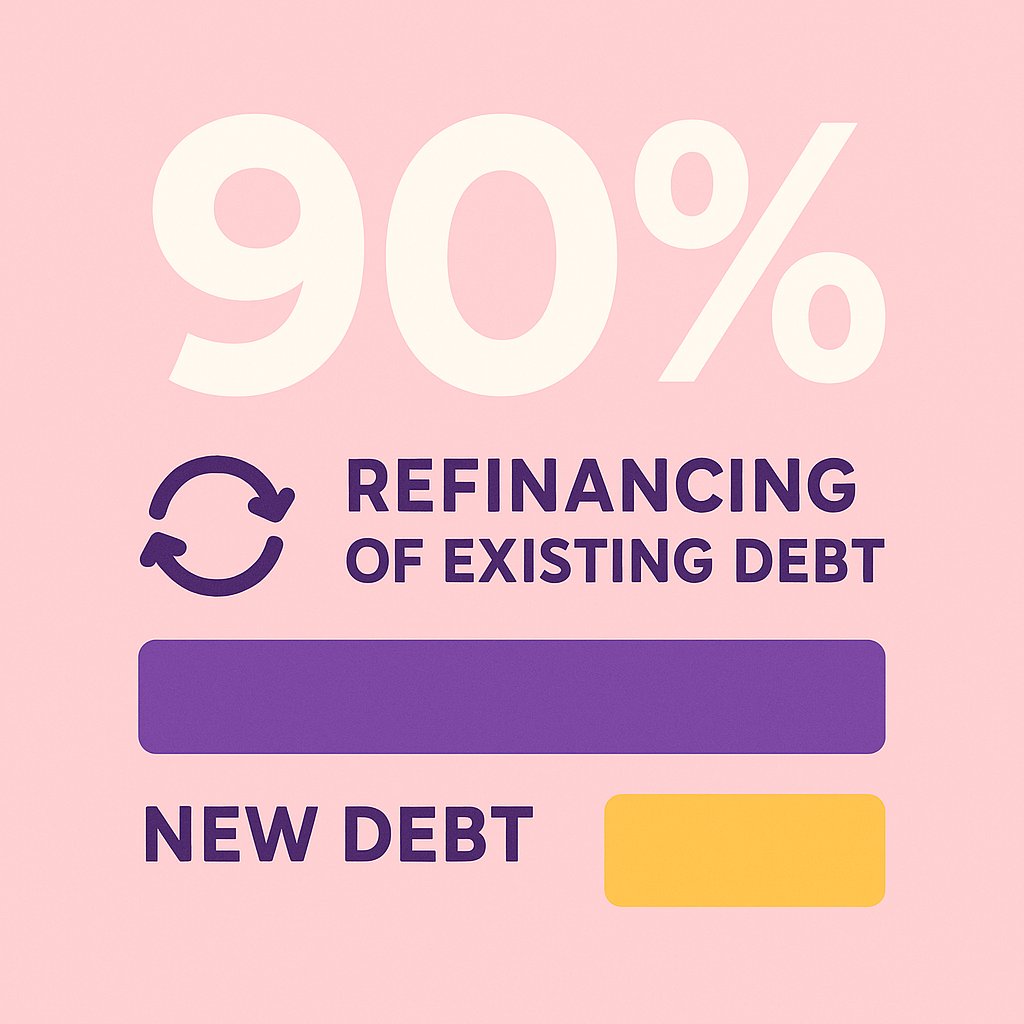
most of debt is issued for re-financing of existing debt, not for new debt
repo markets are the backbone of that. and since they're collateralized loans - there is a huge demand for collateral/safe assets
most of debt is issued for re-financing of existing debt, not for new debt
repo markets are the backbone of that. and since they're collateralized loans - there is a huge demand for collateral/safe assets
90% of all newly issued debt is for refinancing of existing debt, not new debt/financing
Thus, new debt is extremely inflationary & asset bubble-nurturing
The financial system is extremely leveraged at a high risk
We need to fix this. DeFi is the tool
remember those HUGE repo markets that I talked about?
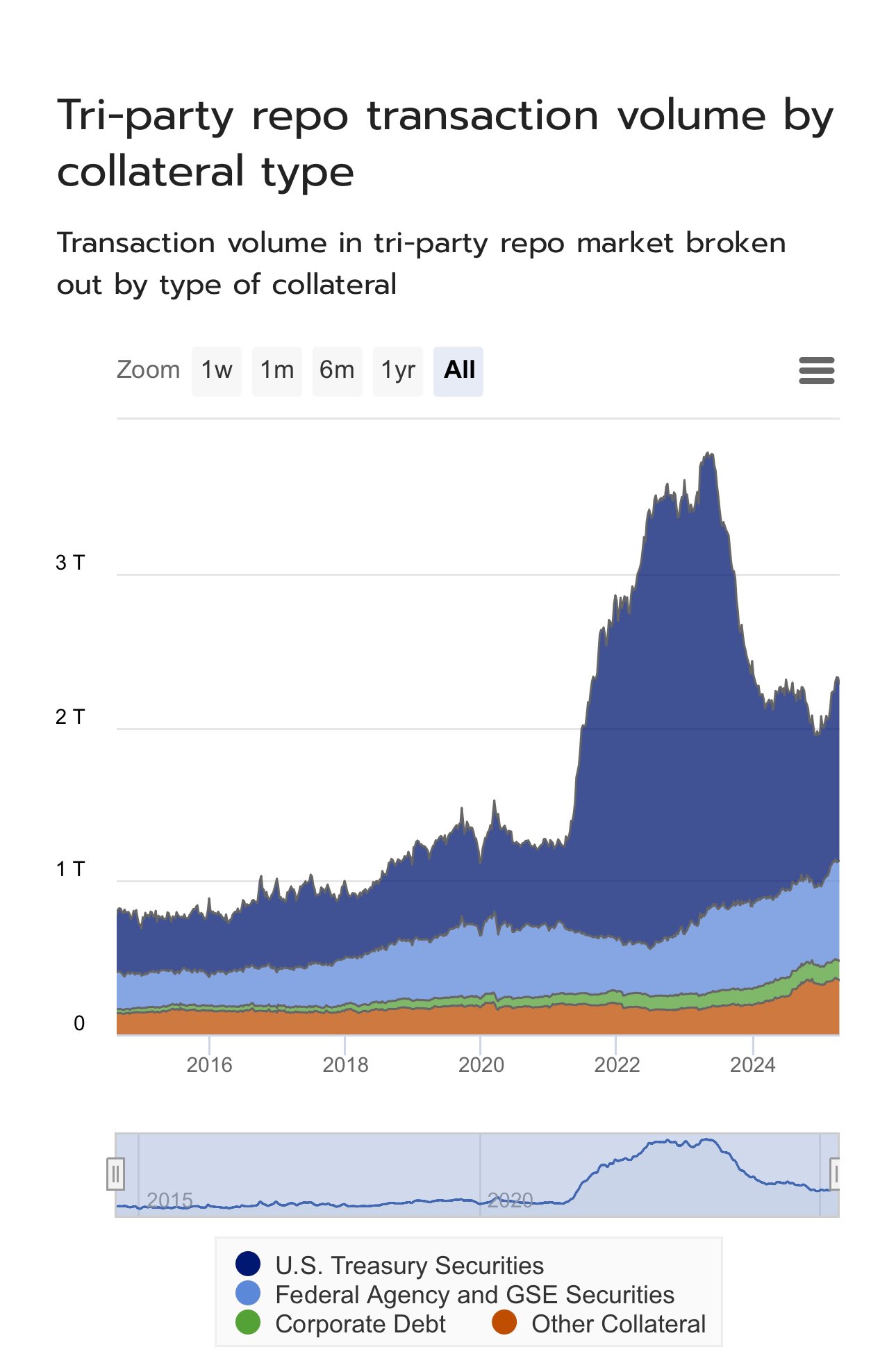
US bonds/treasuries are the favorite collateral for those transactions
and that's why they're not going away anytime soon
but of course, the financial system is slowly diversifying
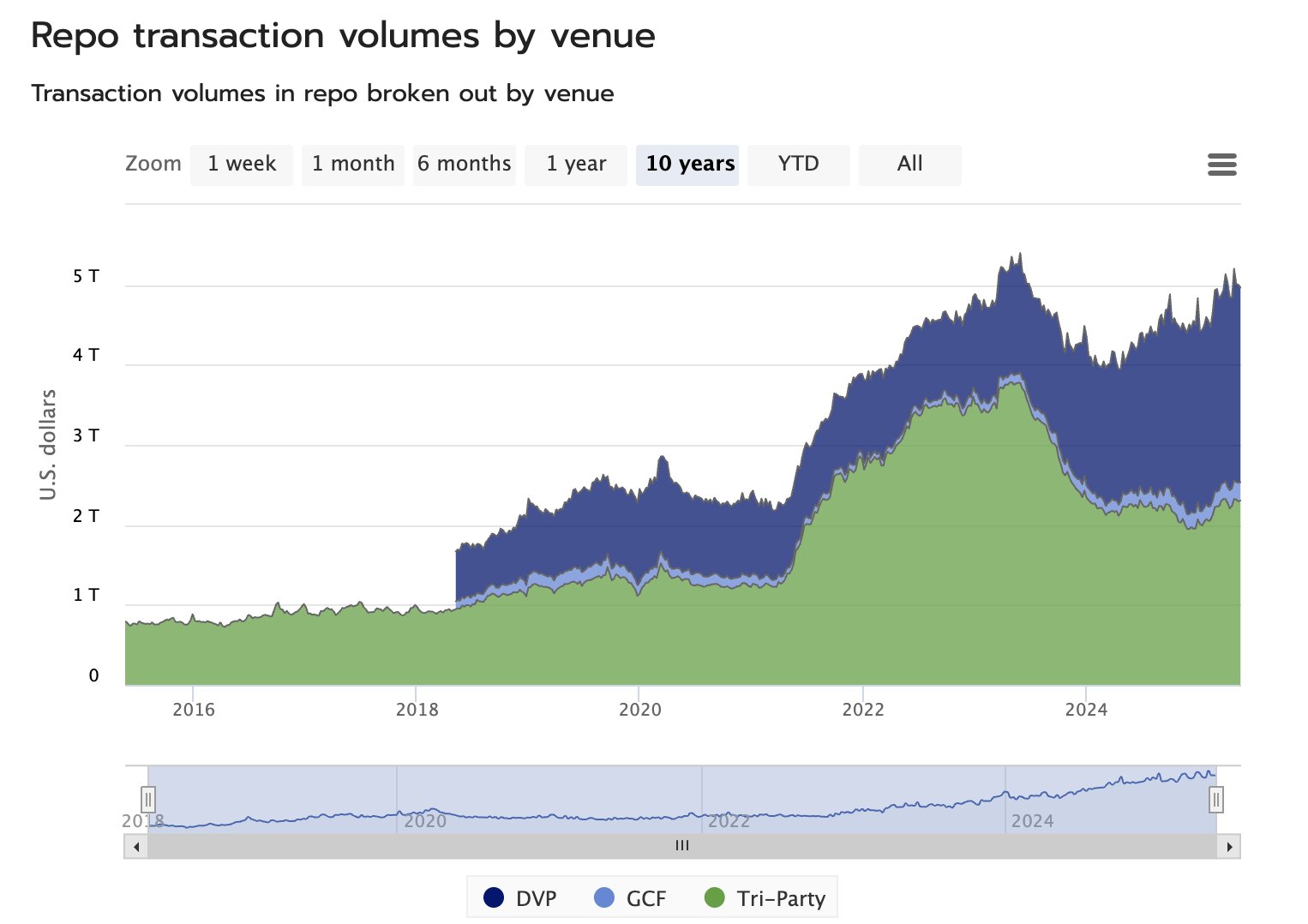
repo markets are HUGE - about the size of USD M2!
they underpin the global financial system
however, there's not many DeFi protocols addressing this part of the market
i may pick it up in the near future
if you're working on something similar - hit me up!
repo markets are HUGE - about the size of USD M2!
they underpin the global financial system
however, there's not many DeFi protocols addressing this part of the market
i may pick it up in the near future
if you're working on something similar - hit me up!
in the end, you get your UST bond back
and it makes sense for you to repurchase the bond (collateral) even if the price falls
as long as the price fall is < ≈haircut (2% in our case)
repurchase agreements are almost always over-collateralized
the borrower undervalues the collateral by a percentage (haircut) - this is a buffer against price volatility
the purchase and repurchase price are computed over the post-haircut value
new currency in circulation is just one of the side-effects
and that transition is neither direct, nor instant
before these funds effectively become new currency, they flow into financial markets - that's why you see the stock market going up first
the same for risky assets
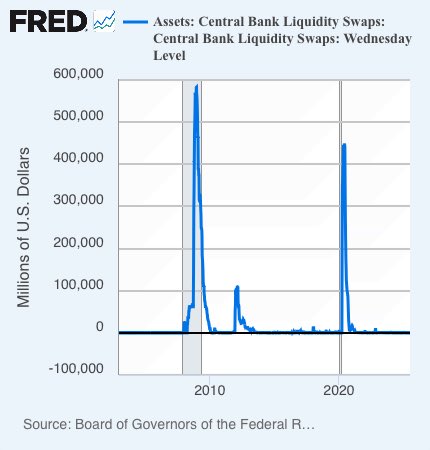
FED swap line operations reach ≈$600 bn
while the swaps are closed/repaid in less than a year, ≈80% of the repayment comes from newly issued wholesale debt
thus, ≈80% of the swap volume eventually becomes new currency in circulation
and then you wonder about inflation 😄
FED swap line operations reach ≈$600 bn
while the swaps are closed/repaid in less than a year, ≈80% of the repayment comes from newly issued wholesale debt
thus, ≈80% of the swap volume eventually becomes new currency in circulation
and then you wonder about inflation 😄
💧FED swap lines = infinite liquidity pool
👉 here's how:
1️⃣ central banks exchange their foreign currency for USD, 7-80 days later, they reverse the exchange at the same rate + fee
2️⃣ central banks then lend these new USD to commercial banks
thus, USD demand is met
💧FED swap lines = infinite liquidity pool
👉 here's how:
1️⃣ central banks exchange their foreign currency for USD, 7-80 days later, they reverse the exchange at the same rate + fee
2️⃣ central banks then lend these new USD to commercial banks
thus, USD demand is met
central bank balance sheets are an underrated resource for understanding the global liquidity moves
if you're following my posts - you already know that
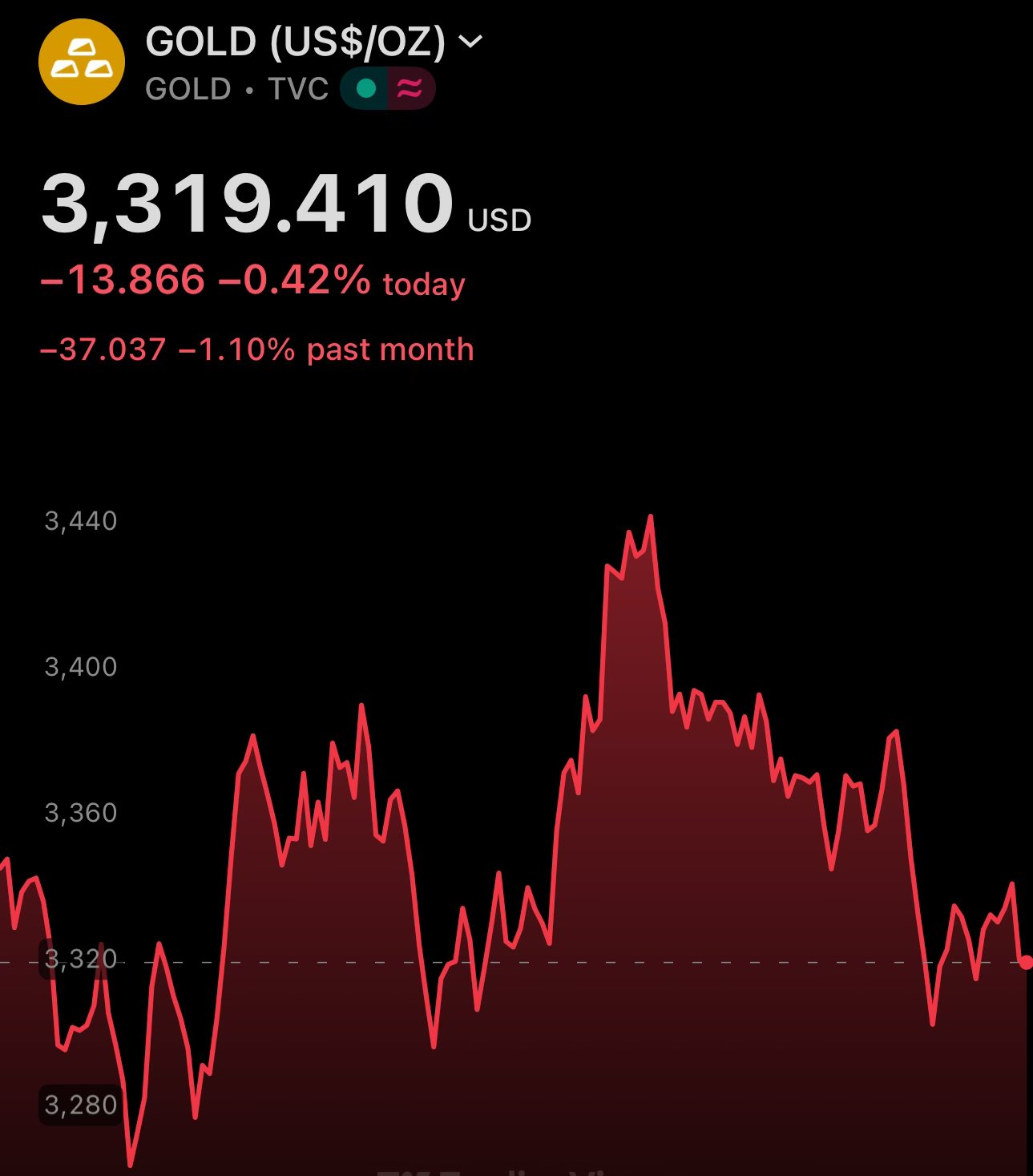
rising US bond yields, ruble & gold
falling USD
i've been warning about it for months
90's style data = massive alpha 😂⬇️
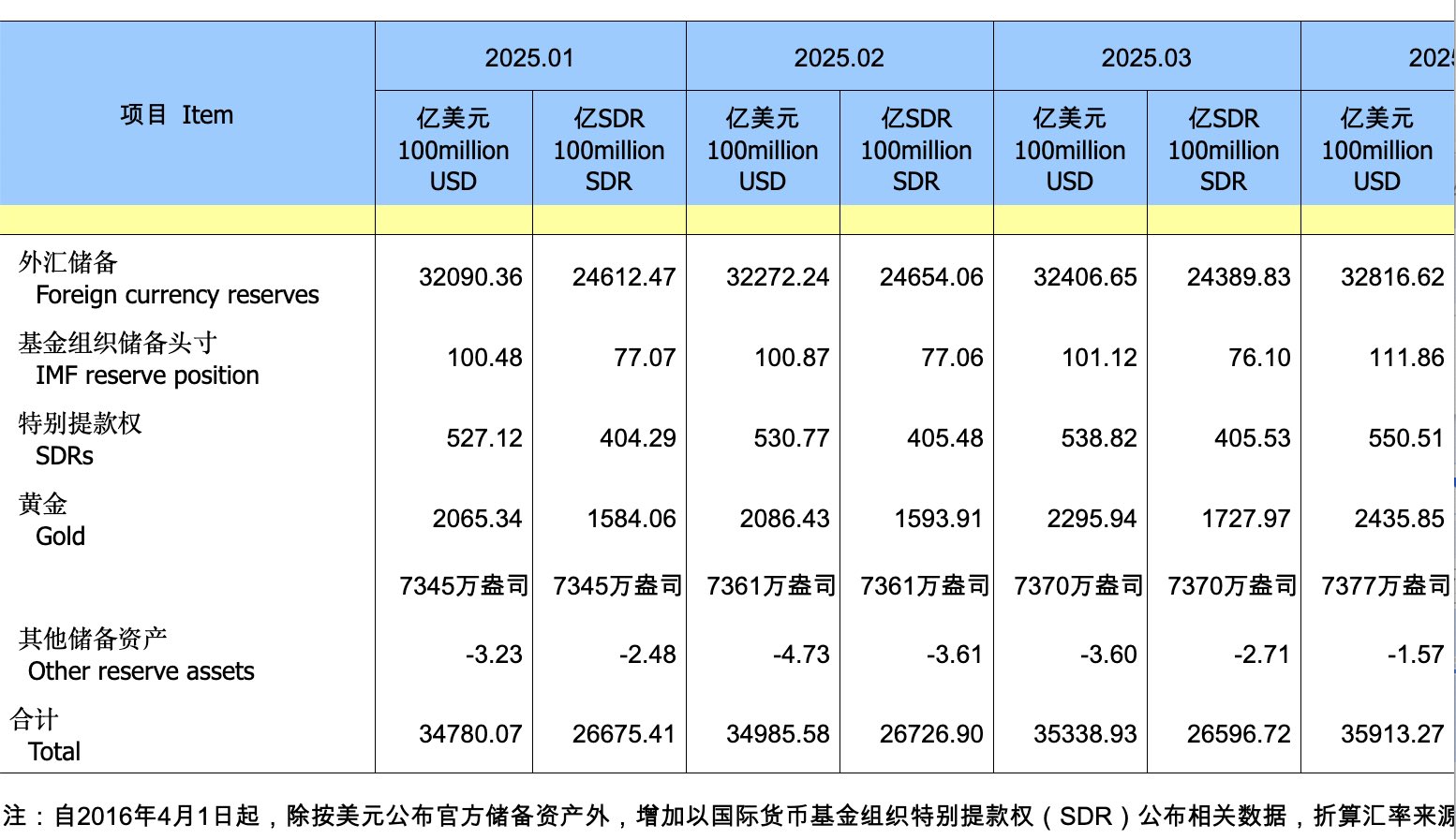
central banks will continue to buy gold
you'll be able to confirm that in their upcoming balance sheets reports. pay special attention to China & Russia
enjoy the dip, because smart money is!
reverse repurchase agreement is just the other side (seller) side of a repurchase agreement (buyer)
repurchaser provides collateral and receives a loan
reverse repurchaser receives the collateral and issues a loan
at maturity the repurchaser repurchases the collateral
money market funds yield close to the risk free rate (think of FED funds rate in the US, or ECB deposit rate in the EU), while offering less risk due to shorter maturity
essentially, you provide a collateral (highly liquid - usually sovereign debt) and get a loan against it
record $7 trillion USD in money market funds (mmf)
this risk-averse liquidity is bound to flow into into other financial assets at some point
mmf consists of short-term collateralized loans - credit that is NOT captured by M2
last two outflows coincided with bitcoin bullrun
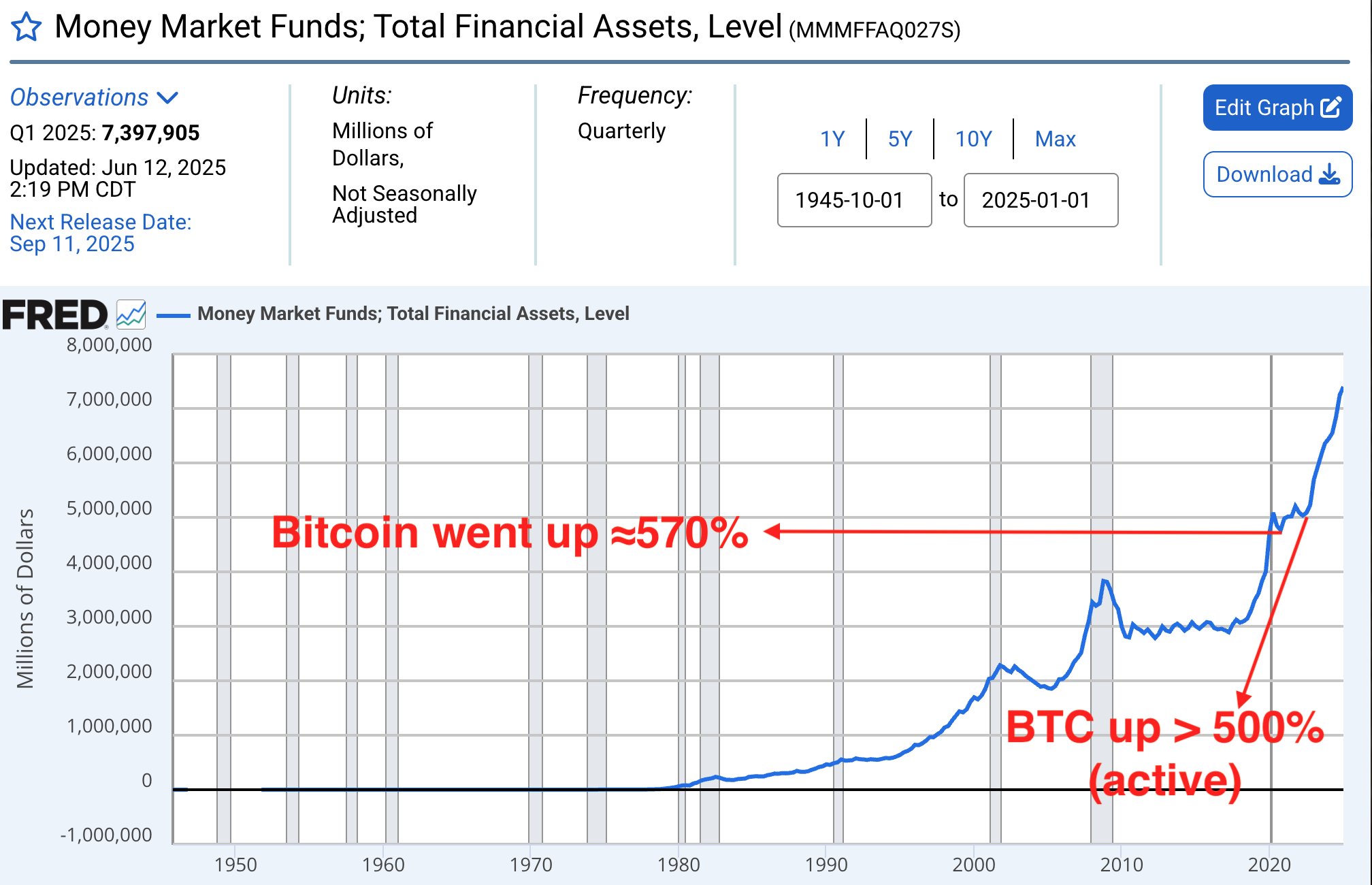
record $7 trillion USD in money market funds (mmf)
this risk-averse liquidity is bound to flow into into other financial assets at some point
mmf consists of short-term collateralized loans - credit that is NOT captured by M2
last two outflows coincided with bitcoin bullrun
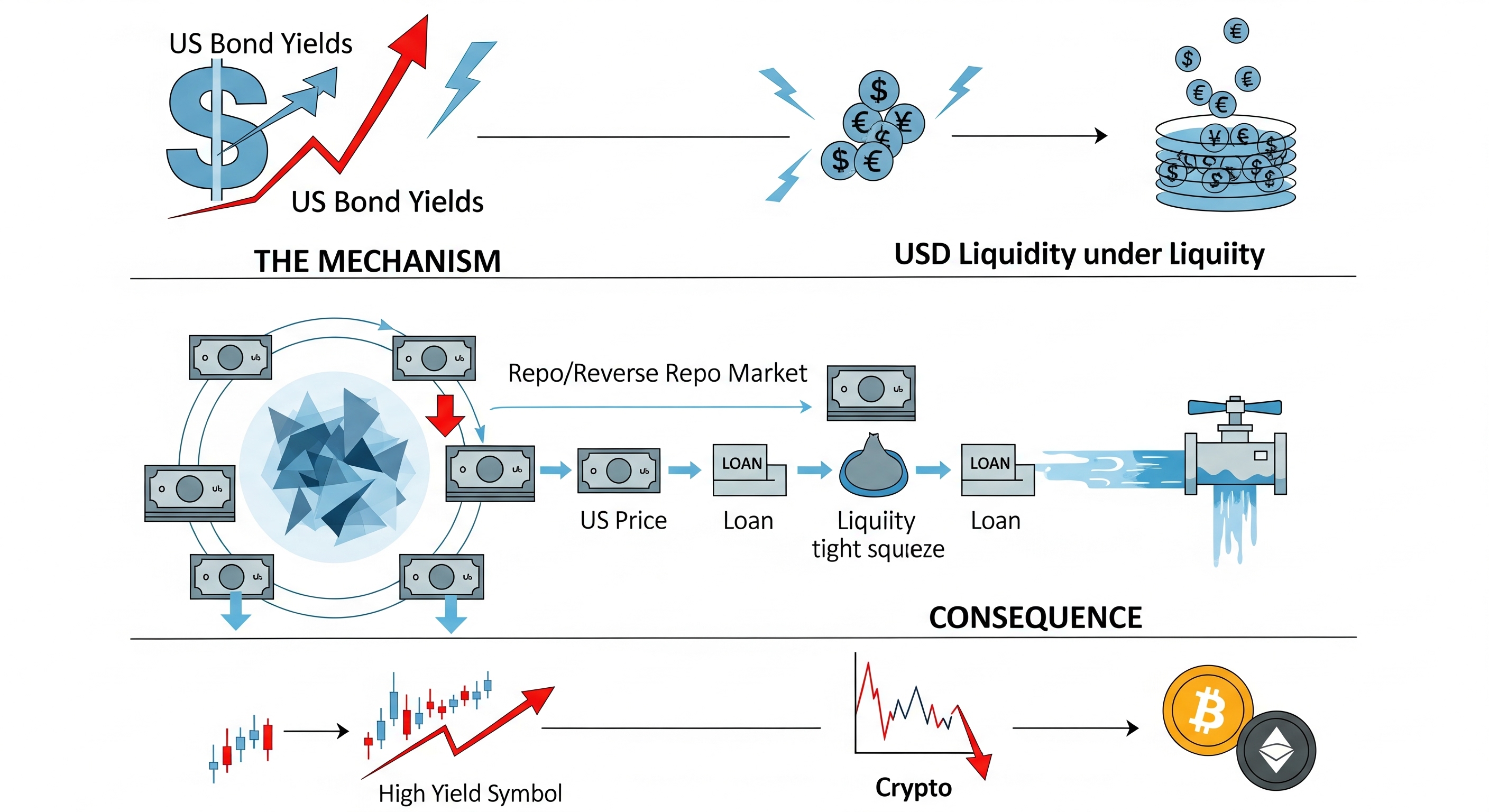
⚡️ US Bond yields directly affect USD liquidity
Here's how 👇
1️⃣ Repo + reverse repo market provides $5 trillion of liquidity
2️⃣ US bonds represent ≈70% of collateral
3️⃣ Lower bond prices means smaller loans, leading to a liquidity squeeze
🏦 Quantitative Easing (QE) by a Central Bank (CB) increase both - its assets & liabilities
👇
QE = CB buys securities from commercial banks
👆
This involves:
1️⃣ Transfer of securities to CB (asset UP)
2️⃣ Credit the bank's reserve account (liability UP)

👉 M2 Supply ≠ Liquidity 👈
M2 is only a part of the total liquidity
🔎 Here's an example:
Repurchase agreements market adds ≈$17T in the form of security-backed short-term credit, thus increasing available currency
M2 does not account for the repo market
Regarding the bond market collapse ⬇️
US Treasury Securities are the main collateral used in repurchase agreements. Given that these are short-term, the yield spike is unlikely to lead to defaults
However, the fall in bond prices will reduce credit, adding to liquidity crunch
Of course, this also gives China leverage - if The People Bank's of China (China's Central Bank) dumps their US Securities in the market, it will skyrocket bond yields, by reducing their prices
Who will lend to the US then, and at what premium? And at 125% debt to GDP 😬
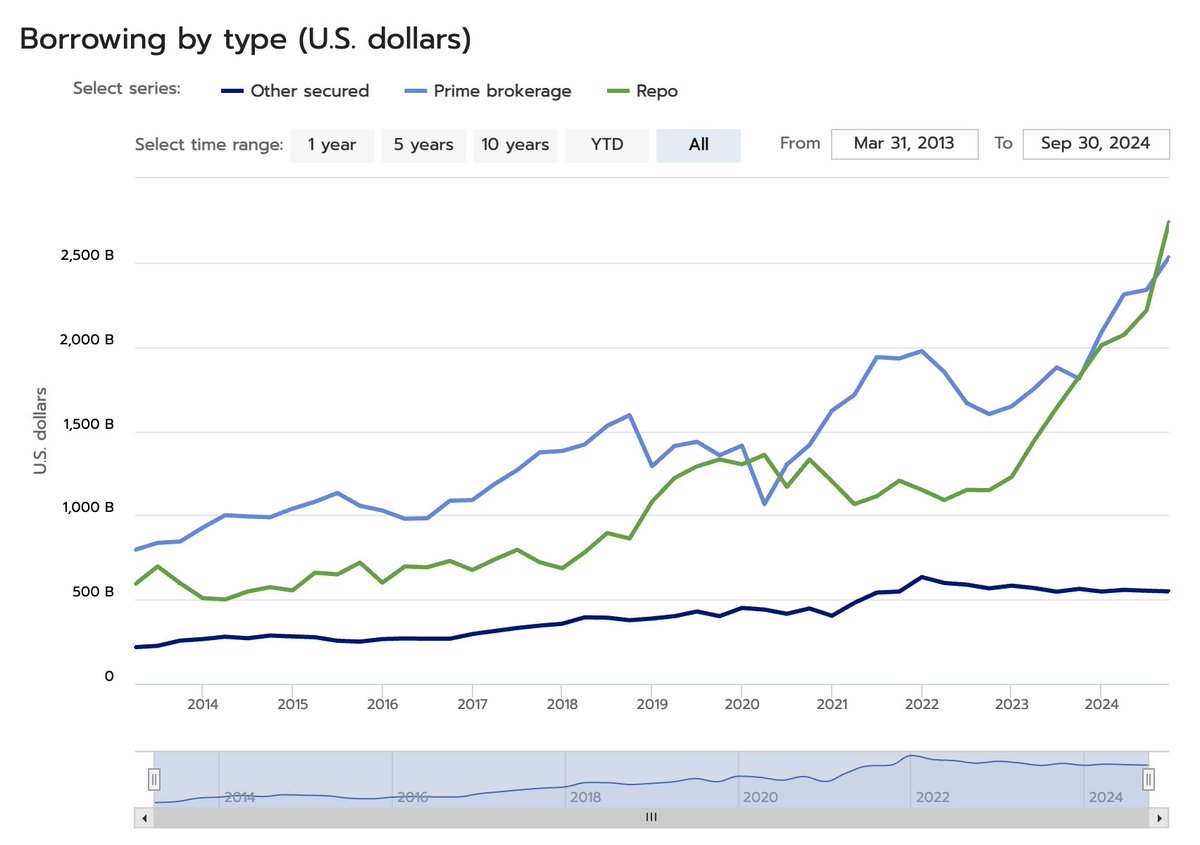
📈 Institutional investors have increased their reverse purchase agreements exposure ever since the central bank interest rates spiked
Repos are shorter-term loans, meaning they present a shorter commitment, thus less risk
Another message is clear: institutions are expecting…
🚨 The system faced its biggest test during the 90s banking crisis:
• 110 financial institutions resolved
• Full deposit protection implemented
• Massive debt-based interventions
DICJ has met its insurance obligations, but at what cost? 🤔
🇯🇵🆚🇪🇺
Japan's & EU's deposit guarantee schemes differ⬇️
🇯🇵 DICJ: Active crisis manager (Act 34 of 1971)
🇪🇺 DGS: Mainly deposit protection (Directive 2014/49/EU)
Japan's approach = more intervention power & broader mandate
EU's approach = more focused mandate

🇯🇵 How does Japan protect bank deposits when banks fail?
🤯 Their deposit insurance system handled 180+ financial institution failures, including the massive 90's banking crisis
👉 Here's how Japan's ¥10M deposit guarantee scheme works: https://illya.sh/blog/posts/deposit-guarantee-scheme-japan-dia-dicj/
🧵
🛟 The liquidation logic makes the initial required margin a collateral for all of the parties
Failure to meet the obligations means a loss of the deposited margin/collateral, either in full or in part
If a party fails to meet margin requirements, the smart contract:
1️⃣ Terminates the agreement
2️⃣ Transfers deposited assets to the compliant party
3️⃣ Applies penalties to the defaulting party
This liquidation process is executed automatically on-chain 🤖
📈 The margin requirements increase algorithmically over the contract's lifespan
This ensurer both parties deposit their obligation in full by maturity, while allowing for partial collaterization
Thus leveraging the time value of money, without the need for a trusted party
The DeFi margin for futures contracts differs from TradFi margins, by:
1️⃣ Gradually increasing over time
2️⃣ Ensuring full collateralization by maturity
3️⃣ Delaying full payment
TradFi margin's main goal is to cover daily settlement gains/losses of the futures position
🏦 Traditional futures require centralized clearing houses
On the blockchain, smart contracts eliminate intermediaries, enabling decentralized peer-to-peer agreements
Example: A contract to trade 1000 $MINA for 2000 $USDC in 1 year, regardless of future $MINA price 📊
Futures contracts serve crucial roles in finance:
1️⃣ Hedging against price volatility
2️⃣ Speculation on future asset prices
3️⃣ Price discovery for underlying assets
Smart contracts on the blockchain will disrupt this $1T+ market. Here's how ⬇️