Financial plumbing & market structure updates
Short updates on repo markets, collateral chains, clearing and settlement systems, and the core infrastructure that drives global liquidity.

this is also why commercial banks purchasing government debt securities, such as Treasury bills may be effectively monetizing that debt
generally speaking:
➖ transaction between central bank accounts = base money reallocated, decreased or increased
➖ transaction between non-central bank accounts = broad money reallocated, decreased or increased
generally speaking:
➖ transaction between central bank accounts = base money reallocated, decreased or increased
➖ transaction between non-central bank accounts = broad money reallocated, decreased or increased
effectively this means that if both parties involved in the transaction have an account at the central bank, they will will use it to settle payments
effectively this means that if both parties involved in the transaction have an account at the central bank, they will will use it to settle payments
reserve accounts at the central bank are important to understand the mechanics of how asset purchase happens. generally speaking, if an institution has an account at the central bank - reserve or other deposit account, they will use it whenever possible to settle payment
reserve accounts at the central bank are important to understand the mechanics of how asset purchase happens. generally speaking, if an institution has an account at the central bank - reserve or other deposit account, they will use it whenever possible to settle payment
also note that it's not just commercial banks that have accounts at the central bank. it varies by jurisdiction, but other entities also have accounts at the central bank
for example, in the US the Treasury has an account at the Fed - the Treasury General Account (TGA)
also note that it's not just commercial banks that have accounts at the central bank. it varies by jurisdiction, but other entities also have accounts at the central bank
for example, in the US the Treasury has an account at the Fed - the Treasury General Account (TGA)
if it's the central bank buying assets from other banks, such as in QE - then the central bank also creates the deposit "out of thin air", thus effectively paying for the assets to the commercial bank with a newly created deposit into their reserve account. base money increases
if it's the central bank buying assets from other banks, such as in QE - then the central bank also creates the deposit "out of thin air", thus effectively paying for the assets to the commercial bank with a newly created deposit into their reserve account. base money increases
when banks buy assets from other banks - new deposits do not get created, as the payment happens by moving funds between the commercial bank's reserve accounts at the central bank
thus, it's base money movements/reallocation, not creation
when banks buy assets from other banks - new deposits do not get created, as the payment happens by moving funds between the commercial bank's reserve accounts at the central bank
thus, it's base money movements/reallocation, not creation
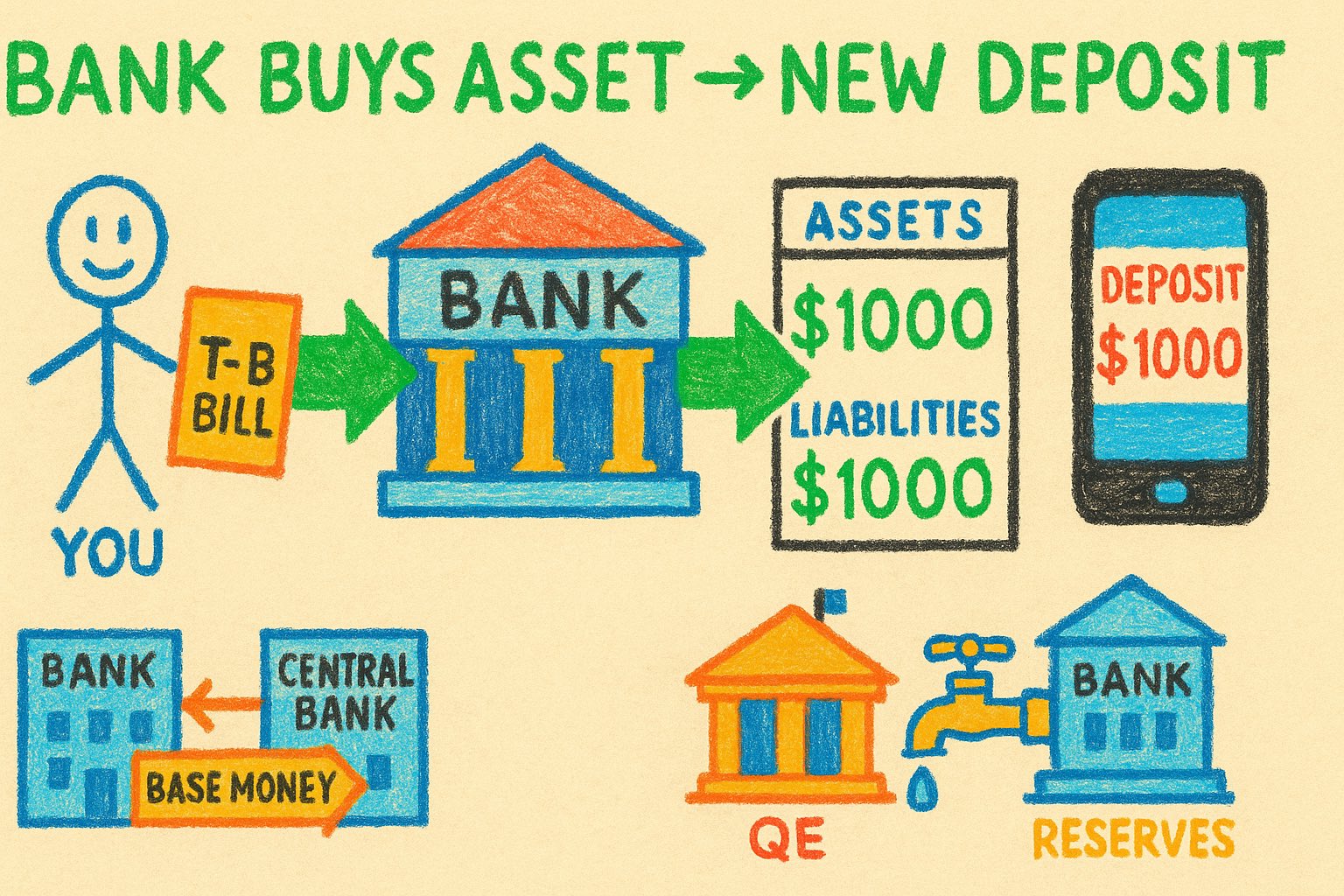
let's say the bank bought a T-bill from you for $1000. for this, they "created $1000" and deposited them into your account. bank’s balance sheet:
➖ Assets: +$1000 (the T-bill)
➖ Liabilities: +$1000 (the deposit/payment to you)
the key here is that you are a NON-bank
the bank doesn't need to have the money to pay you for the T-bill, as that money will be created and deposited into your account
on the bank's sheet side it works: its assets and liabilities increase in the same amount
when a bank buys an asset from a non-bank it creates broad money
if a commercial bank buys a US Treasury bill from you, it will pay you by create a new deposit into your account
so effectively the bank pays you by creating new digital currency and crediting it into your account
when a bank buys an asset from a non-bank it creates broad money
if a commercial bank buys a US Treasury bill from you, it will pay you by create a new deposit into your account
so effectively the bank pays you by creating new digital currency and crediting it into your account
a lot of these US treasury purchases will be financed with short-term rolling debt (e.g. repo)
the newly issued Treasuries themselves will be used as collateral to borrow cash, many times over via rehypothecation
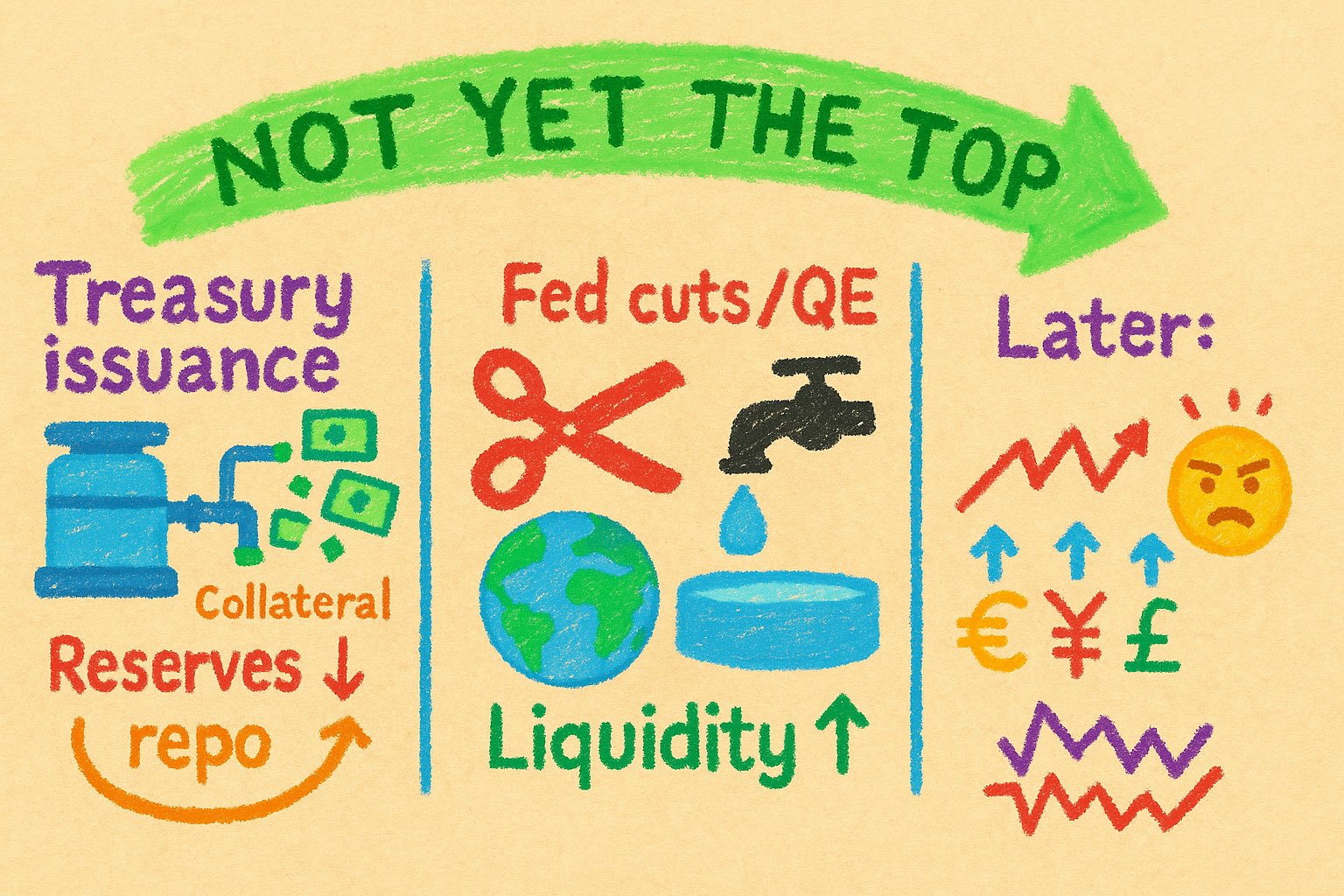
it's NOT yet the top of the cycle for equities, cryptocurrencies and other risk assets. here’s why
1️⃣ US Treasury is issuing more debt
2️⃣ in the next months I expect the Fed to cut rates and/or introduce some form of QE
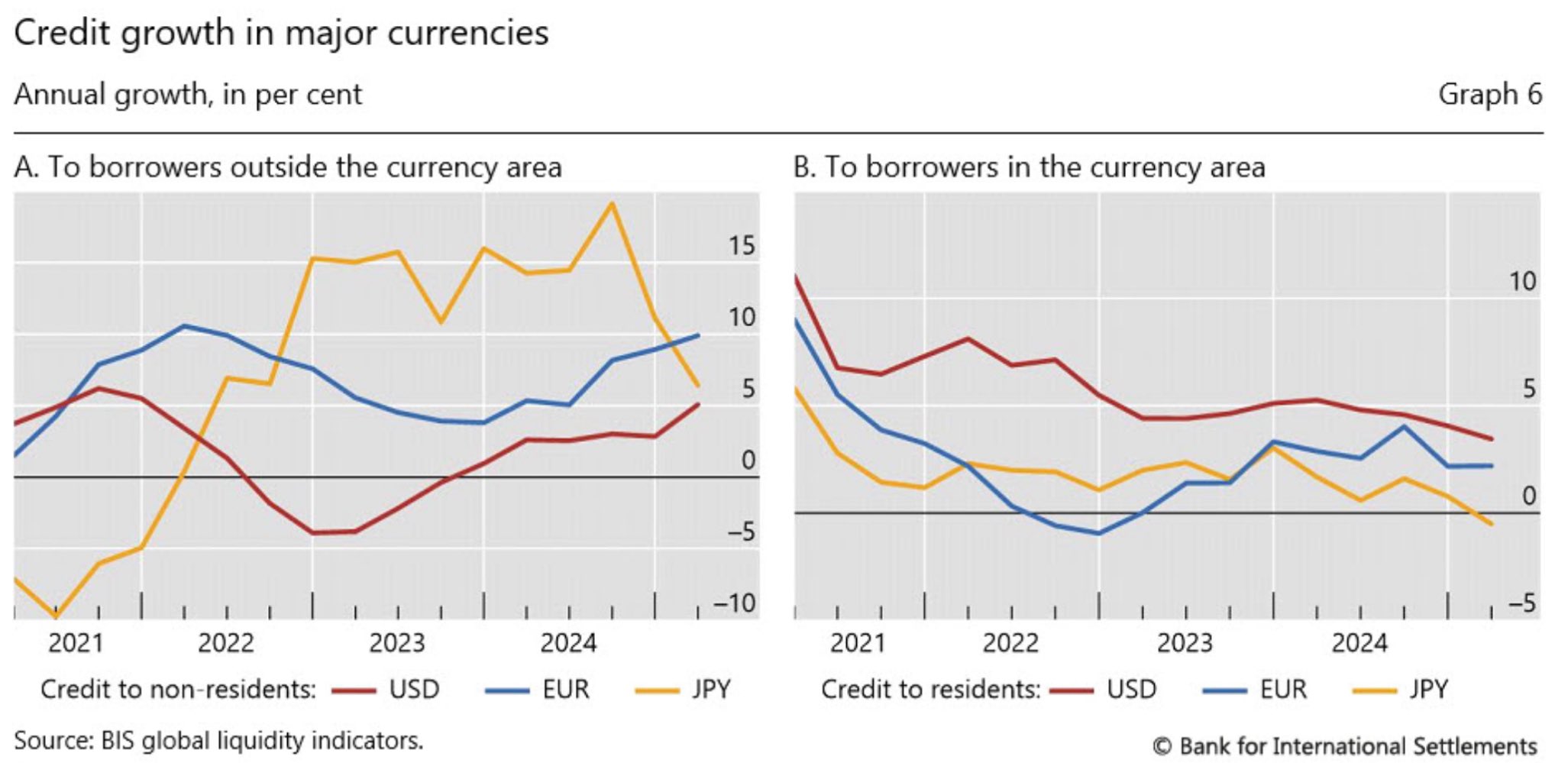
3️⃣ weaker USD means more cross-border USD credit
US Treasury debt is likely to be among the assets purchased by those same banks that received QE funds from the central bank. so central bank's QE injection may be used to purchase US Treasury debt at auctions, thus effectively monetizing the government debt 😁
even if it doesn't happen directly at the start - eventually QE also increases broad money, due to reduced balance sheet constraints and an increase in cash reserves, which needs to be invested ASAP. this leads to more lending and asset purchases
initially QE may only increase base money supply - as commercial banks reserve balances get credited by the Central Bank
if the Central Bank purchases assets from non-bank financial institutions, then broad money increases directly as well, as deposits increase
the US Treasury may also issue more debt to increase the supply of safe assets, thus offsetting the compression shock
end result: more safe assets/prime collateral provided to markets. remember that the newly issued treasuries are likely to be rehypothecated several times
the global financial system depends on the abundance of this collateral, otherwise - defaults, margin calls, etc
i wrote a thread/article explaining how US Treasuries are the dominant collateral in short-term wholesale debt markets (e.g. repo). read here: https://illya.sh/threads/@1751726431-1.html
QE also removes safe collateral from the market, mainly US Treasury bills, notes and bonds. this safe collateral is the backbone of wholesale debt markets, where financial institutions, including commercial and central banks finance and re-finance their positions
QE also removes safe collateral from the market, mainly US Treasury bills, notes and bonds. this safe collateral is the backbone of wholesale debt markets, where financial institutions, including commercial and central banks finance and re-finance their positions
however, eventually yield spreads will raise with high velocity. this is the larger financial crisis part of the cycle. there you will also see lower rates and more QE
Bank of International Settlements (BIS) has a lot of interesting papers, articles and data on global liquidity and financial system
it's bank-focused, but connected to the broader scope, like the non-bank financial institution (NBFI) credit flows i posted about earlier
this collateral (US Treasury bonds) can then be used on wholesale debt markets to issue more credit
moreover, this collateral can be leveraged/rehypothecated, thus increasing liquidity
still, in the USA the Fed continues to dominate in importance
so it may not only be central bank setting the rates and affecting liquidity
for example, when US Treasury auctions bonds, they're both, temporarily reducing the effective amount of USD in circulation and providing more high-quanlity collateral
so it may not only be central bank setting the rates and affecting liquidity
for example, when US Treasury auctions bonds, they're both, temporarily reducing the effective amount of USD in circulation and providing more high-quanlity collateral
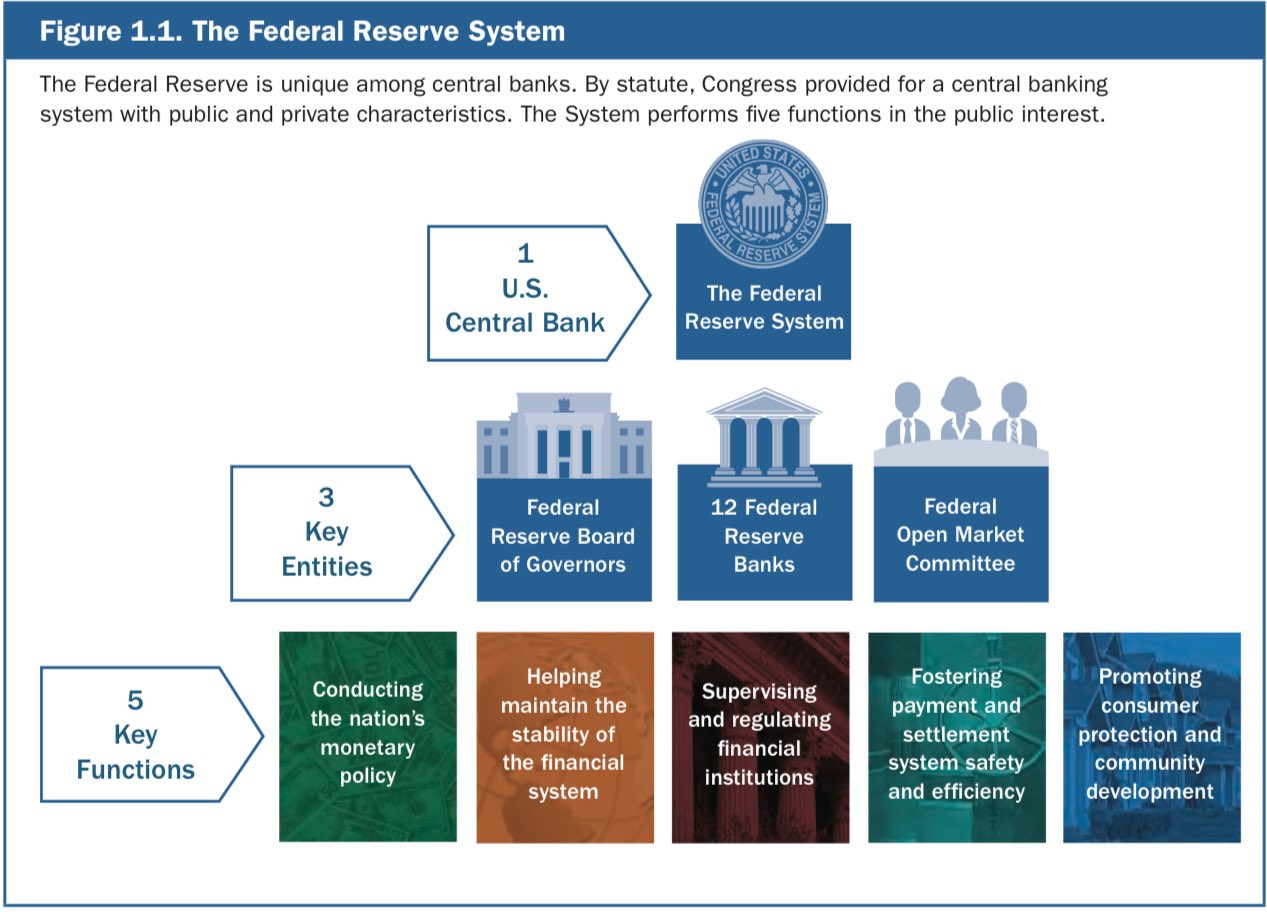
by "central bank" I'm frequently referring to the broader set of the legal framework behind the macro monetary policy
in most countries central banks plays a key role, but they frequently co-exist in a larger network of institutions
by "central bank" I'm frequently referring to the broader set of the legal framework behind the macro monetary policy
in most countries central banks plays a key role, but they frequently co-exist in a larger network of institutions
bank's leverage ratios improve due to collateral appreciation, thus allowing them to borrow more USD
collateral here is the non-USD local currency, such as Yuan
weaker US dollar means more USD credit issuance abroad - here's why
foreign banks frequently borrow USD through wholesale markets with a local currency denominated collateral
when USD depreciates against a local currency, offshore USD credit now has a reduced debt service
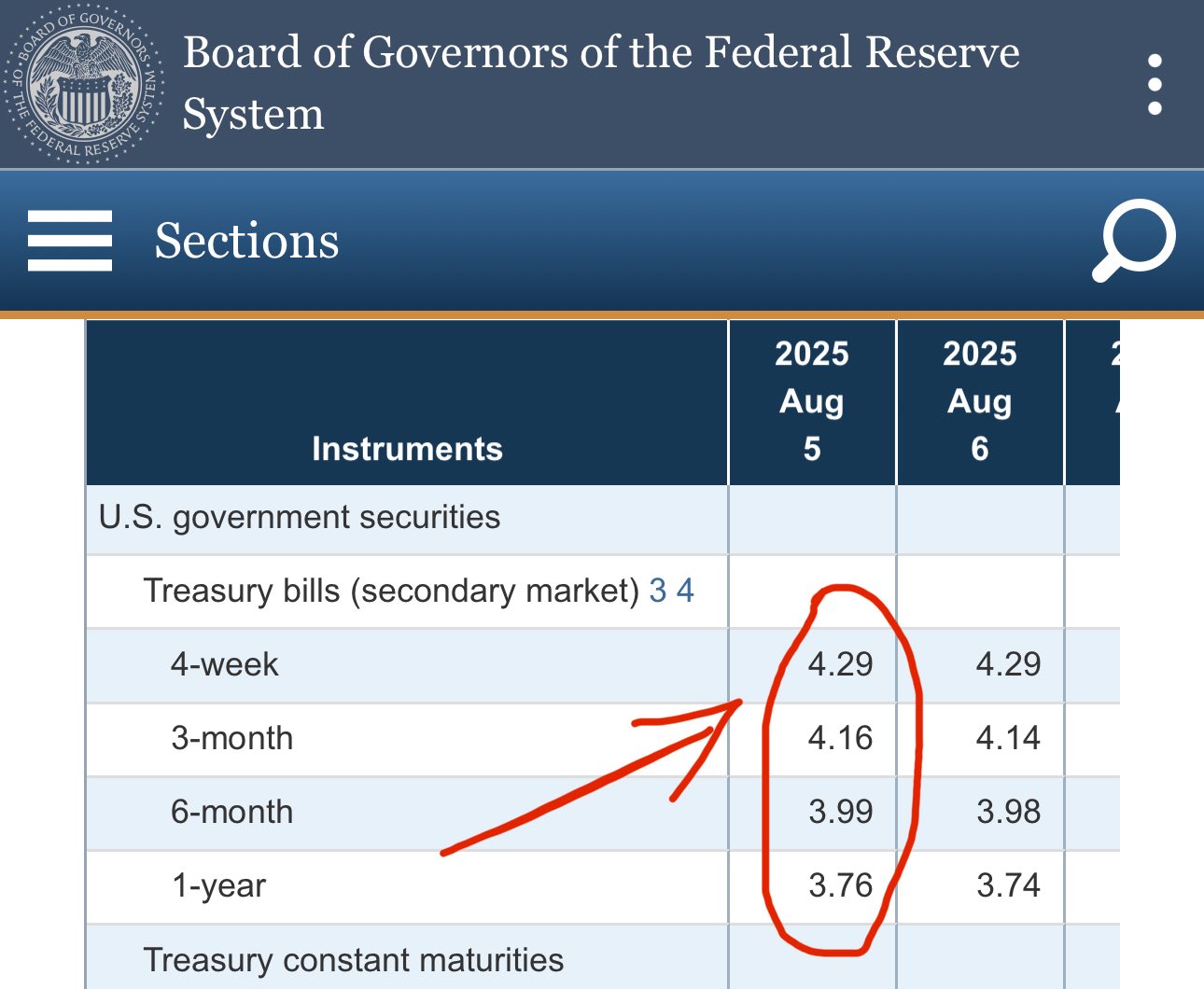
so according to this, since Treasuries yield more than ON RRP the wholesale cash moved from ON RRP into Treasuries
when the US Treasury spends them - they flow right back into broad money
indeed, currently T bills yield from 4.29%, while ON RRP is at 4.25%
interesting take!
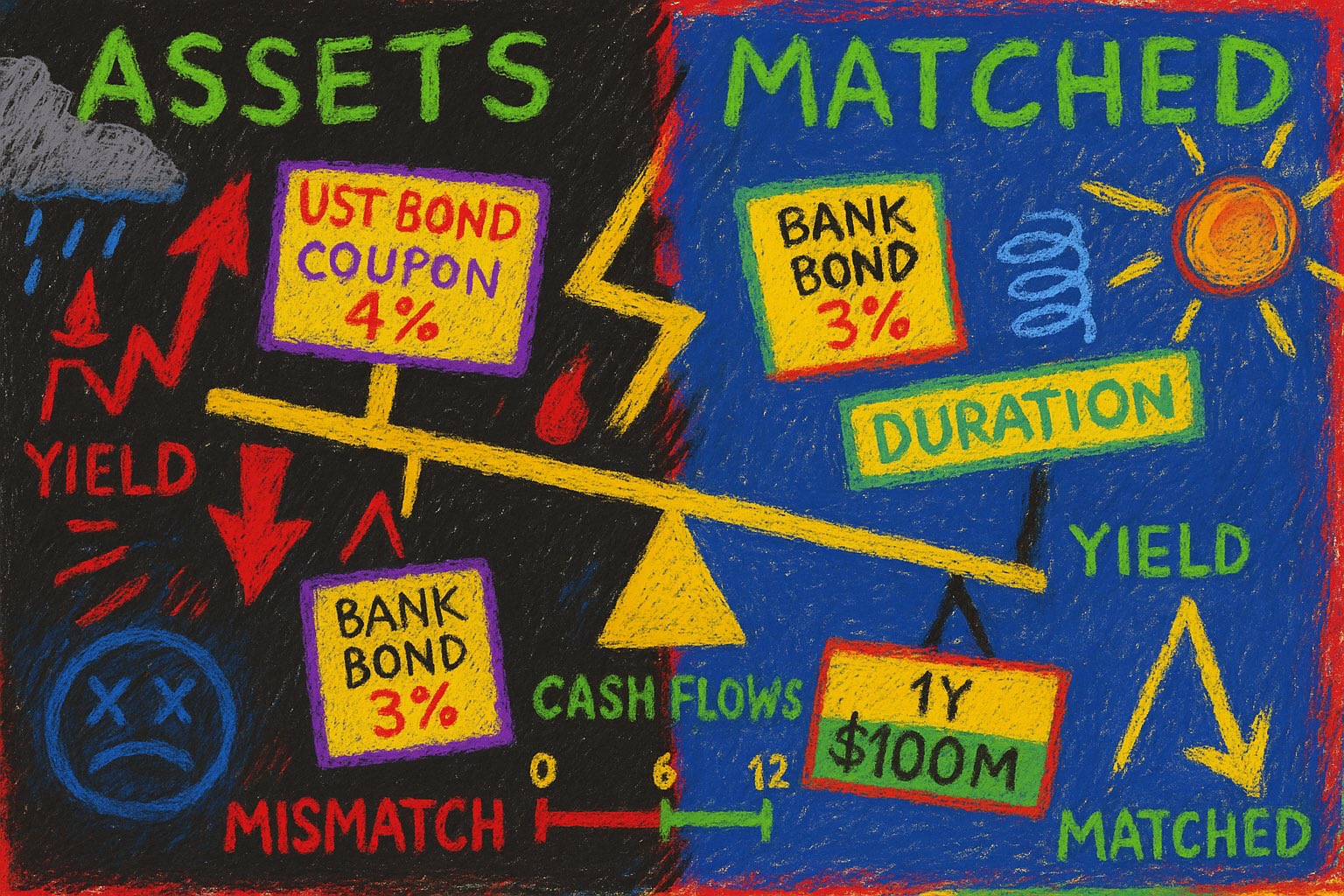
this is why duration matching is key for financial institutions
this is also the reason why it's generally not a good idea for governments to refinance long-term debt with short-term debt
this shortens the duration of both - government liabilities and market's assets
duration matching protects:
➖ liquidity via cashflow modulation, by helping liability cashflows match asset cashflows
➖ solvency via asset and liability value modulation, by reducing asset value loss when yields fall and reducing liability value loss when yields raise
let's develop on this simple bank example
assume a brand-new bank with an empty balance sheet, no revenue, no deposits, no cashflow and no regulations
the bank is about to finance its first asset - a UST bond with a liability - bonds issued by the bank
this newly acquired UST bond was financed with some liability of the bank
let's say the bank itself issued bonds with a smaller coupon than UST’s
thus, the bank used a liability to finance and asset and earns a spread
duration matching protects solvency and liquidity when yields shift
assets are financed by liabilities and equity. financial institutions like banks usually have small equity - so liabilities finance assets
i wrote about how reverse repurchase agreements work and their importance in the global financial system in this thread:
https://illya.sh/threads/@1751561045-2
the US will be able to sustain their debt financing for as long as US government debt and US dollar dominate in demand
for as long as USD is the reserve currency - the US can finance its debt
in other words, as long as there's enough buyers and users - it's all good! 😁
intermediation started with paper records, physical bank counters and now has mostly moved to technological - via computer systems
while hybrid intermediation systems don’t strictly need to be technological - in practice they vastly are as most of financial activity happens through computer and information systems