Financial plumbing & market structure updates
Short updates on repo markets, collateral chains, clearing and settlement systems, and the core infrastructure that drives global liquidity.

while hybrid intermediation systems don’t strictly need to be technological - in practice they vastly are as most of financial activity happens through computer and information systems
base money issuance and management is a responsibility of the US government - so it's always intermediated, even if by government-controlled systems
base money issuance and management is a responsibility of the US government - so it's always intermediated, even if by government-controlled systems
hybrid intermediation systems include all means of facilitating the issuance, servicing and transactions of USD and USD-denominated securities, including equities, bonds and derivatives
hybrid intermediation systems include all means of facilitating the issuance, servicing and transactions of USD and USD-denominated securities, including equities, bonds and derivatives
balance sheet capacity is heavily dependent on regulations (e.g. Basel III & local)
hybrid intermediation systems facilitate access to the payment and credit channels
SWIFT, FedWire and digital private USD claims like stablecoins & PayPal facilitate USD's movement and usage
balance sheet capacity is heavily dependent on regulations (e.g. Basel III & local)
hybrid intermediation systems facilitate access to the payment and credit channels
SWIFT, FedWire and digital private USD claims like stablecoins & PayPal facilitate USD's movement and usage
liquidity means availability, thus it comes down to being able to:
1️⃣ access USD credit
2️⃣ settle payments in USD
this means balance sheet capacity and hybrid technological intermediation systems in place
regarding the IPO/privatization of Fannie Mae & Freddie Mac i wrote a thread explaining the role, function and use during QE of those GSE
also their history and how they were used to lower mortgage rates after the 2008 GFC
you can read it it here ⬇️
https://illya.sh/threads/@1754148538-1.html
stablecoin issuers could intermediate the issuance process, so you don't need to get all credit institutions on-chain from the start
non-algorithmic stablecoin issuance already happens off-chain and presumes trust in a third party
this would just be faster. more liquidity
now imagine when credit institutions can tokenize new credit and allow automated stablecoin issuance backed by that credit
in practice it's code in smart contract that wraps one token with another
i created a similar project on an Ethereum hackathon ⬇️
https://github.com/iluxonchik/eth-lisbon-hackathon-23
banks are also subject to regulations when issuing loans
and no - it's not the fractional reserve system
in many sovereigns, like the USA the reserve requirements sit at 0%
there are other regulatory requirements limiting loan issuance
the bank has the legal right to increase the money supply AKA 'print money'
so to give you a $100 loan the bank can just create those $100 and give give them to you
pretty neat arrangement, huh? 😁
banks are credit institutions which means they can create broad money
while a non-credit institution or a regular business can issue loans - they must fund it (e.g. raise money, use excess profits)
they can't just create those $100, thus expanding the monetary supply
so the bank funds the loan by creating $100 and crediting them to your account
those $100 that they credited you did not exist before - the bank created that money on demand
those $100 are not physical cash - they're an entry in a digital ledger (i.e. in a computer system)
so the bank funds the loan by creating $100 and crediting them to your account
those $100 that they credited you did not exist before - the bank created that money on demand
those $100 are not physical cash - they're an entry in a digital ledger (i.e. in a computer system)
a loan for the bank ends up earning more than the lent amount
this is because the borrower repays the principal (loan amount) + interest
deposits are liabilities to the bank - as they are owed to depositors/customers
so the $100 cash loan that the bank issues to you becomes a deposit in that same bank, and thus a liability for the bank
you can move those $100 outside of the bank at any time/on short notice
in the bank’s balance sheet:
⬆️ +$100 assets - the loan they just issued
⬆️ +$100 liabilities - the $100 your account was credited with
your loan is an asset to the bank - and your loan itself funds the $100 deposit that you get in your account
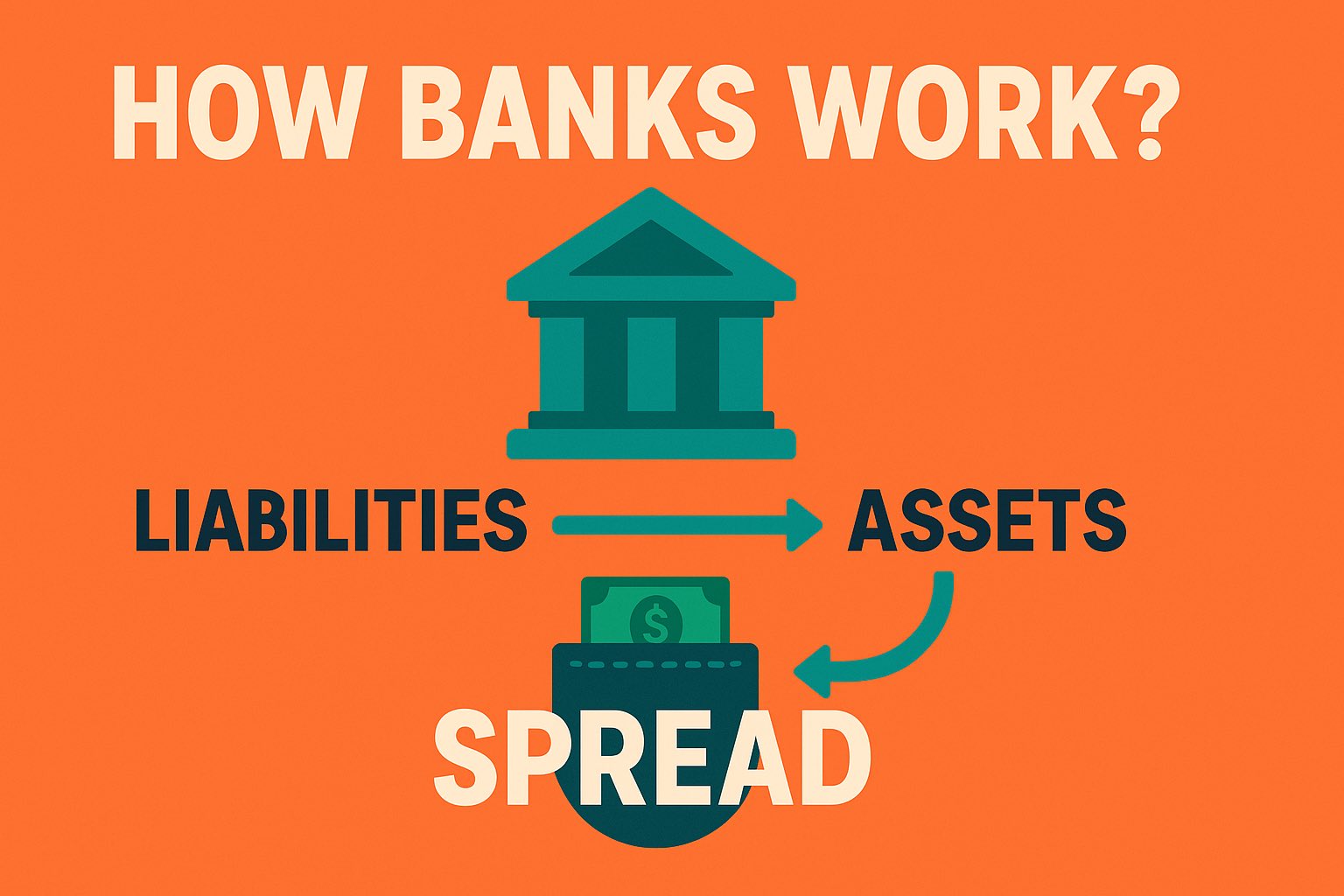
how banks work? bank's business model is very simple:
1️⃣ Take liability
2️⃣ Use liability to buy asset
3️⃣ Pocket the spread/carry
all of the bank's assets are financed by its liabilities
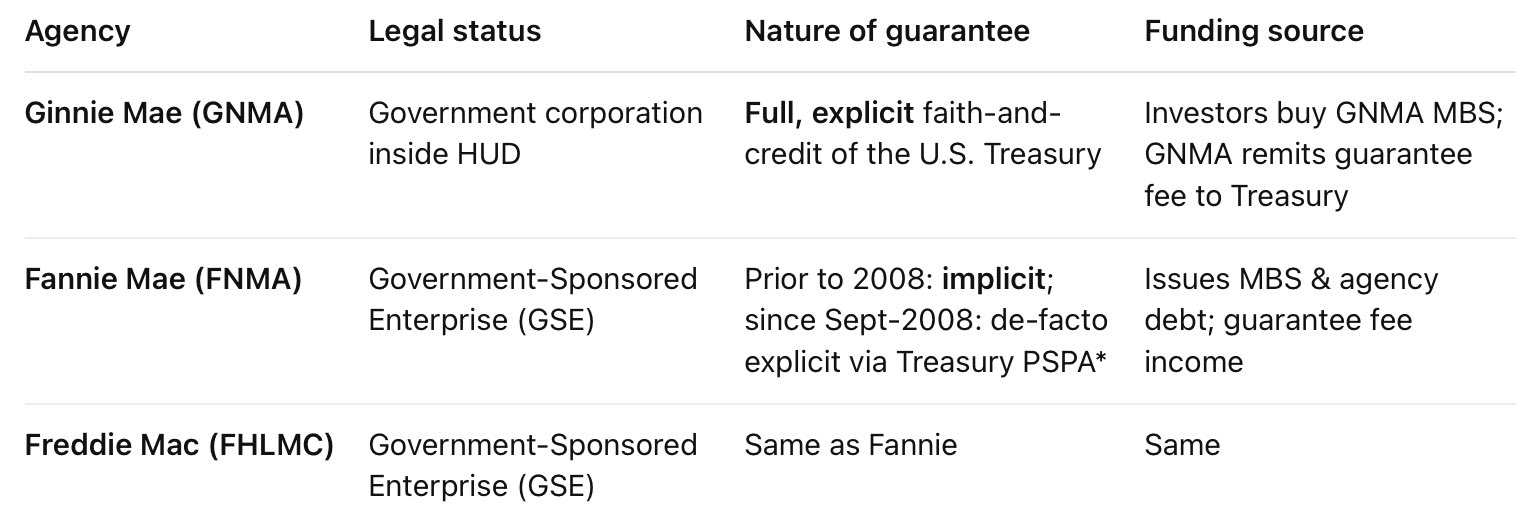
Fed's balance sheet expansion with agency MBS reduced risks in liquidity, market depth and optionality/convexity
this is a crucial point to understand - it wasn't just the Fed buying agency MBS, but the explicit government guarantee that accompanied it
thus, the yields fell
Ginnie & Fannie Mae conservatorship in Sept 2008 made agency MBS default risk free
essentially, the US Treasury covers all losses from GNMA and FNMA up to $200 billion each
from the total $400B budget ≈$170B are still available
once exhausted it will surely be increased
and this is how the Federal Reserve steers the federal funds rate/interest rates in the market within the target range 🏦✨
follow the quoted posts to read the full thread/article

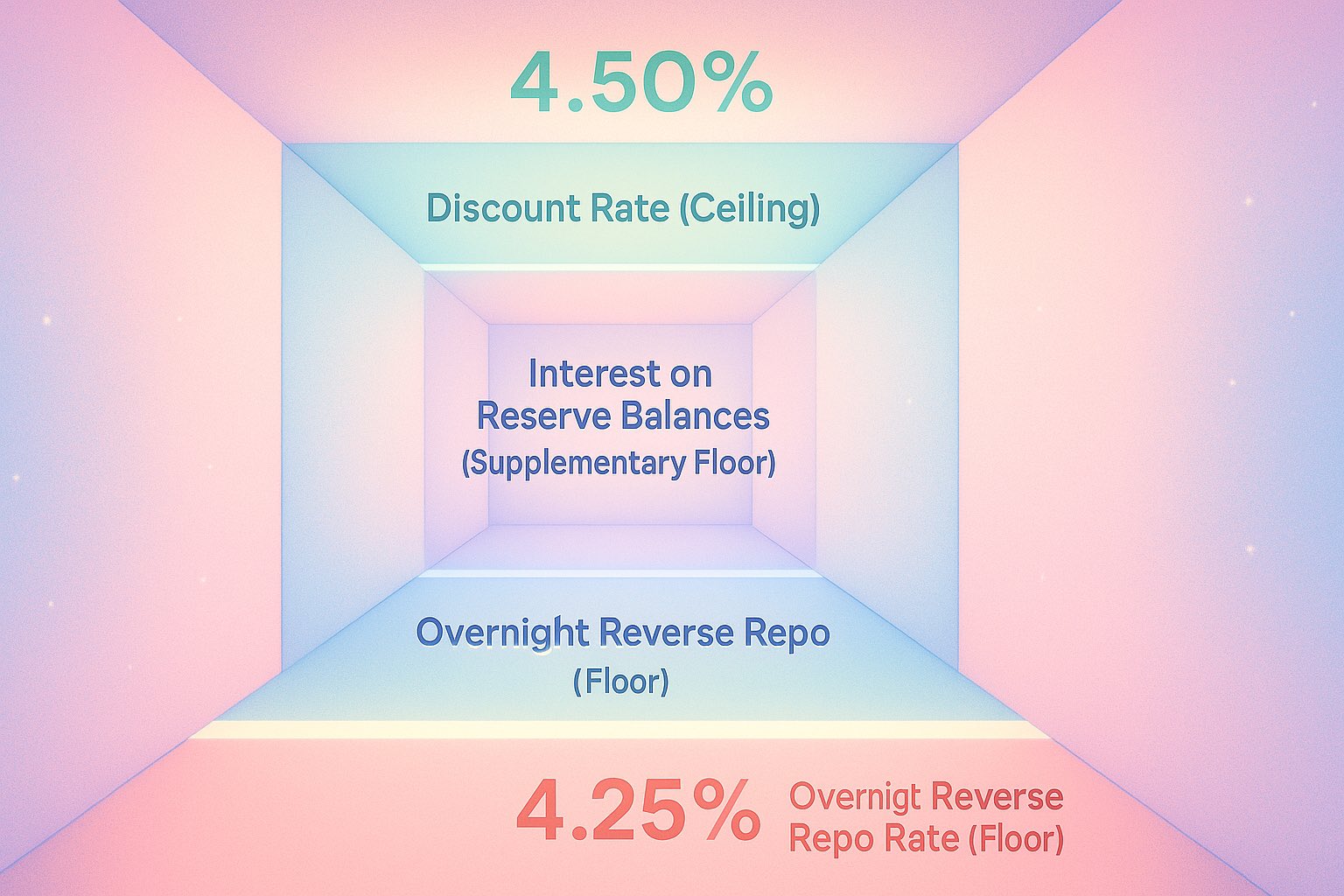
together, ON RRP, IORB, Discount Rate and SRF create a corridor for rates, which stay within the target 4.25%-4.50%
👉 by "firms" i mean select non-bank financial institutions - think dealers, market makers & other wholesale debt institutions
thus, Standing Repo Facility (SRF) further reinforces the upper part of the target interest rate corridor
in other words, it strengthens the cap on short-term interest rates
Standing Repo Facility (SRF) allows banks & other financial institutions to do collateral-backed loans from the FED overnight
the institution provides high quality collateral (e.g. treasury bond) and gets a loan against it - at the set rate
Standing Repo Facility (SRF) allows banks & other financial institutions to do collateral-backed loans from the FED overnight
the institution provides high quality collateral (e.g. treasury bond) and gets a loan against it - at the set rate
it't called discount window for historical reasons
discounting means buying treasuries at a slightly lower price - i.e. at a discount
window comes from the fact that these were sold at counter/teller windows at the bank
the majority of liquidity is actually created in wholesale short-term debt markets
ON RRP addresses exactly that sector, thus setting the lower bound of the target interest rate corridor for the broader financial sector
ON RRP further reinforces the the floor for the market-wide interest rates
since it's accessible to a broader set of financial institutions - not only banks. those now also have little incentive to lend below the ON RRP rate
ON RRP further reinforces the the floor for the market-wide interest rates
since it's accessible to a broader set of financial institutions - not only banks. those now also have little incentive to lend below the ON RRP rate
Overnight Reverse Repo Rate (ON RRP) defines the rate at financial institutions can lend money overnight to the FED
in return the FED provides treasury bonds as a collateral
ON RRP is accessible to both banks & non-banks (e.g. money market funds)
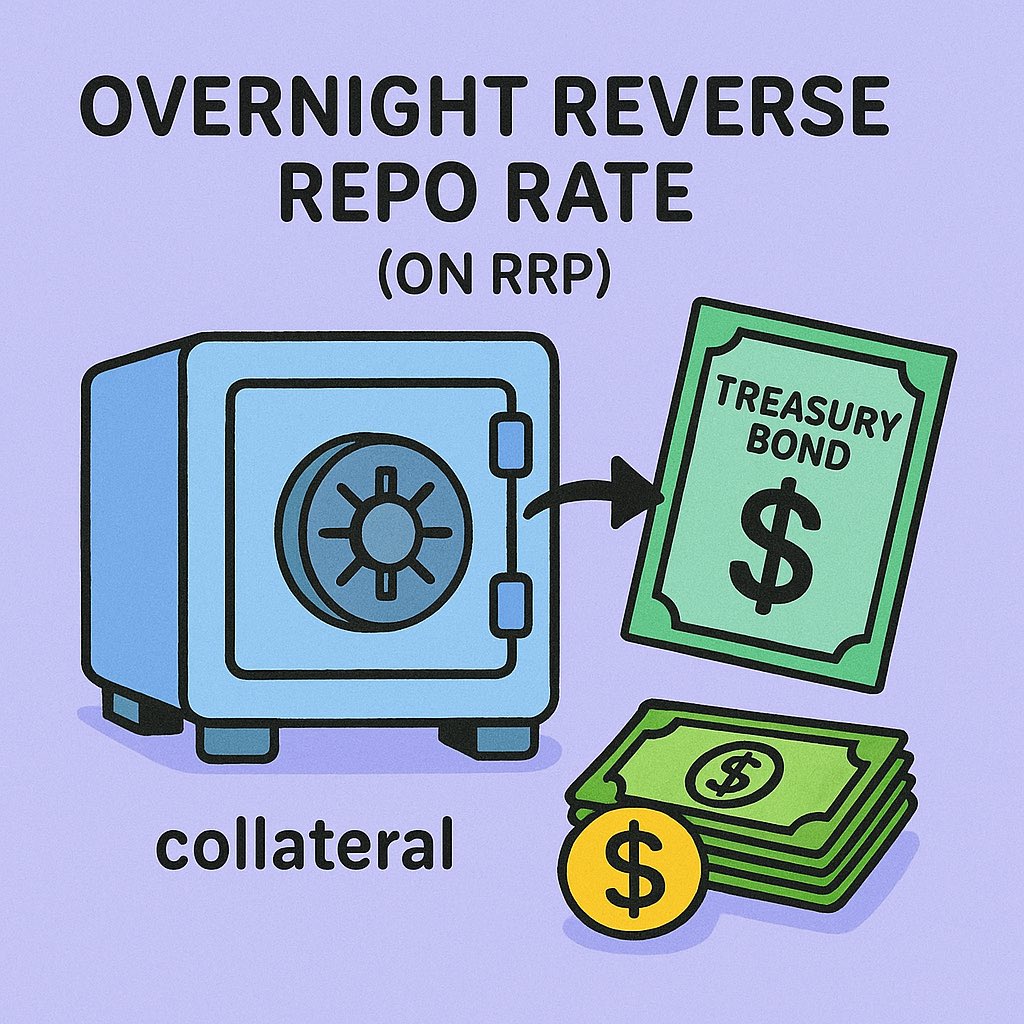
Overnight Reverse Repo Rate (ON RRP) defines the rate at financial institutions can lend money overnight to the FED
in return the FED provides treasury bonds as a collateral
ON RRP is accessible to both banks & non-banks (e.g. money market funds)
since banks can always deposit cash into their reserve account account at the FED and earn the IORB rate they have little incentive to lend at rates below IORB
effectively, this sets the floor (lower bound of the corridor) for interest rates for banks
since banks can always deposit cash into their reserve account account at the FED and earn the IORB rate they have little incentive to lend at rates below IORB
effectively, this sets the floor (lower bound of the corridor) for interest rates for banks
Interest on Reserve Balances (IORB) is the rate FED pays banks on their excess reserves
commercial banks have reserve accounts at the FED. regulations define the minimum amounts - any excess earns the IORB interest rate set by the FED
the 4 key interest rates set by the FED are:
1️⃣ Overnight Reverse Repo Rate (ON RRP)
2️⃣ Interest on Reserve Balances (IORB)
3️⃣ Discount Rate - also known as Lending Rate
4️⃣ Standing Repo Facility (SRF)
we'll cover them in this order below
now let's understand each one of the 4 key rates set by the federal reserve to keep the market rates within the target range
namely, what each one of those rates represents and how together they act as ceiling or floor for the interest rate corridor
now let's understand each one of the 4 key rates set by the federal reserve to keep the market rates within the target range
namely, what each one of those rates represents and how together they act as ceiling or floor for the interest rate corridor
so when banks and other financial institutions need to lend capital - they can do it at a rate within the target range
of course, their balance sheet capacity must allow for that - but that's another topic which I already covered in some detail in my other posts😁
so when banks and other financial institutions need to lend capital - they can do it at a rate within the target range
of course, their balance sheet capacity must allow for that - but that's another topic which I already covered in some detail in my other posts😁
now you should have a clear mental model of how the Federal Reserve sets the interest rates in the market
a target range is defined, and then several different interest rates are set explicitly to steer the real interest rate into that target range
now you should have a clear mental model of how the Federal Reserve sets the interest rates in the market
a target range is defined, and then several different interest rates are set explicitly to steer the real interest rate into that target range
think of these 4 rates as defining a corridor with an upper and a lower bound - currently 4.25% and 4.50%
the average market interest rate will sit somewhere in between
the rates define the interest rate corridor in the following manner:
1️⃣ Overnight Reverse Repo Rate - floor
2️⃣ Interest on Reserve Balances - supplementary floor
3️⃣ Discount Rate - ceiling
4️⃣ Standing Repo Facility - supplementary ceiling
together, ON RRP, IORB, discount rate and SRF define an interest rate corridor, composed by:
1️⃣ lower bound (floor) - the lowest possible interest rate
2️⃣ upper bound (ceiling) - the highest possible interest rate
the other market rates fluctuate between this floor and ceiling
how can the FED even set market-wide rates? 🤔
after all - there is no single rate that the whole market unanimously uses
different types of lending have different rates in the market, as it's a (somewhat) open market
How Does the Federal Reserve Set Interest Rates?
some think that they define a single rate - namely the overnight lending rate - i.e. the rate at which the banks lend to each other overnight
but that's not the case ❌