My Thoughts
Short-form commentary on macro, market structure, commodities, Bitcoin, crypto markets, and AI.

banks are also subject to regulations when issuing loans
and no - it's not the fractional reserve system
in many sovereigns, like the USA the reserve requirements sit at 0%
there are other regulatory requirements limiting loan issuance
the bank has the legal right to increase the money supply AKA 'print money'
so to give you a $100 loan the bank can just create those $100 and give give them to you
pretty neat arrangement, huh? 😁
the bank has the legal right to increase the money supply AKA 'print money'
so to give you a $100 loan the bank can just create those $100 and give give them to you
pretty neat arrangement, huh? 😁
banks are credit institutions which means they can create broad money
while a non-credit institution or a regular business can issue loans - they must fund it (e.g. raise money, use excess profits)
they can't just create those $100, thus expanding the monetary supply
banks are credit institutions which means they can create broad money
while a non-credit institution or a regular business can issue loans - they must fund it (e.g. raise money, use excess profits)
they can't just create those $100, thus expanding the monetary supply
so the bank funds the loan by creating $100 and crediting them to your account
those $100 that they credited you did not exist before - the bank created that money on demand
those $100 are not physical cash - they're an entry in a digital ledger (i.e. in a computer system)
so the bank funds the loan by creating $100 and crediting them to your account
those $100 that they credited you did not exist before - the bank created that money on demand
those $100 are not physical cash - they're an entry in a digital ledger (i.e. in a computer system)
a loan for the bank ends up earning more than the lent amount
this is because the borrower repays the principal (loan amount) + interest
a loan for the bank ends up earning more than the lent amount
this is because the borrower repays the principal (loan amount) + interest
why is a loan an asset to the bank?
because the loan earns an interest over its lifetime. this the the fixed or variable interest rate associated with the loan
with time, that loan brings periodic cashflows repaying the principal and the interest
why is a loan an asset to the bank?
because the loan earns an interest over its lifetime. this the the fixed or variable interest rate associated with the loan
with time, that loan brings periodic cashflows repaying the principal and the interest
deposits are liabilities to the bank - as they are owed to depositors/customers
so the $100 cash loan that the bank issues to you becomes a deposit in that same bank, and thus a liability for the bank
you can move those $100 outside of the bank at any time/on short notice
deposits are liabilities to the bank - as they are owed to depositors/customers
so the $100 cash loan that the bank issues to you becomes a deposit in that same bank, and thus a liability for the bank
you can move those $100 outside of the bank at any time/on short notice
in the bank’s balance sheet:
⬆️ +$100 assets - the loan they just issued
⬆️ +$100 liabilities - the $100 your account was credited with
your loan is an asset to the bank - and your loan itself funds the $100 deposit that you get in your account
in the bank’s balance sheet:
⬆️ +$100 assets - the loan they just issued
⬆️ +$100 liabilities - the $100 your account was credited with
your loan is an asset to the bank - and your loan itself funds the $100 deposit that you get in your account
the bank needs a liability to fund an asset
when a bank gives you a loan it gains both an asset and a liability in the same amount
let's say you get a loan for $100
the bank needs a liability to fund an asset
when a bank gives you a loan it gains both an asset and a liability in the same amount
let's say you get a loan for $100
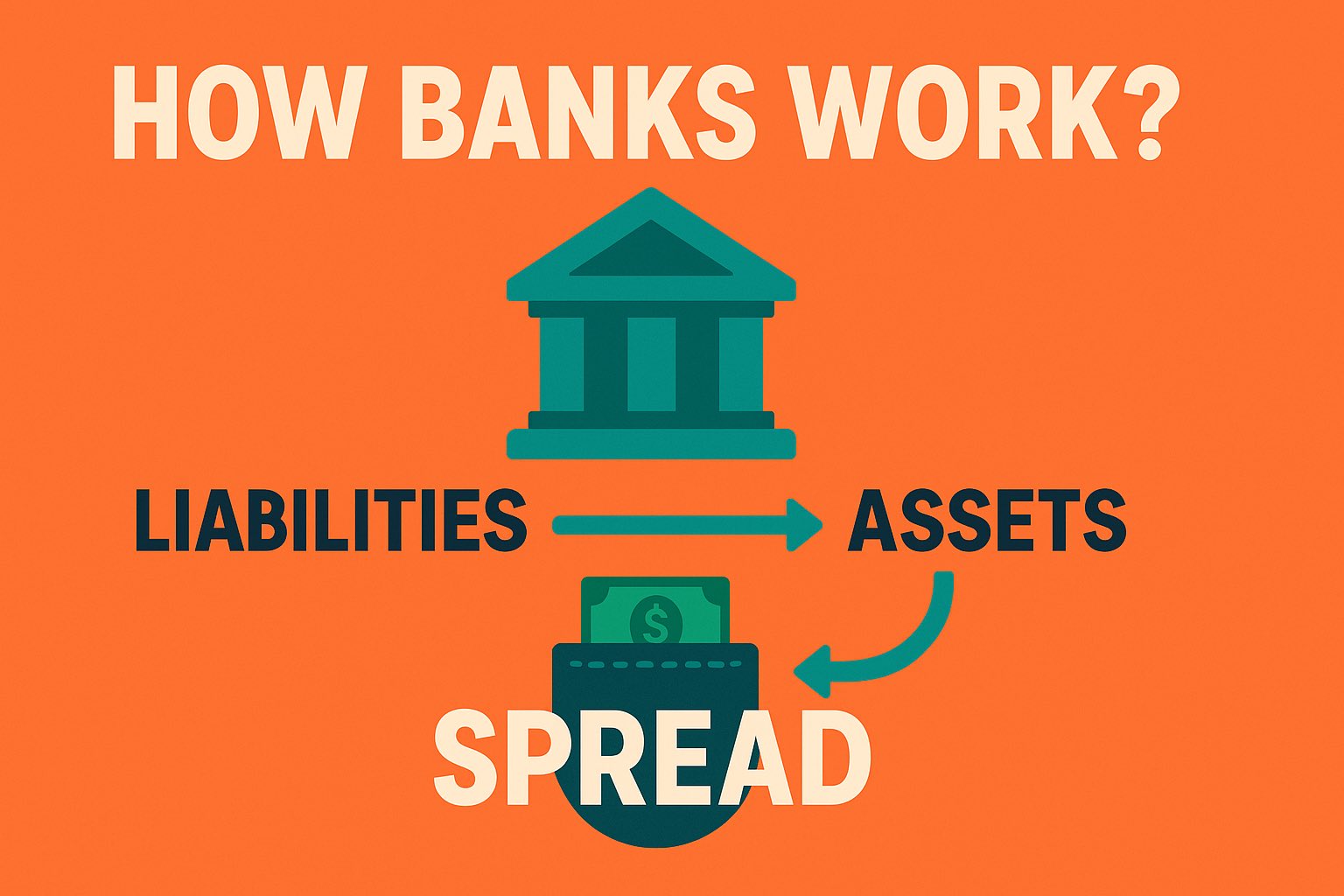
how banks work? bank's business model is very simple:
1️⃣ Take liability
2️⃣ Use liability to buy asset
3️⃣ Pocket the spread/carry
all of the bank's assets are financed by its liabilities
how banks work? bank's business model is very simple:
1️⃣ Take liability
2️⃣ Use liability to buy asset
3️⃣ Pocket the spread/carry
all of the bank's assets are financed by its liabilities
updated Illya's Threads url to https://illya.sh/threads/
now it gets it own subdirectory - so the URLs are shorter and it's more modular to manage the sitemaps this way
later I'll also add an RSS feed for threads, just like the one for thoughts at https://illya.sh/thoughts/feed.xml
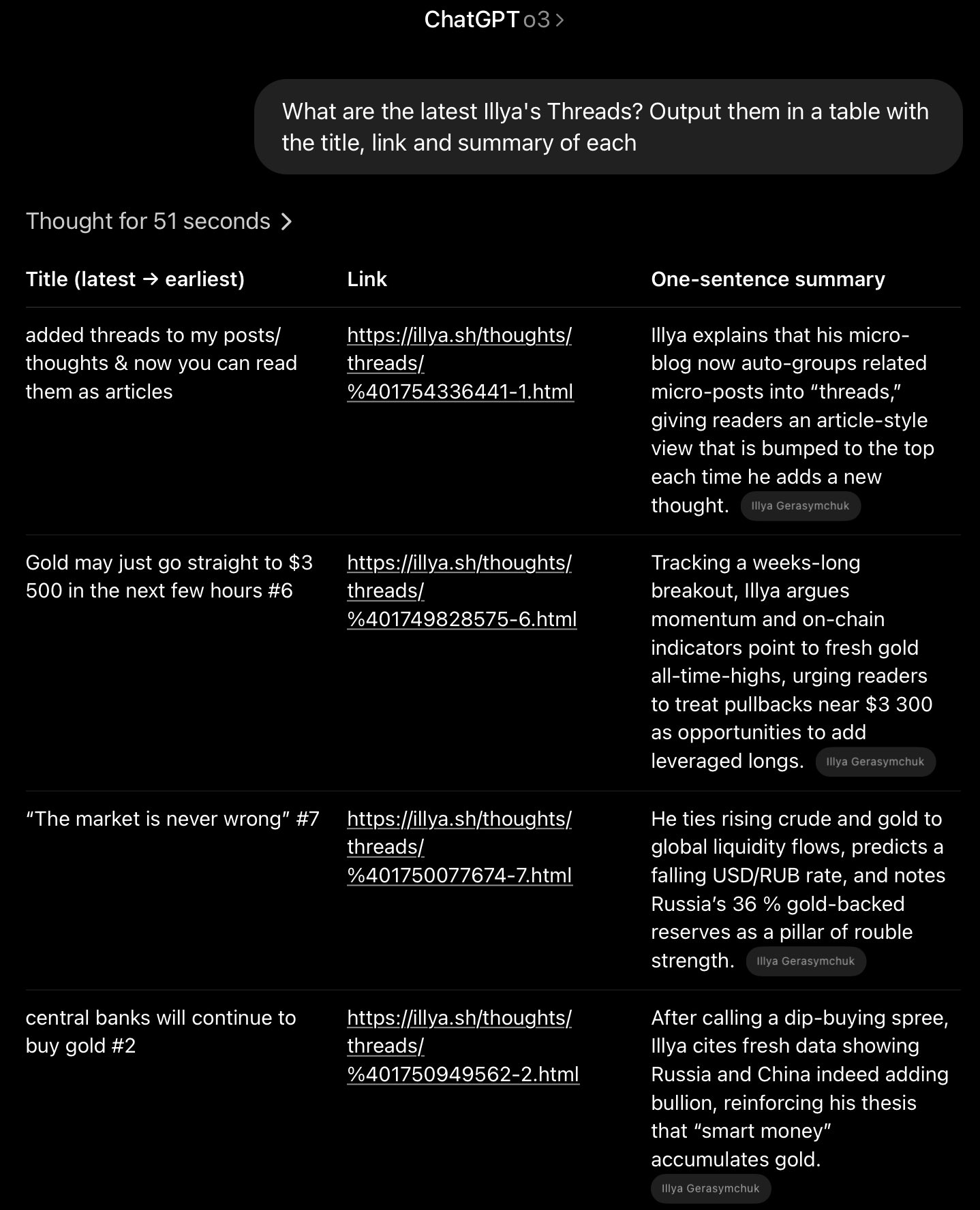
ask ChatGPT what are the latest Illya's Threads and it will tell you 😄
should also work with Grok, Claude, Gemini and any other agentic AI with web access
this is again JSON-LD magic - LLMs seem to love it
i only added threads a few hours ago - it's already indexed & working
ask ChatGPT what are the latest Illya's Threads and it will tell you 😄
should also work with Grok, Claude, Gemini and any other agentic AI with web access
this is again JSON-LD magic - LLMs seem to love it
i only added threads a few hours ago - it's already indexed & working
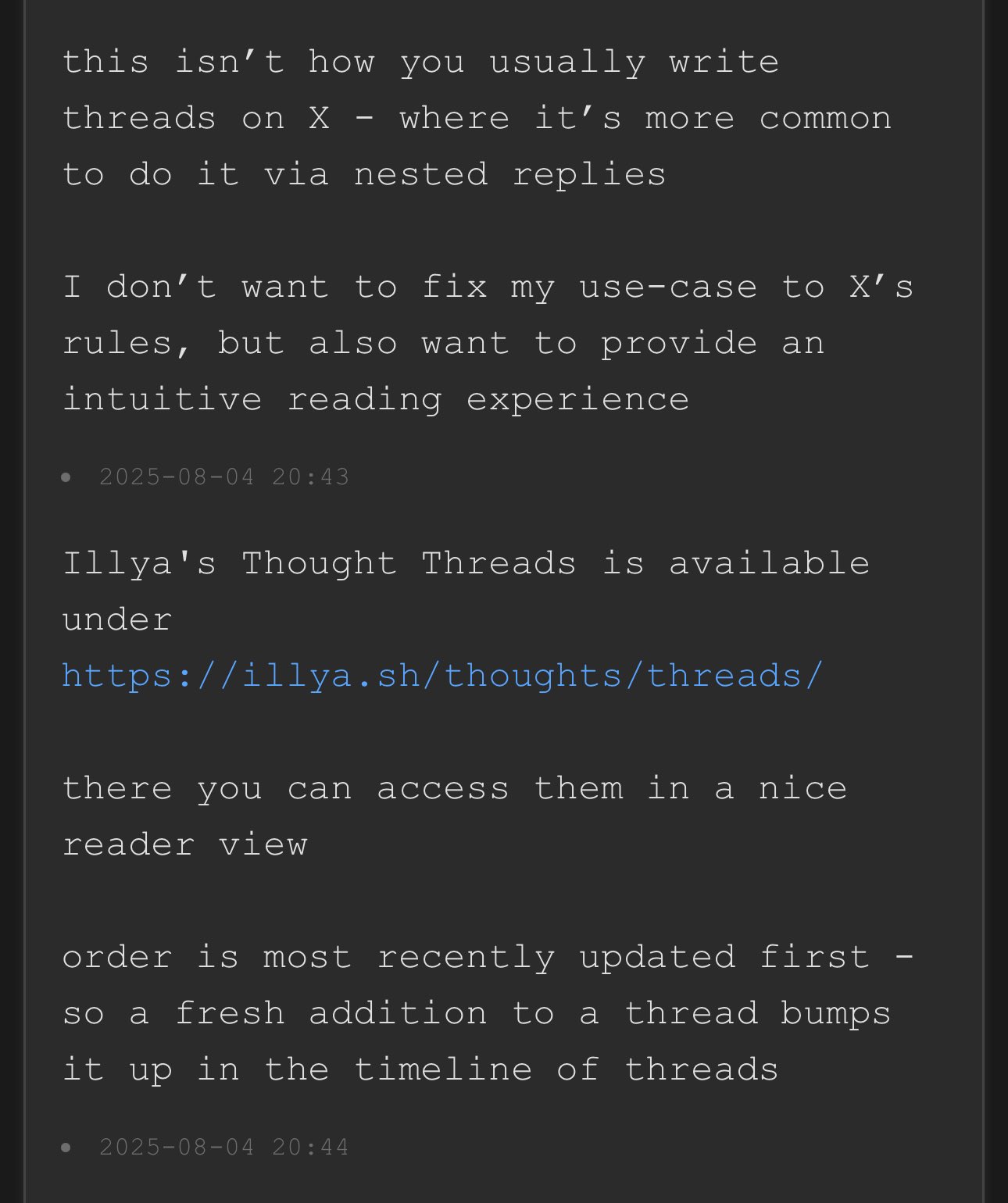
here's how the thread reading experience looks like
the aim is clean article view - with timestamps as visual separators between posts/thoughts
if you click on the timestamp it takes you to the individual post/thoughts
here's how the thread reading experience looks like
the aim is clean article view - with timestamps as visual separators between posts/thoughts
if you click on the timestamp it takes you to the individual post/thoughts
Illya's Thought Threads is available under https://illya.sh/threads/
there you can access them in a nice reader view
order is most recently updated first - so a fresh addition to a thread bumps it up in the timeline of threads
Illya's Thought Threads is available under https://illya.sh/threads/
there you can access them in a nice reader view
order is most recently updated first - so a fresh addition to a thread bumps it up in the timeline of threads
this isn’t how you usually write threads on X - where it’s more common to do it via nested replies
I don’t want to fix my use-case to X’s rules, but also want to provide an intuitive reading experience
this isn’t how you usually write threads on X - where it’s more common to do it via nested replies
I don’t want to fix my use-case to X’s rules, but also want to provide an intuitive reading experience
the way I do it is by quoting the logically connected post, thus forming a chain of related posts
if you build a DAG with temporal order & display posts from oldest to newest you get a thread of posts, forming a small article
the way I do it is by quoting the logically connected post, thus forming a chain of related posts
if you build a DAG with temporal order & display posts from oldest to newest you get a thread of posts, forming a small article
so everything that I post on other social media, like X/Twitter also gets posted to my microblog at https://illya.sh/thoughts/
frequently an idea evolves into a series of posts - a thread/small article
so everything that I post on other social media, like X/Twitter also gets posted to my microblog at https://illya.sh/thoughts/
frequently an idea evolves into a series of posts - a thread/small article
🚀 added threads to my posts/thoughts & now you can read them as articles
the static microblog now generates a series of quoted posts as threads, where posts are displayed from oldest to newest
🚀 added threads to my posts/thoughts & now you can read them as articles
the static microblog now generates a series of quoted posts as threads, where posts are displayed from oldest to newest
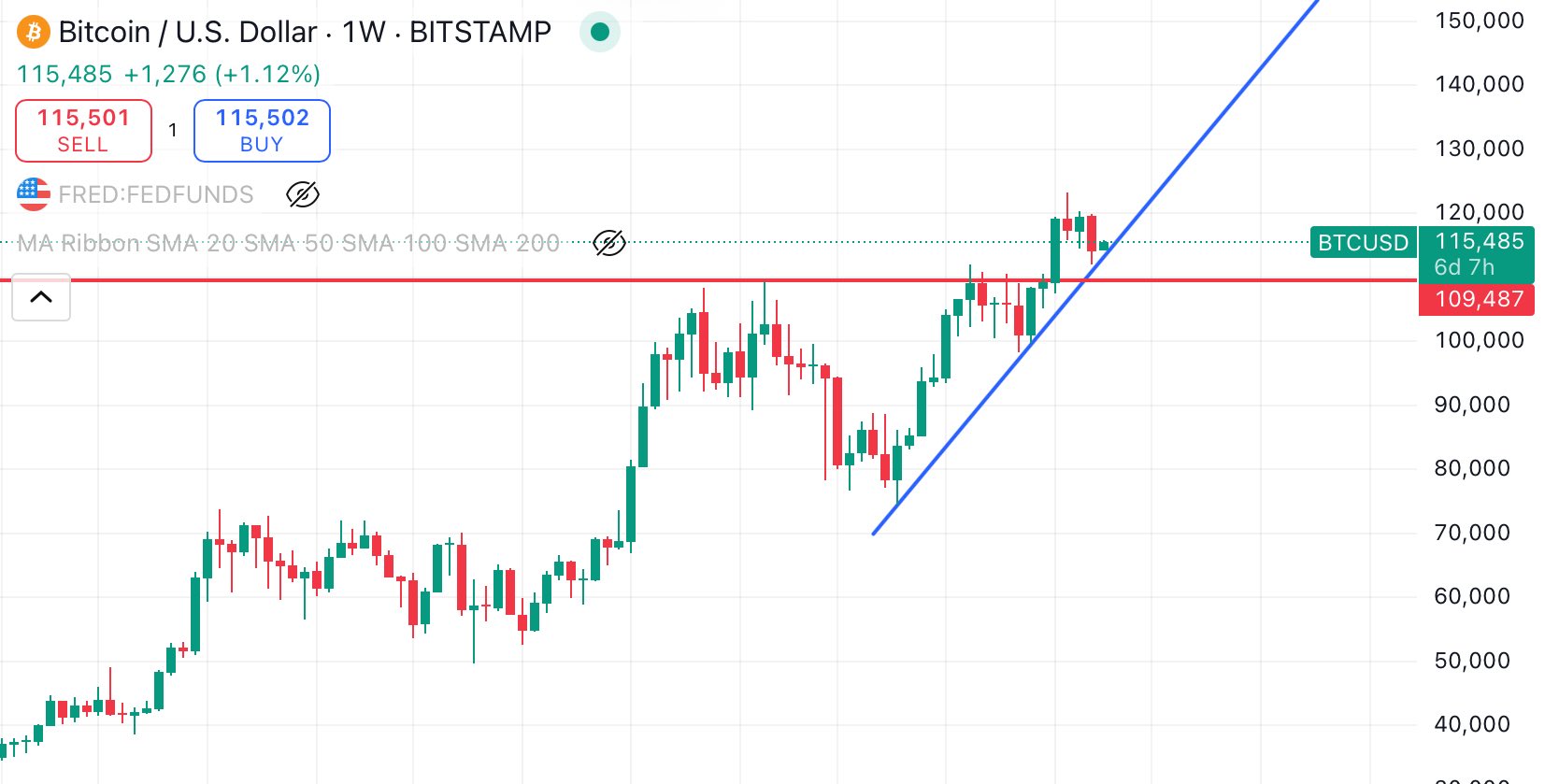
Bitcoin is still in a weekly uptrend it must either go up or down to ≈$109500 - a strong weekly support
two factors in play here:
1️⃣ USD index - inverse correlation
2️⃣ Global liquidity- correlation
keep watching central bank's open market operations & balance sheets
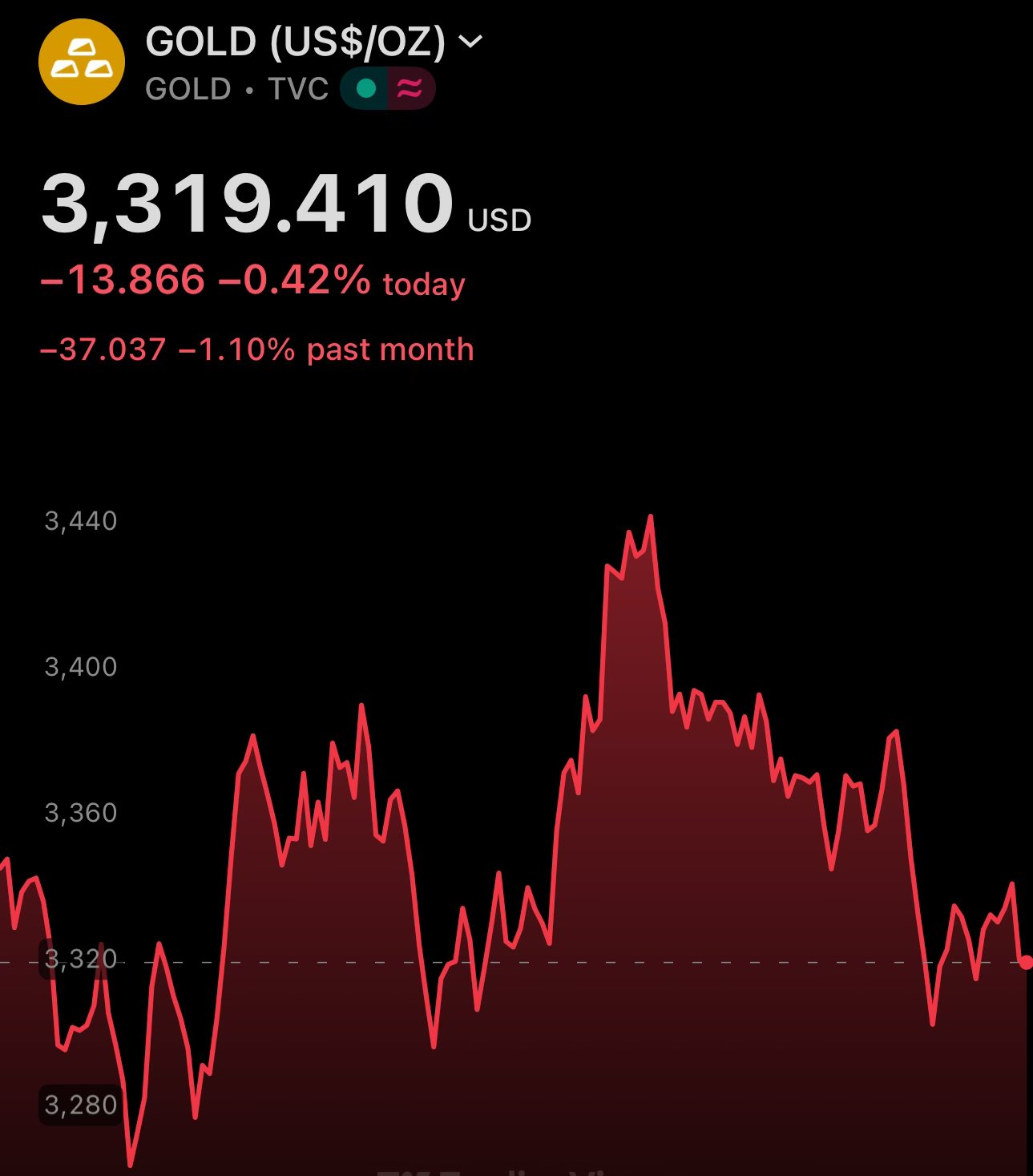
🚀 gold approaching $3400. $3300 was a good price for longs - like I wrote a week ago
currently gold is one of the only assets where leverage entails a much lesser risk
upside price pressure is coming from several points
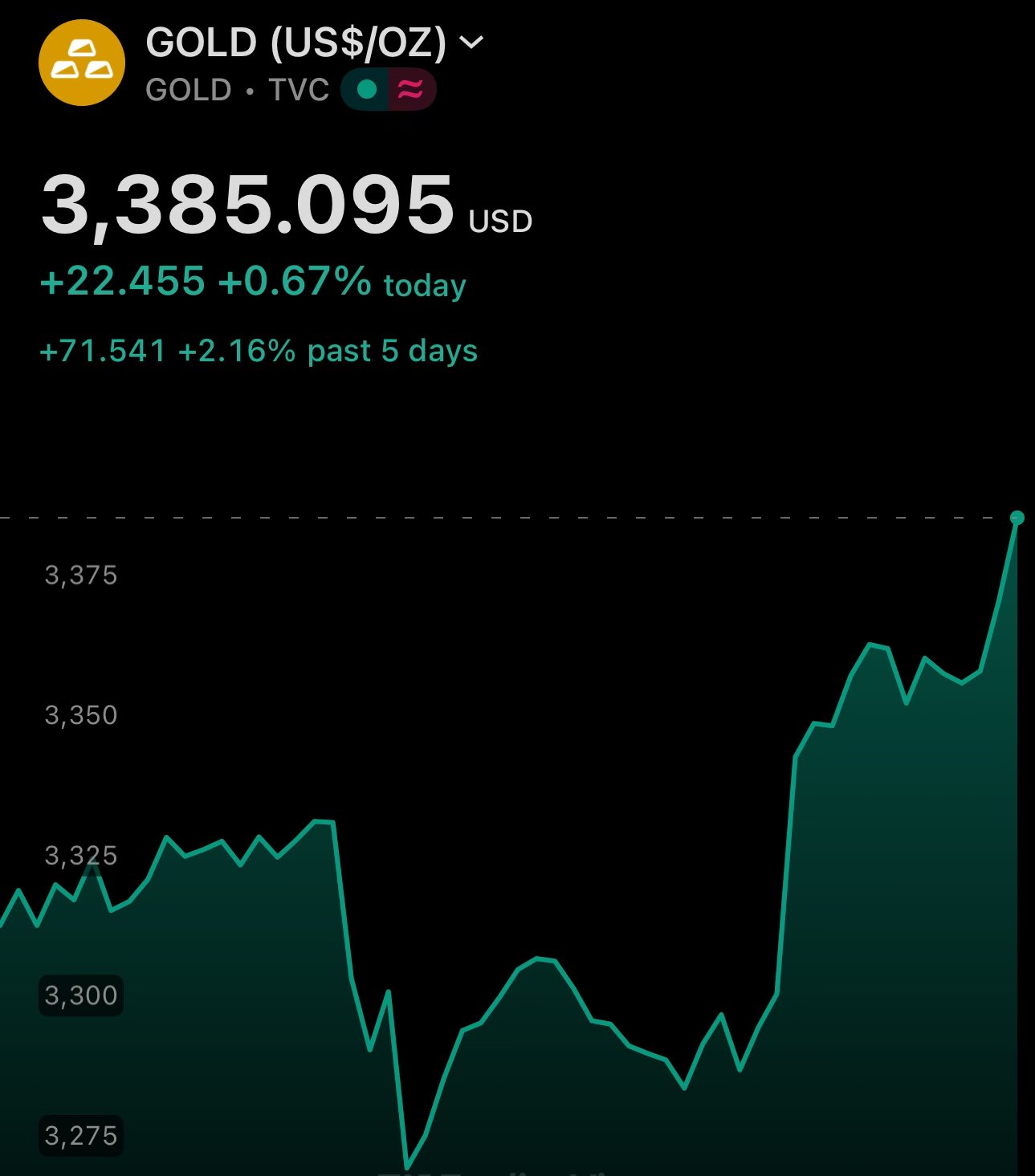
gold price is back up to its price 2 weeks ago
so it indeed was a good idea to long it at the pullback
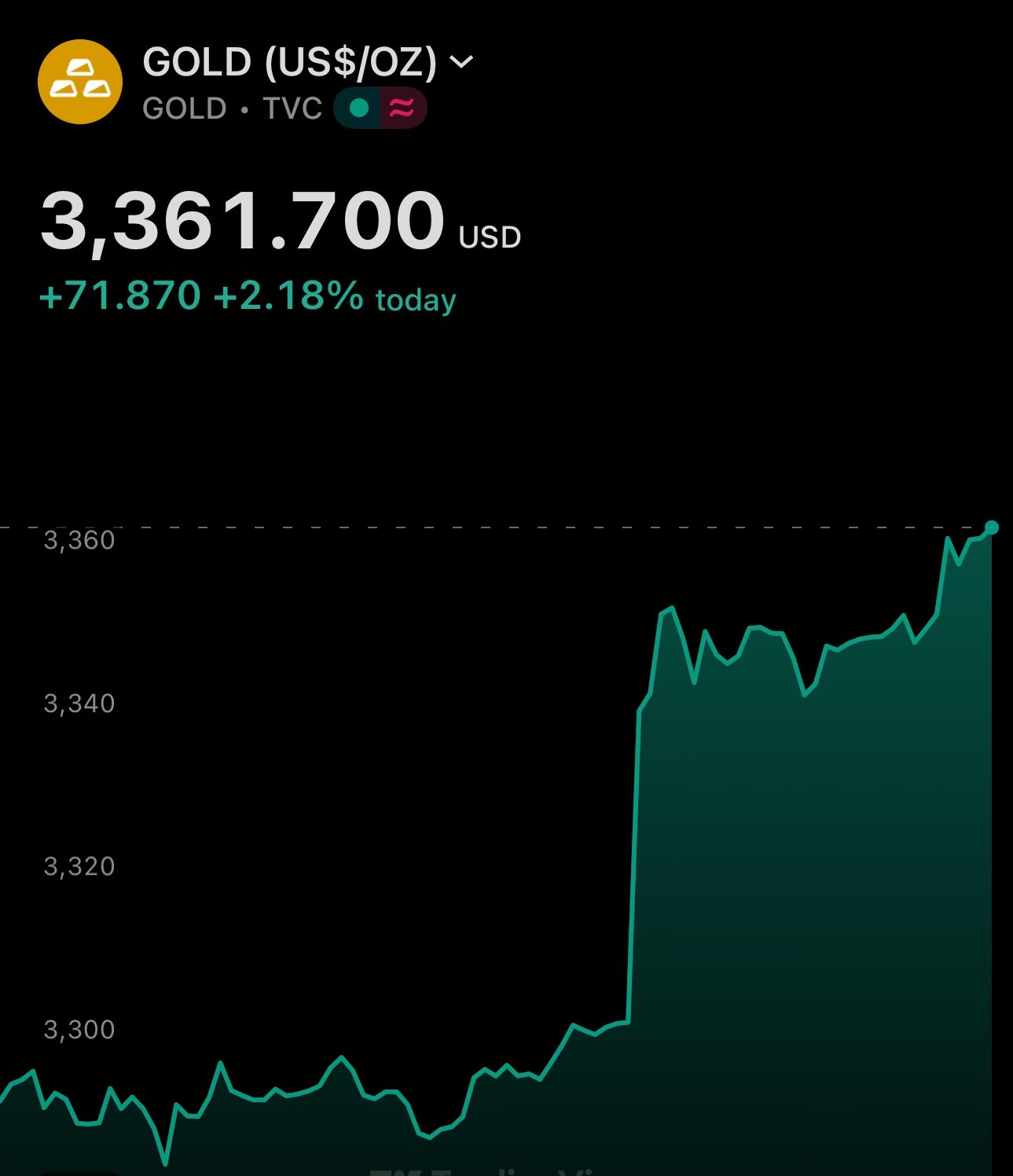
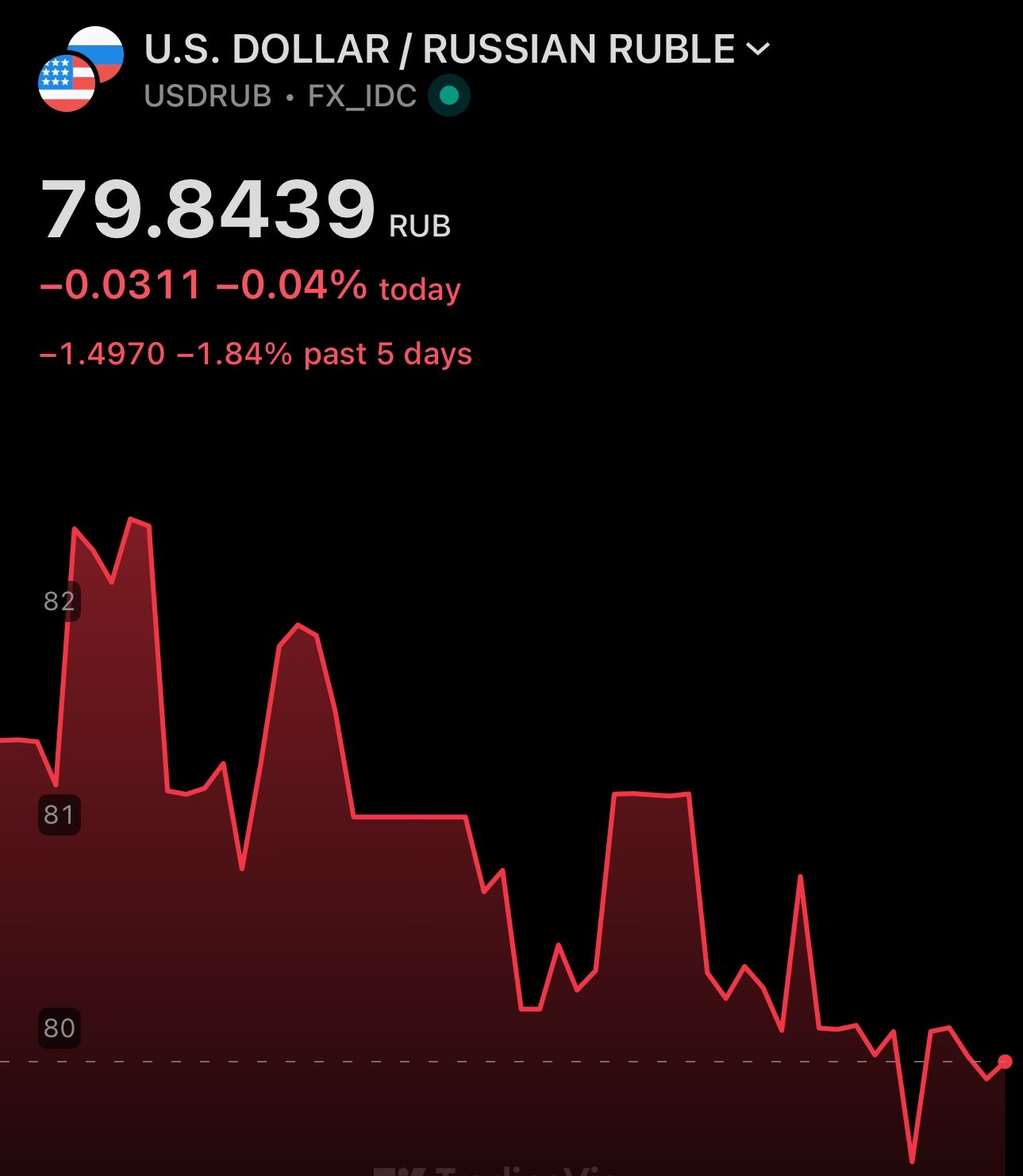
5 days ago I wrote that USD/RUB rate will fall. 5 days later it's down ≈2%
despite oil being down - gold is up
Ruble has hedge from multiple sides
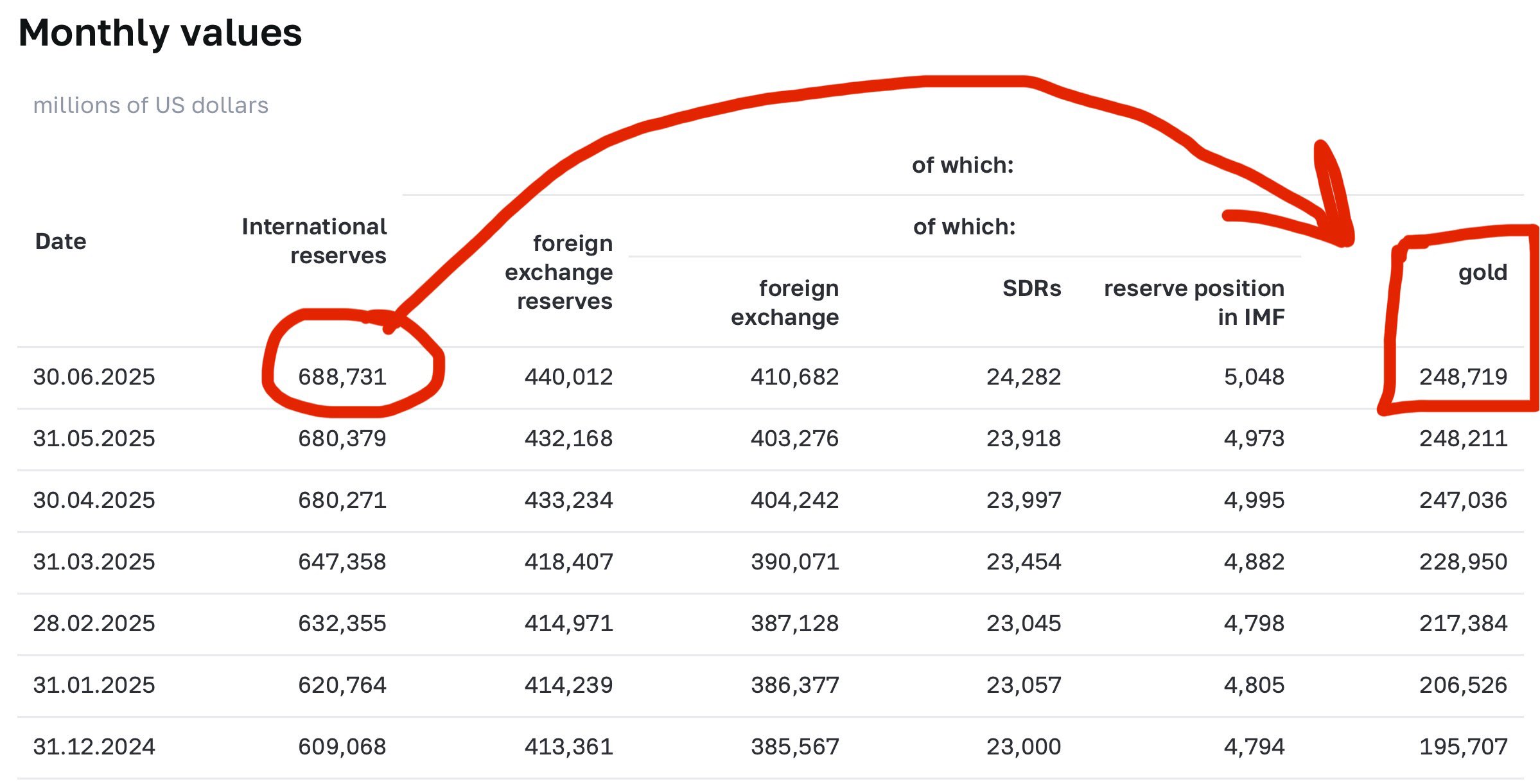
if you've read my previous posts you know that gold is ≈36% of Russia's international reserves
this is taken straight from the Bank of Russia's balance sheet statement
100% of it is stored in Russia, thus no counterparty risk
critical component of Ruble's strength
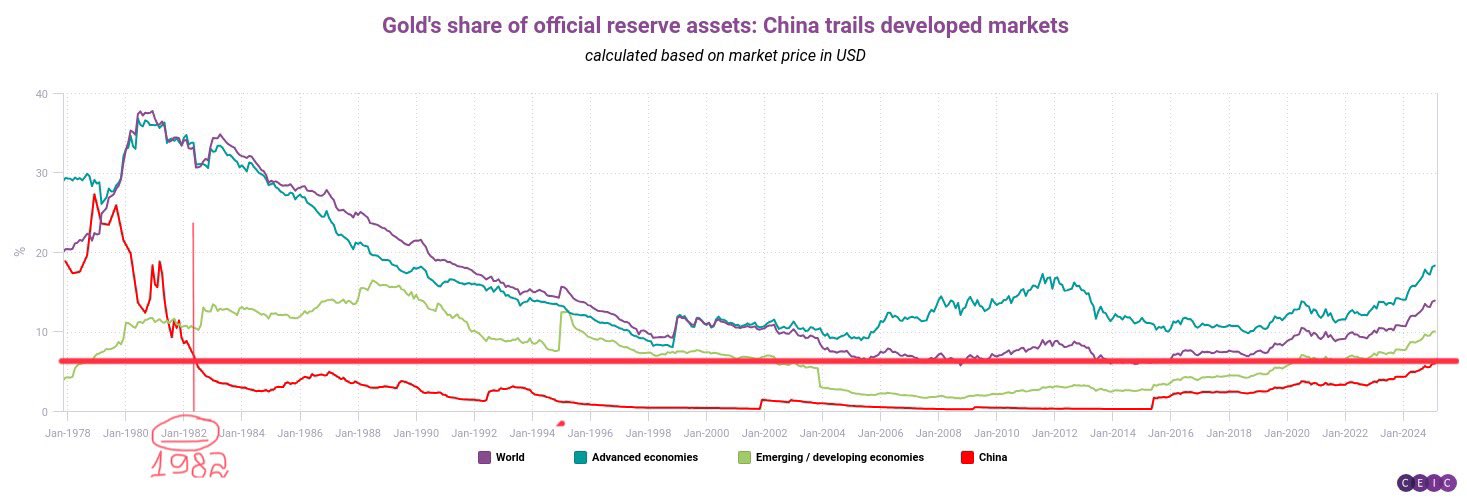
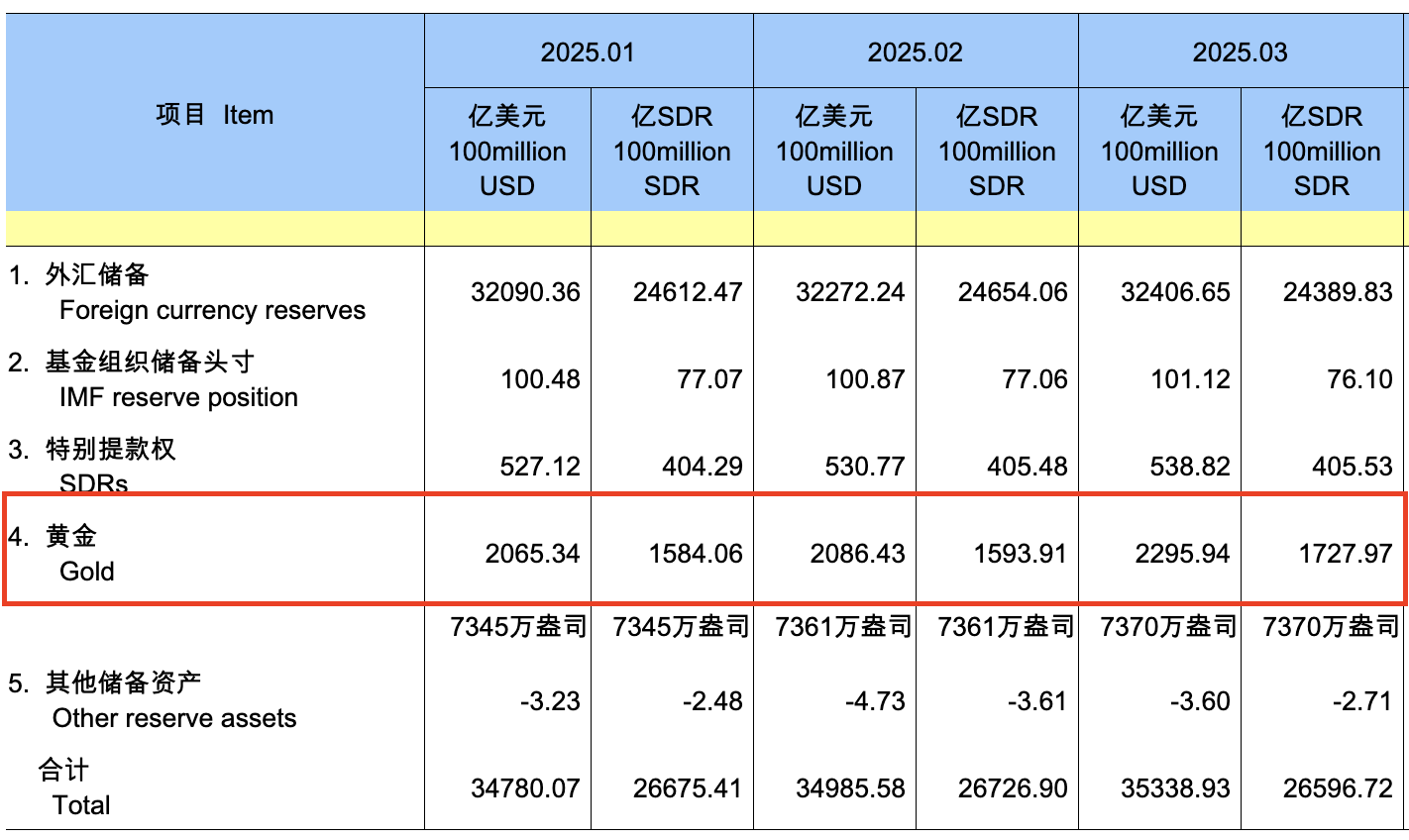
🇨🇳 China's gold holdings are at their highest level in 43 years
gold is now 6% of PBoC international reserves. but that's still below the world average of ≈14%. expect that gap to continue to shorten further
see my drawings on this nice chart spanning over 47 years i found
both Russia & China increased their gold holdings since I wrote this 😄
indeed - central banks are continuing to buy the gold dips
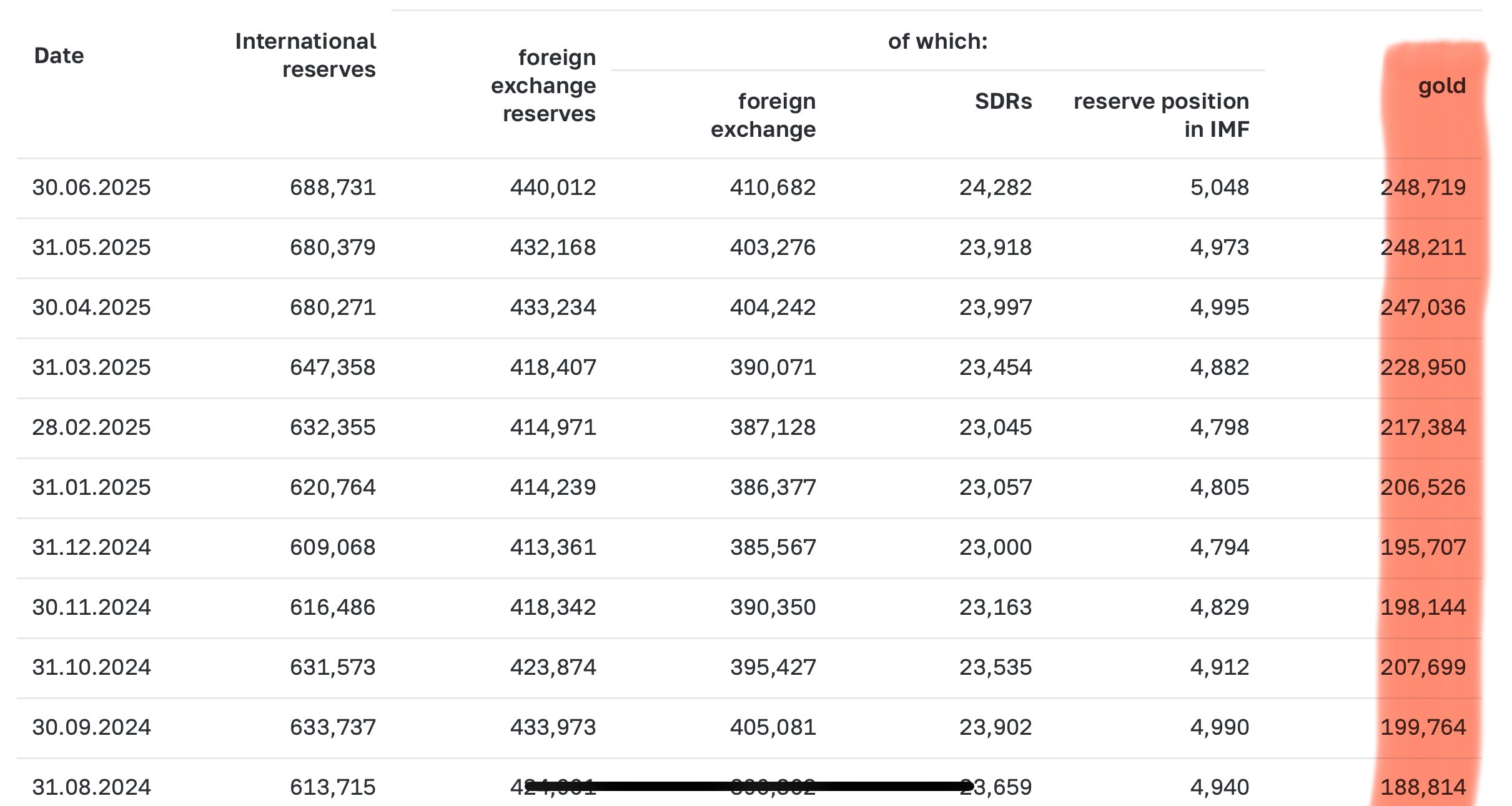
central banks will continue to buy gold
you'll be able to confirm that in their upcoming balance sheets reports. pay special attention to China & Russia
enjoy the dip, because smart money is!
China sold US treasuries and bought gold - just like I wrote over 3 months ago
gold now accounts for ≈6% of PBoC international reserves, while US treasury holdings are ≈40% from their peak in 2013
off-ramp from USD debt to alternative assets continues its progress
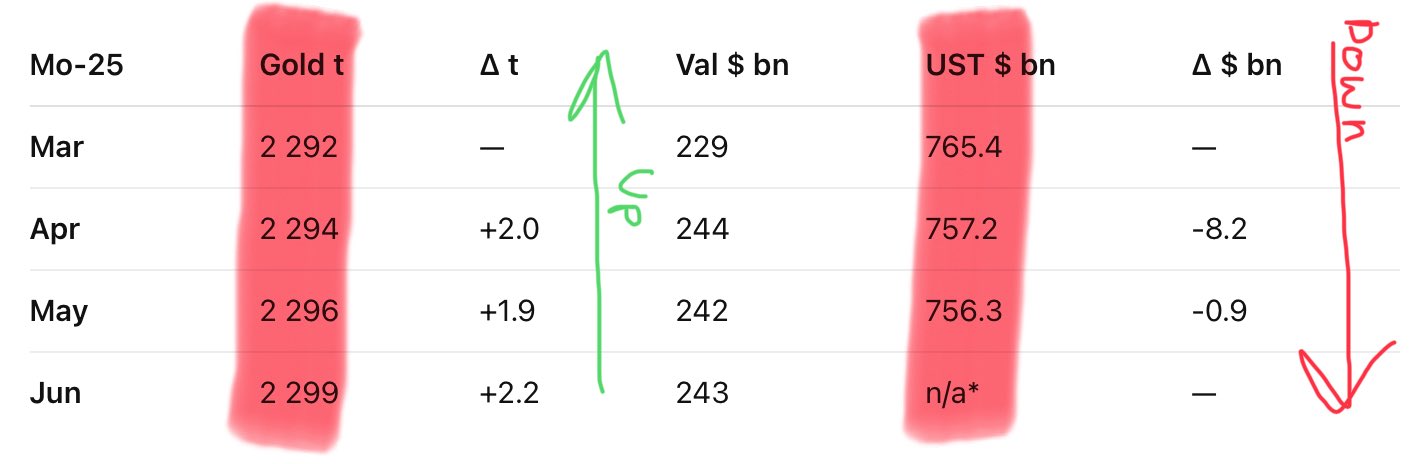
🇨🇳China has been increasing their gold reserves YTD
Gold price keeps going up - major central banks continue to load up
Gold is a hedge against USD. Tariffs are a medium of USD weaponization
👉 Expect US securities sell-off for gold by People's Bank of China
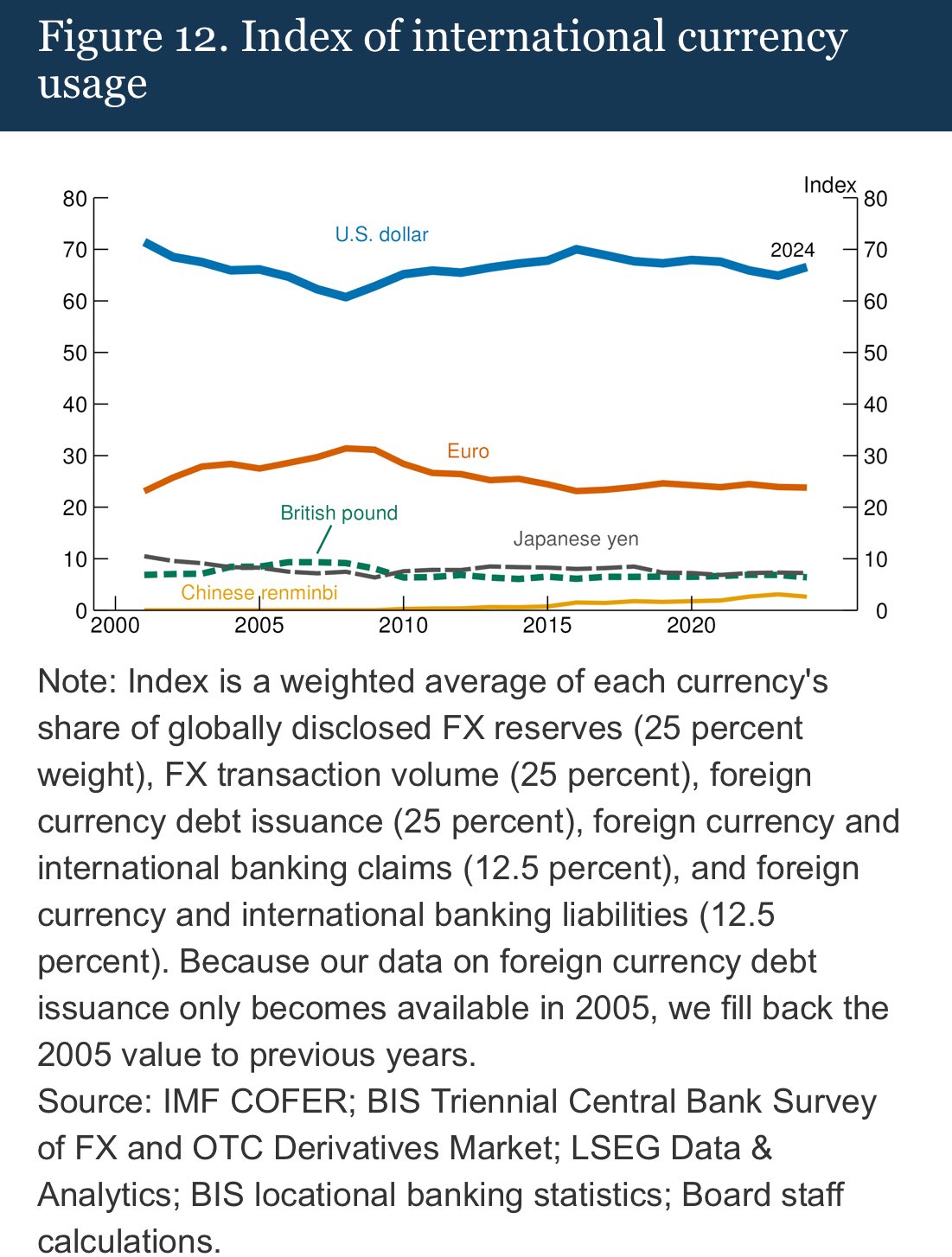
the 70% USD dominance here is as calculated by the Fed across the chosen 5 chosen buckets - with the end result being a weighted composite measure
so don't read this as a literal 70% of all cross-border transactions
🇺🇸 USD dominance is alluring, accounting for ≈70% of currency usage worldwide
even countries that do relatively little trade with US have most of their transactions done in US dollars
ex: 🇮🇳 India invoices 86% of its exports in USD, while only 15% of its exports being to US