My Thoughts
Short-form commentary on macro, market structure, commodities, Bitcoin, crypto markets, and AI.

Bank of International Settlements (BIS) has a lot of interesting papers, articles and data on global liquidity and financial system
it's bank-focused, but connected to the broader scope, like the non-bank financial institution (NBFI) credit flows i posted about earlier
i wrote a thread explaining why weaker USD means more credit/loans issued in USD, thus driving up global liquidity
you can read it here: https://illya.sh/threads/@1755216337-1.html
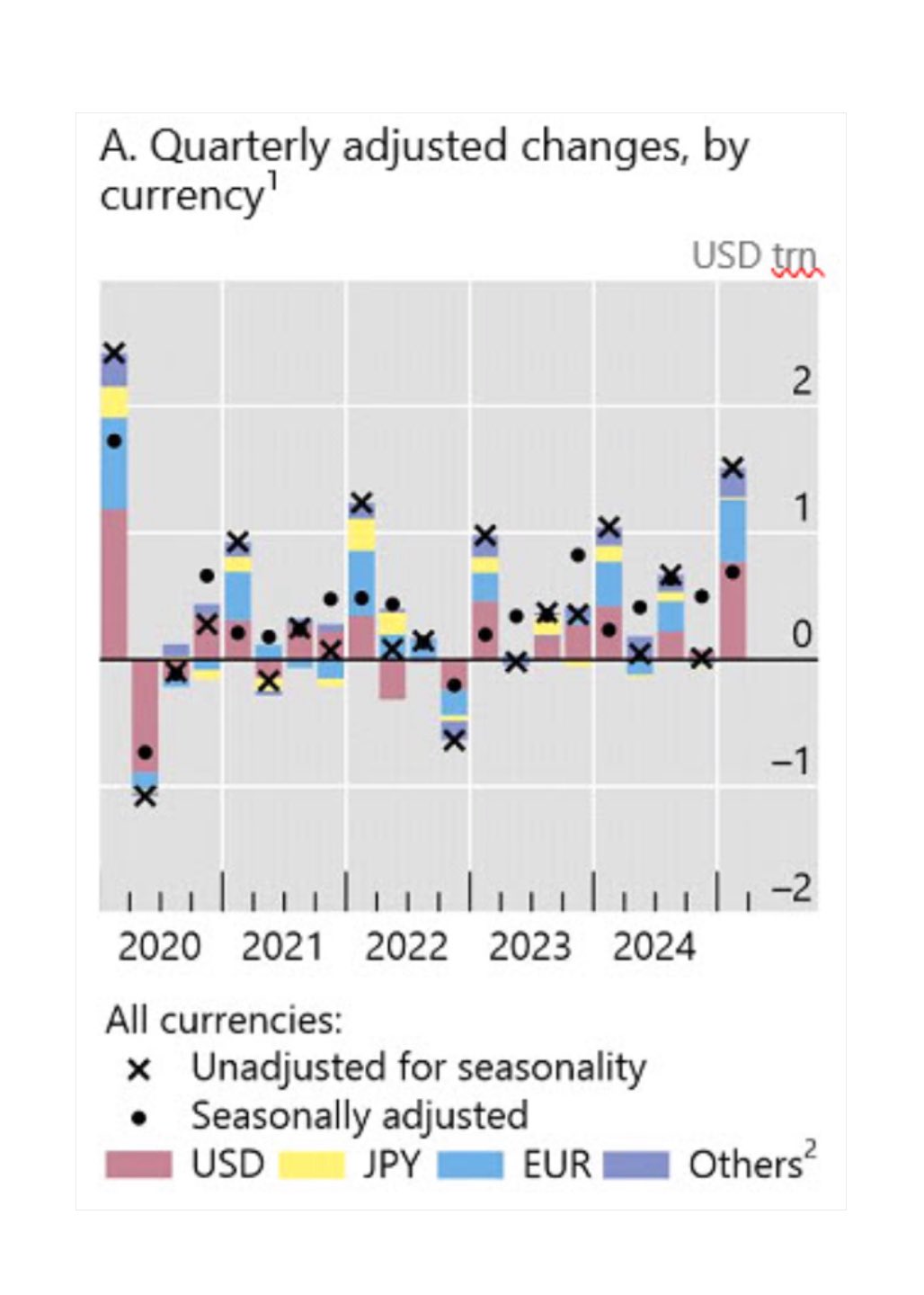
USD cross-border bank credit grew by $800 billion in Q1 2025
expect further increases for Q2 2025, due to the weak US dollar
it's not just the governments and financial institutions who are dependent on debt refinancing - the private non-financial sector as well
remember than more than 70% of credit issuance is for servicing/refinancing of existing debt
credit continues to expand in the non-financial sector as well
the attached graph also shows a turning point in 2008 - that's how the GFC was handled - by issuing more credit 😁
you can also see a steeper increase during COVID
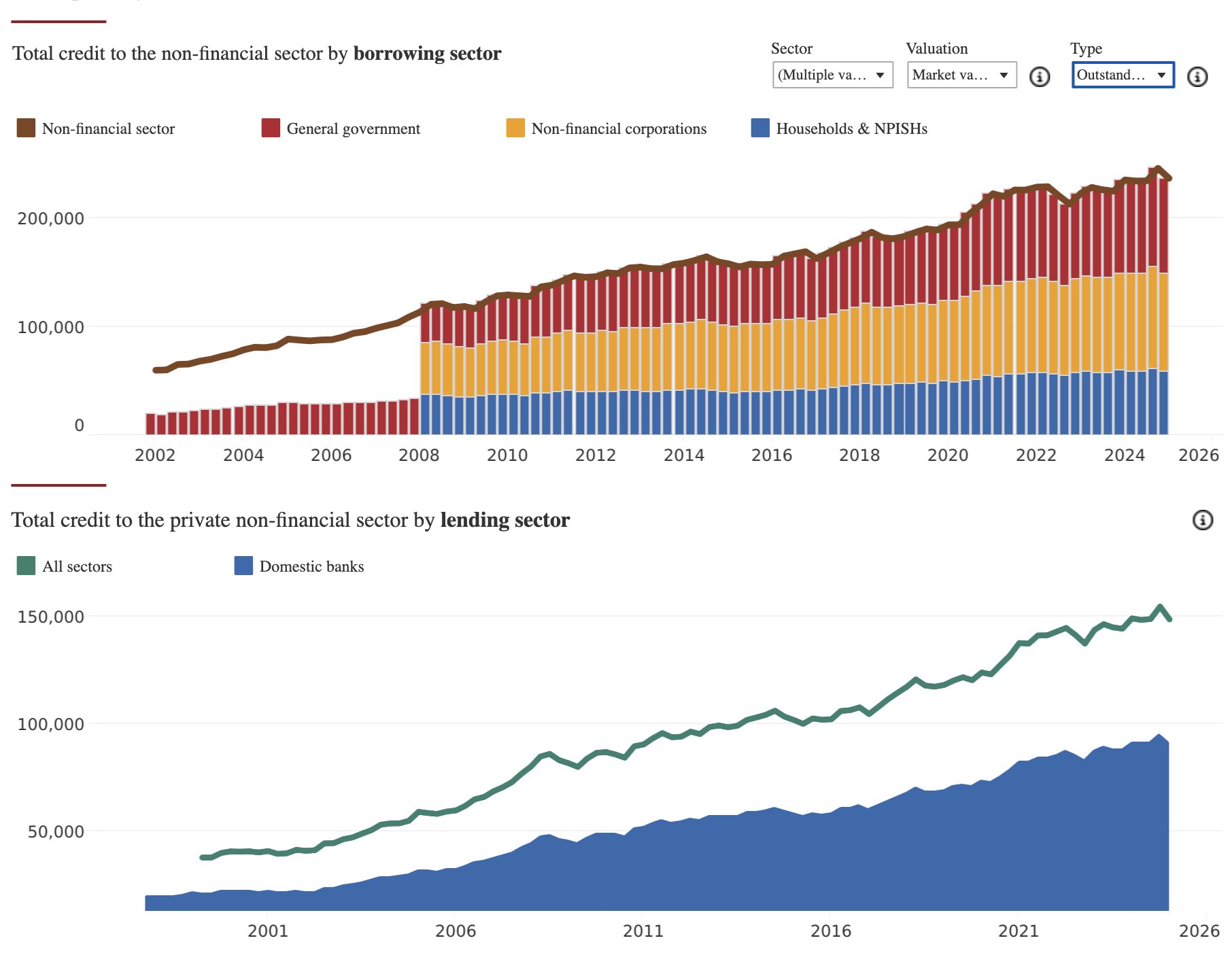
credit continues to expand in the non-financial sector as well
the attached graph also shows a turning point in 2008 - that's how the GFC was handled - by issuing more credit 😁
you can also see a steeper increase during COVID
USD cross-border bank credit grew by $800 billion in Q1 2025
expect further increases for Q2 2025, due to the weak US dollar
renminbi has become dominant in credit growth since 2022
a move from US dollar & Euro denominated credit to Chinese Yuan-denominated credit
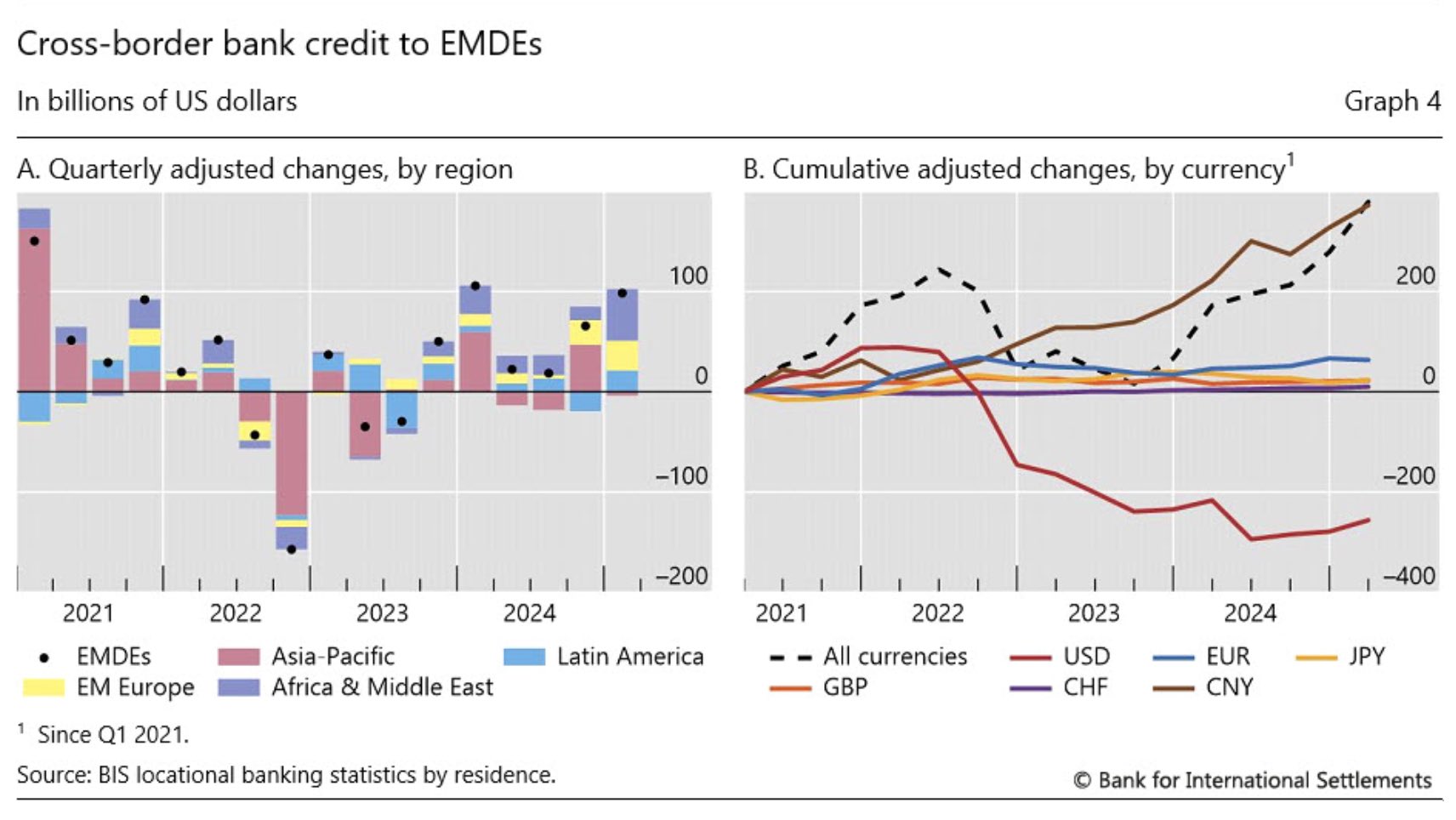
USD dominates in cross-border bank credit to non-bank financial institutions in 2025
in Russia, besides the Bank of Russia there's also the National Wealth Fund (NWF), which is operated by the Ministry of Finance
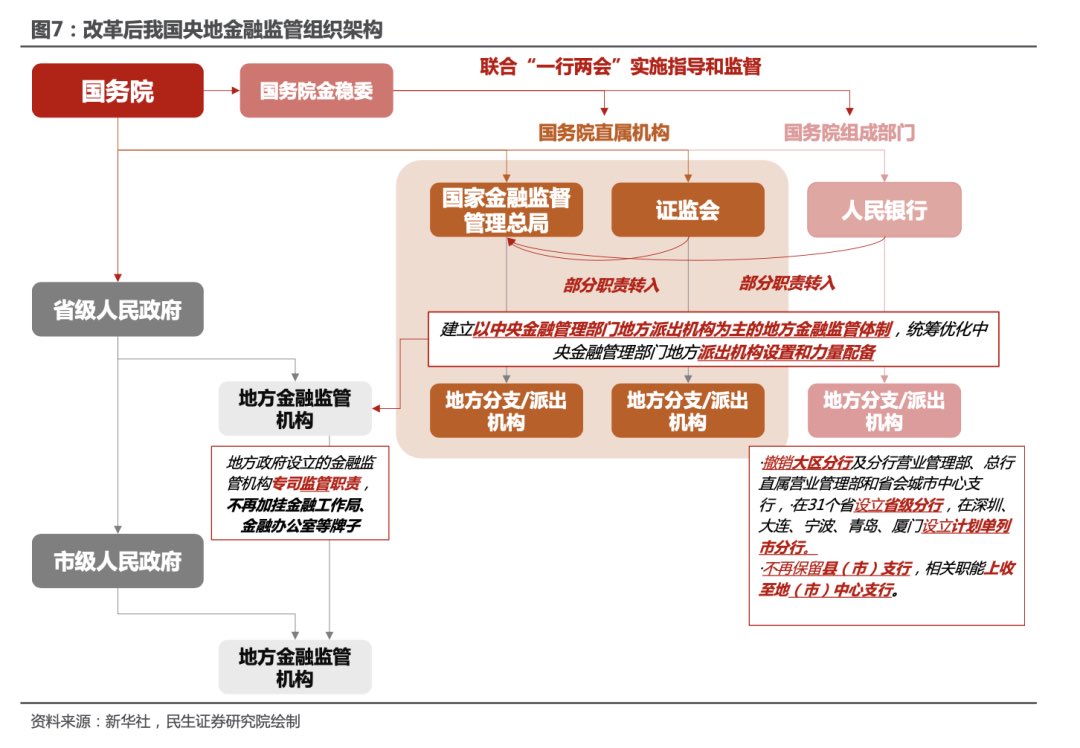
in China, there's policy banks, such as China Development Bank which are supported by PBoC's facilities
this collateral (US Treasury bonds) can then be used on wholesale debt markets to issue more credit
moreover, this collateral can be leveraged/rehypothecated, thus increasing liquidity
still, in the USA the Fed continues to dominate in importance
this collateral (US Treasury bonds) can then be used on wholesale debt markets to issue more credit
moreover, this collateral can be leveraged/rehypothecated, thus increasing liquidity
still, in the USA the Fed continues to dominate in importance
so it may not only be central bank setting the rates and affecting liquidity
for example, when US Treasury auctions bonds, they're both, temporarily reducing the effective amount of USD in circulation and providing more high-quanlity collateral
so it may not only be central bank setting the rates and affecting liquidity
for example, when US Treasury auctions bonds, they're both, temporarily reducing the effective amount of USD in circulation and providing more high-quanlity collateral
by "central bank" I'm frequently referring to the broader set of the legal framework behind the macro monetary policy
in most countries central banks plays a key role, but they frequently co-exist in a larger network of institutions
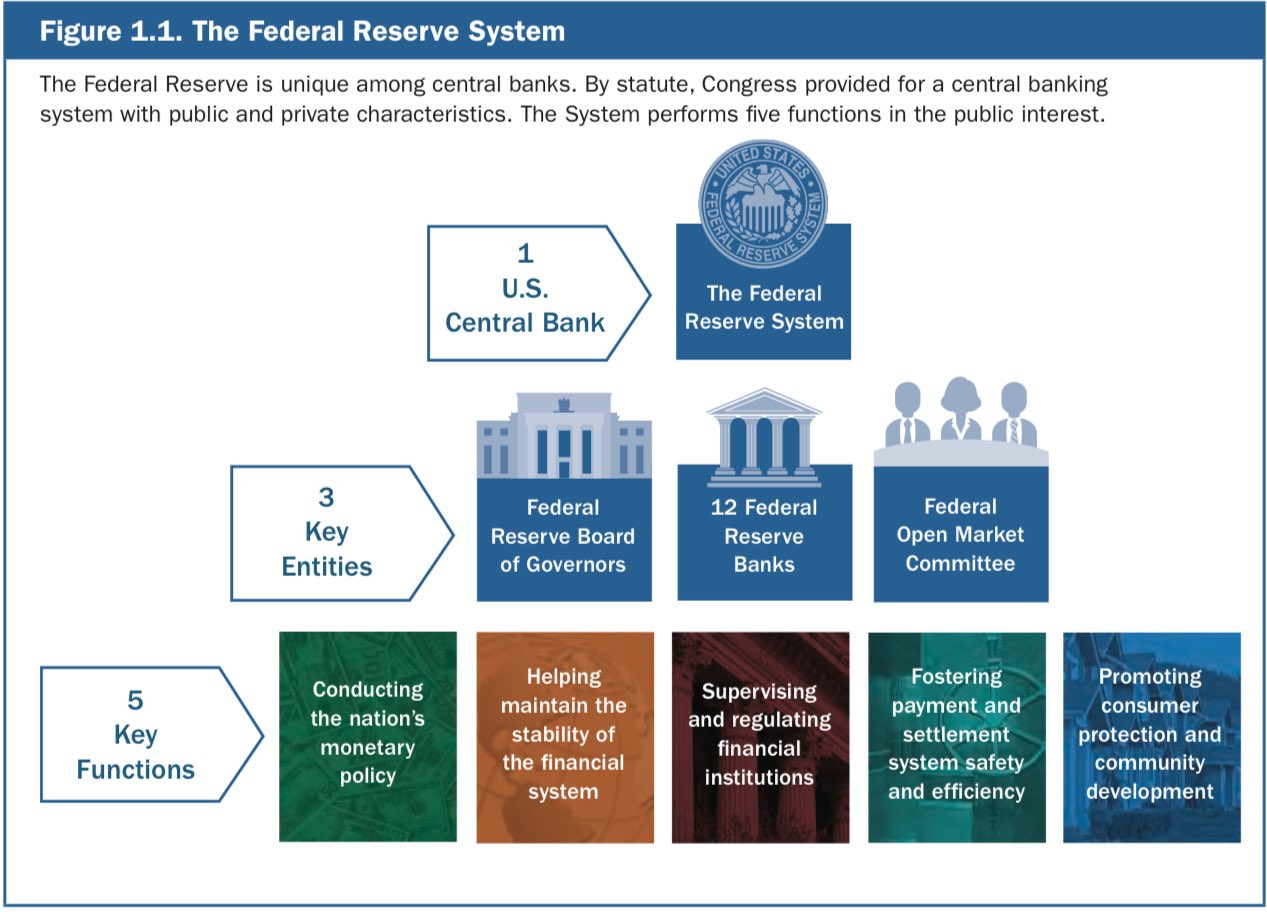
by "central bank" I'm frequently referring to the broader set of the legal framework behind the macro monetary policy
in most countries central banks plays a key role, but they frequently co-exist in a larger network of institutions
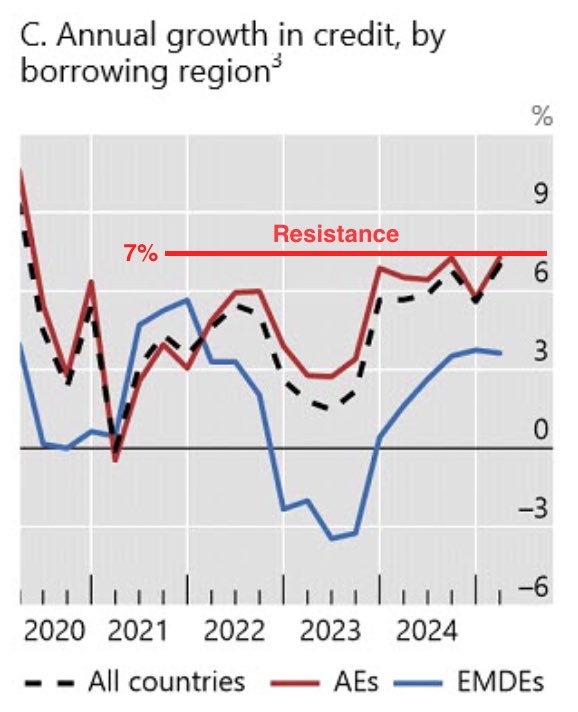
bank credit continues to grow, and it will continue to grow
it will almost certainly break the 7% annual growth resistance
central banks will expand balance sheets and lower interest rates to refinance the existing public and private debt
data source: BIS
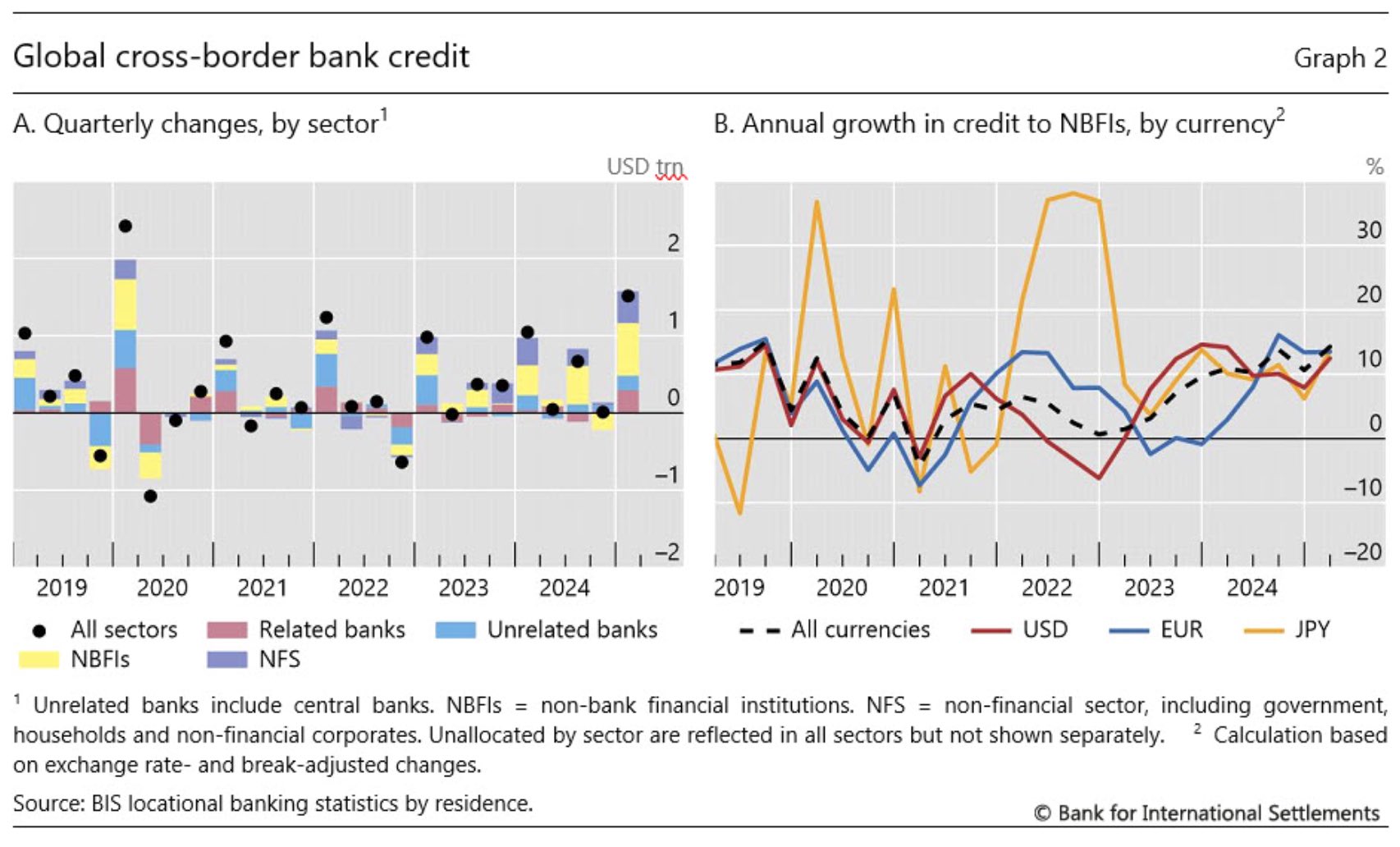
outstanding cross-border bank credit reached a record of $34.7 trillion
the latest increase was driven by increased lending to non-bank financial institutions (NBIFs), with most of the credit being issued in USD or EUR
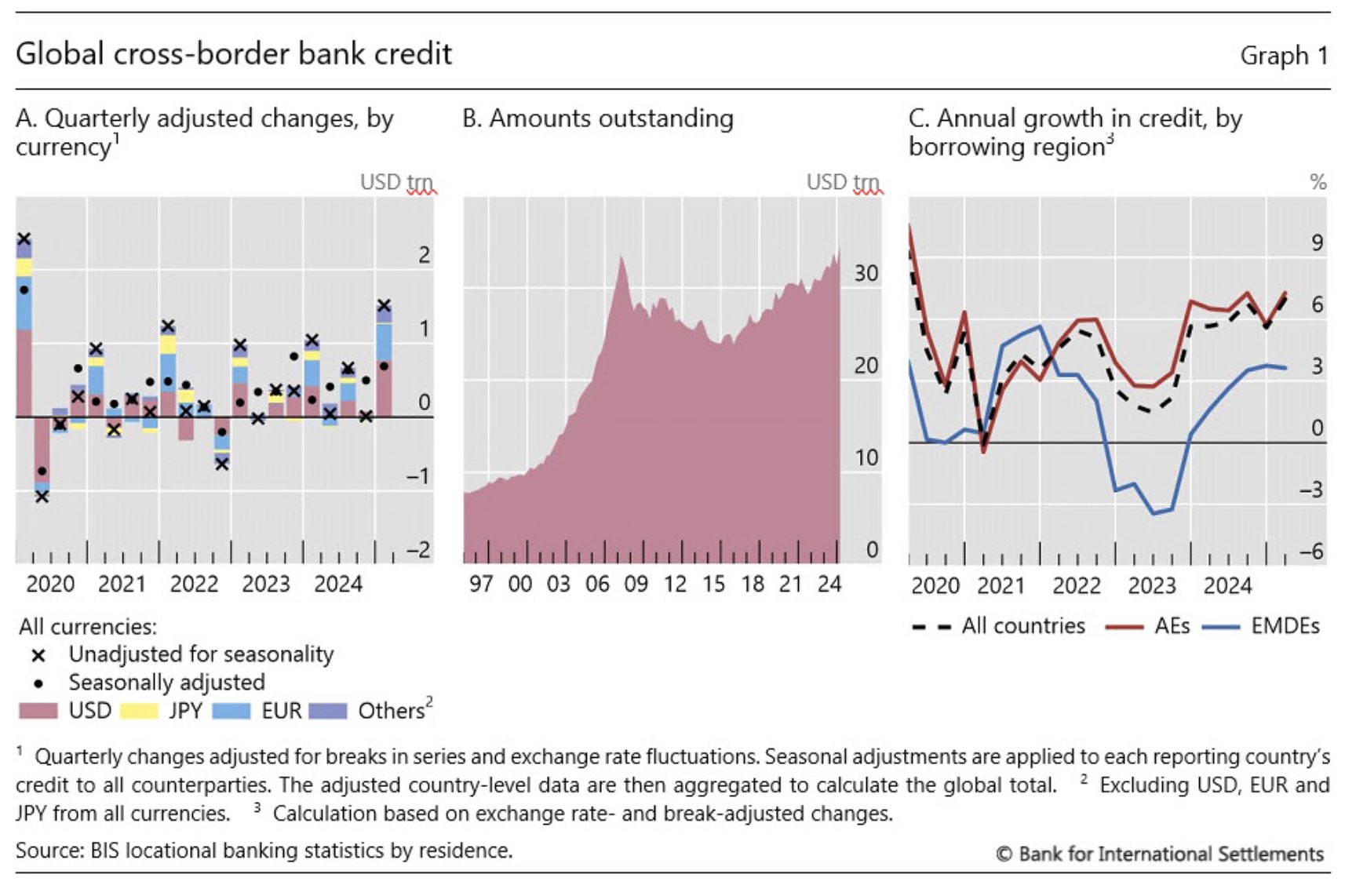
outstanding cross-border bank credit reached a record of $34.7 trillion
the latest increase was driven by increased lending to non-bank financial institutions (NBIFs), with most of the credit being issued in USD or EUR
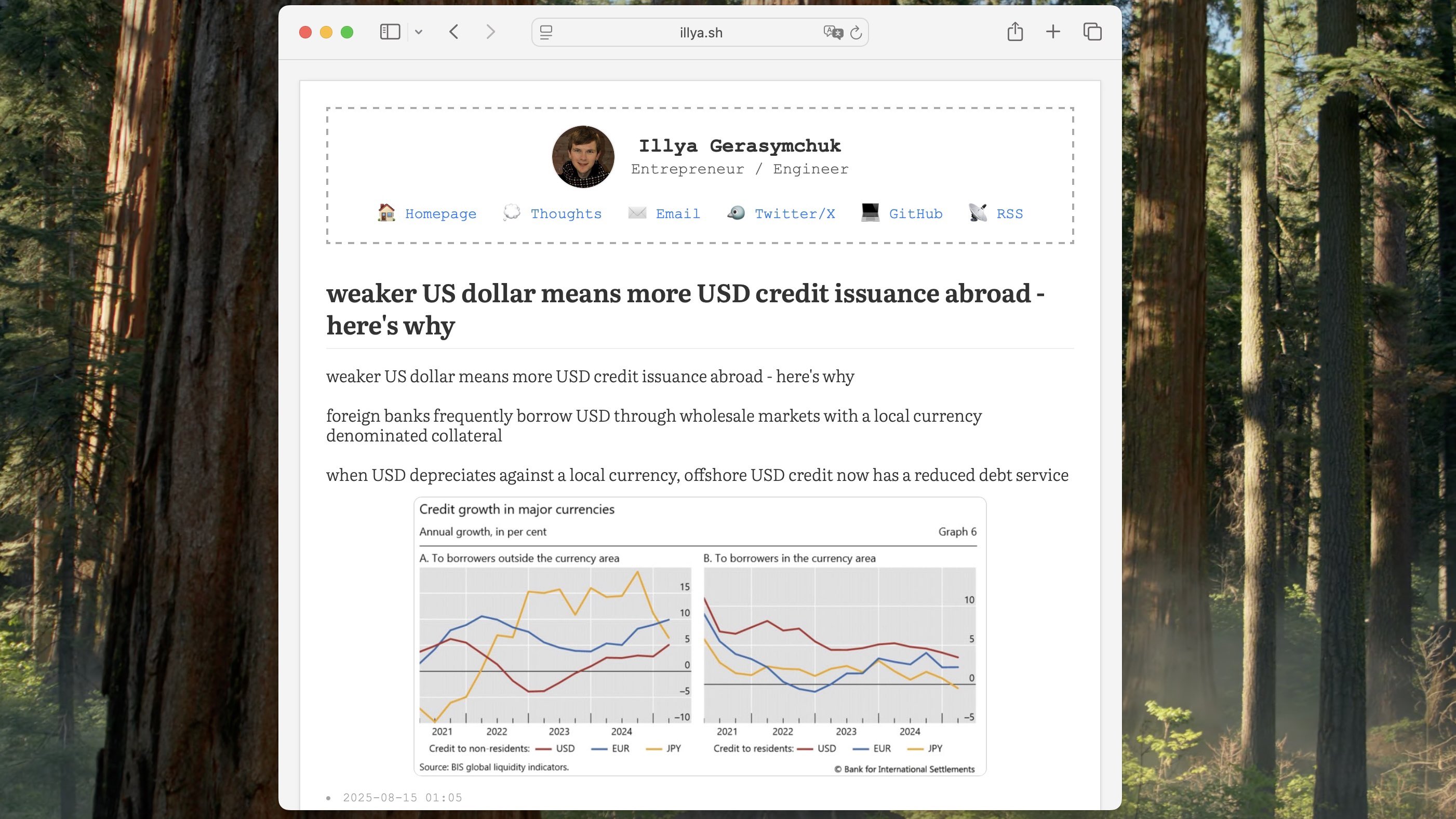
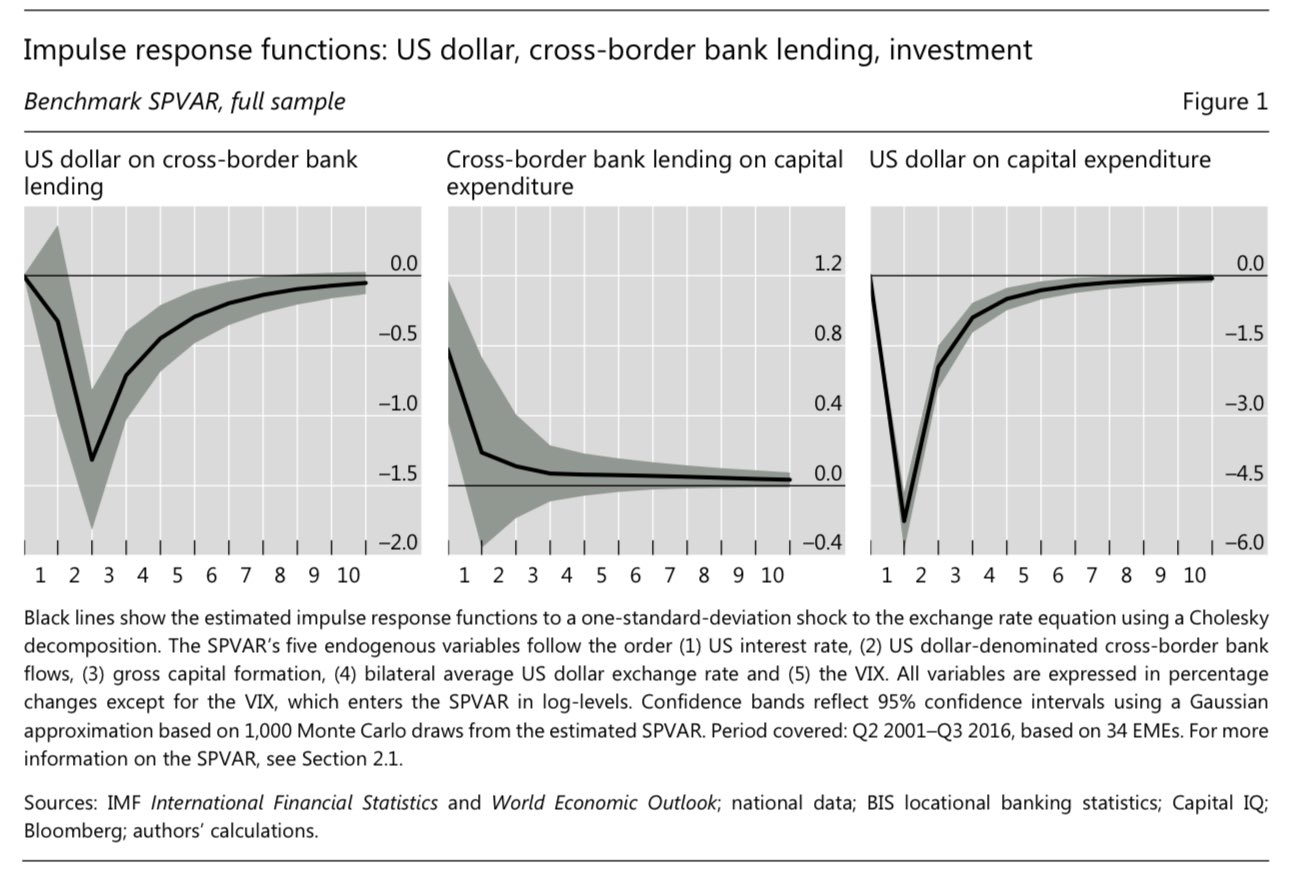
so a weaker US dollar tends to increase global USD liquidity
in the SVAR, one standard deviation of US dollar's appreciation leads to a fall in cross-border USD lending. it reaches its bottom after 6 months and then eventually recovers after 2.5 years if no new shocks arrive
bank's leverage ratios improve due to collateral appreciation, thus allowing them to borrow more USD
collateral here is the non-USD local currency, such as Yuan
bank's leverage ratios improve due to collateral appreciation, thus allowing them to borrow more USD
collateral here is the non-USD local currency, such as Yuan
weaker US dollar means more USD credit issuance abroad - here's why
foreign banks frequently borrow USD through wholesale markets with a local currency denominated collateral
when USD depreciates against a local currency, offshore USD credit now has a reduced debt service
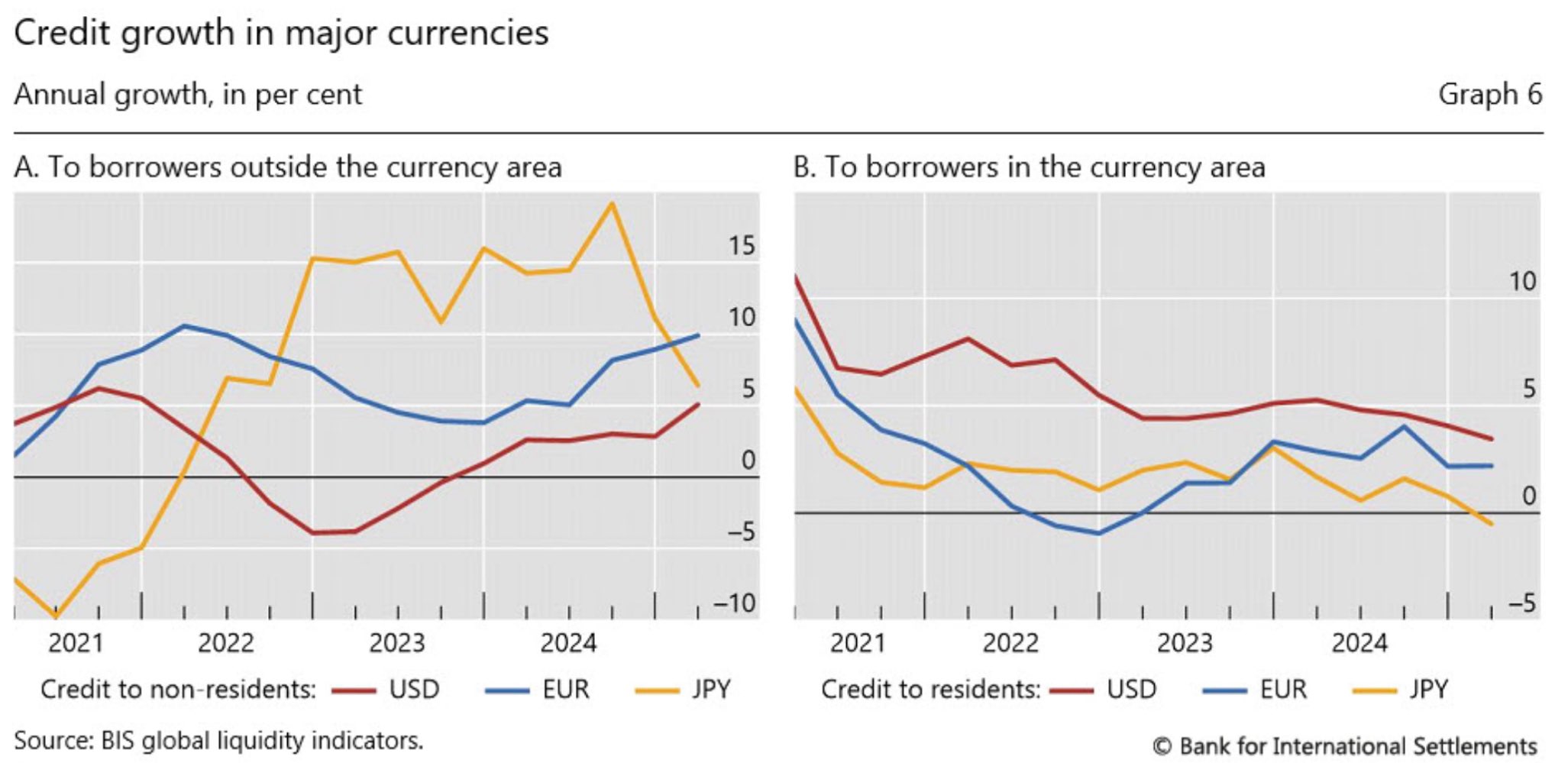
weaker US dollar means more USD credit issuance abroad - here's why
foreign banks frequently borrow USD through wholesale markets with a local currency denominated collateral
when USD depreciates against a local currency, offshore USD credit now has a reduced debt service
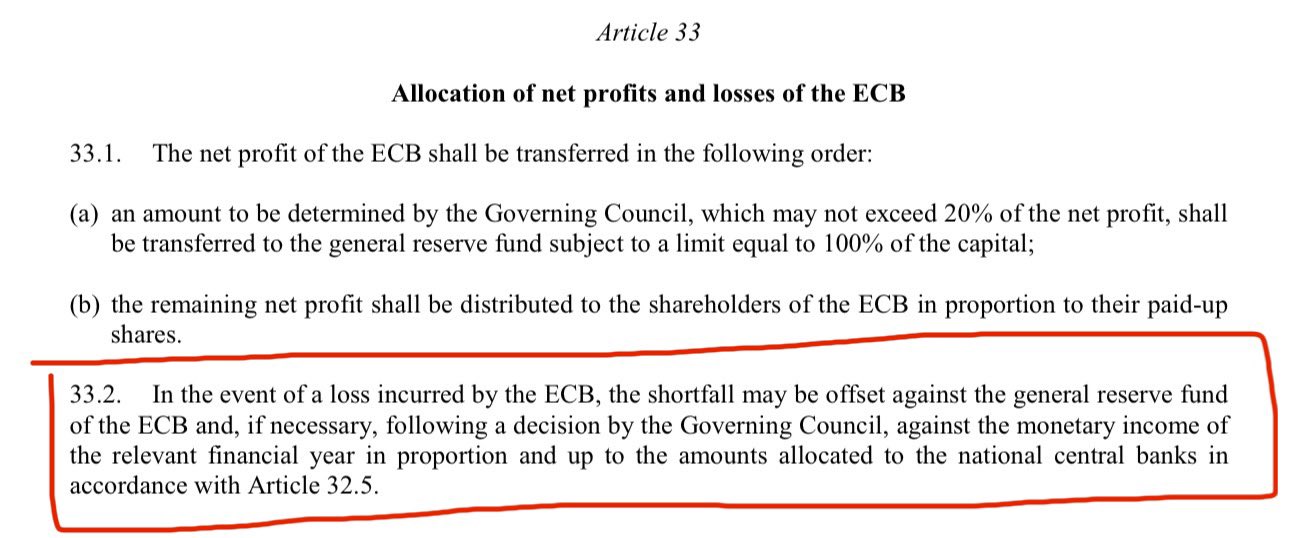
offsetting losses with future profits is explicitly allowed under Article 33 of Statute of ESCB & ECB
ESCB = ECB + EU National Central Banks (NCBs)
so this applies to both, the European Central Bank, and all EU National Central Banks
equity is the residual claim on assets after all liabilities are paid
equity = assets - liabilities
so the ECB just covers the loss with their equity. this equity reduction is carried forward to be offset by future profits
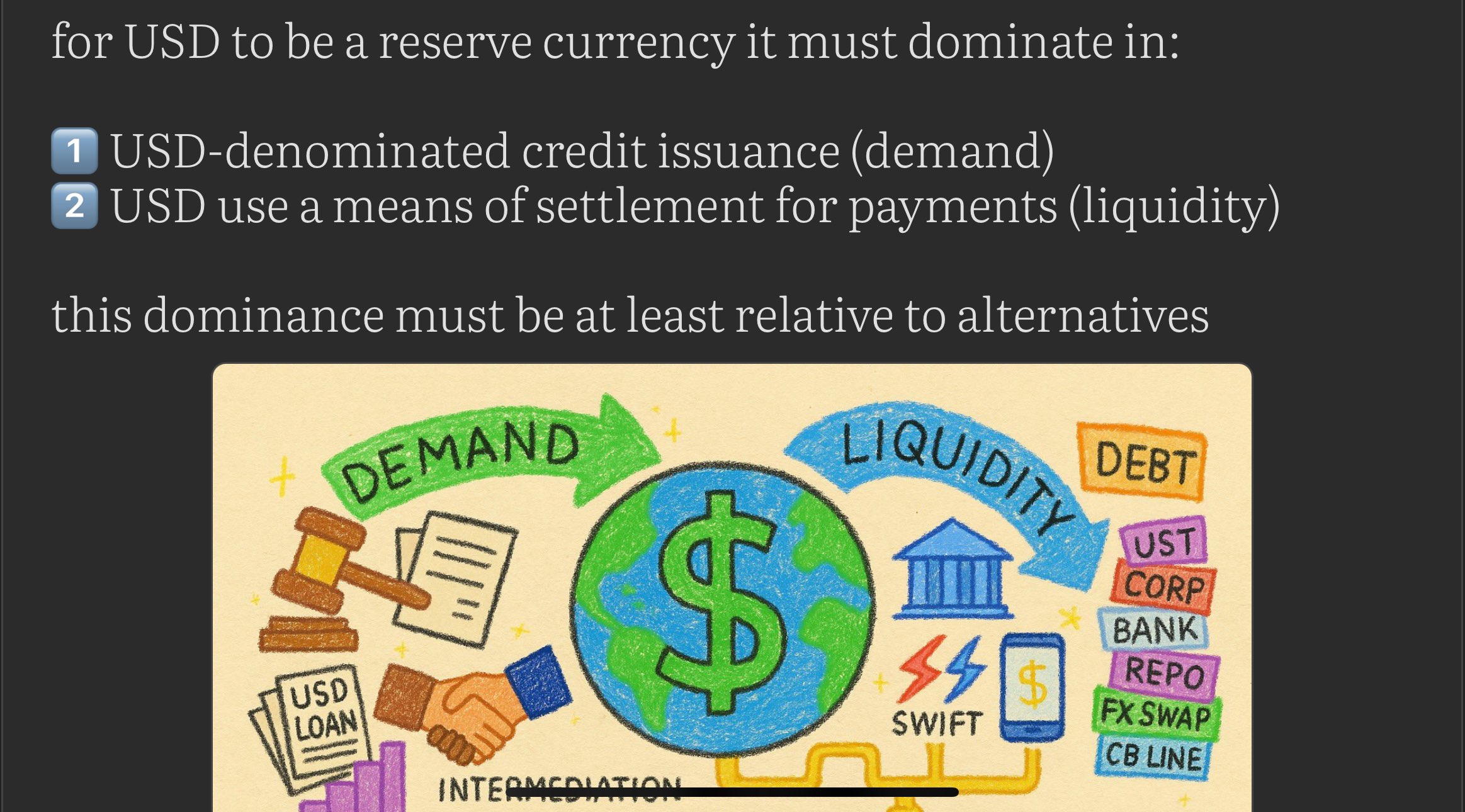
i wrote a thread about what it means for the US dollar to be the reserve currency from the perspective of demand and liquidity
you can read it here:
https://illya.sh/threads/@1754940239-1.html
this is nothing unusual though - many governments do this, and it's mostly towards stabilizing the exchange rate with USD
to a large extent this is a result US dollar's reserve currency status and its dominance in use for all sorts of financial transactions
equity is the residual claim on assets after all liabilities are paid
equity = assets - liabilities
so the ECB just covers the loss with their equity. this equity reduction is carried forward to be offset by future profits
ECB says that the loss will remain on the balance sheet and will be offset by future profits
the loss happened because ECB spent more than earned. they did so by using cash, selling assets or increasing liabilities
the net effect is the same: reduction in equity
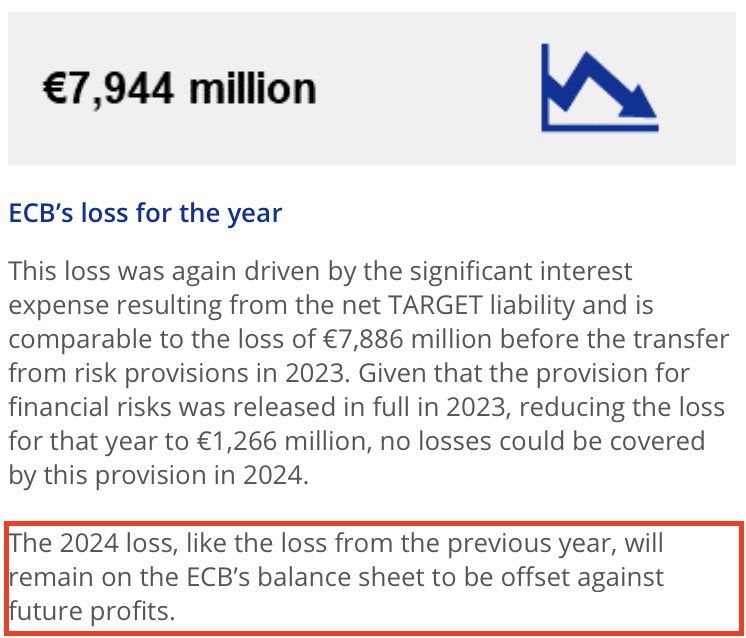
ECB says that the loss will remain on the balance sheet and will be offset by future profits
the loss happened because ECB spent more than earned. they did so by using cash, selling assets or increasing liabilities
the net effect is the same: reduction in equity
🇪🇺 ECB's "business model" is as follows:
➕ income: ECB creates money and invests it into financial assets (e.g.: FX, bonds, funds)
➖expenses, such as operational expanses (e.g. staff), facility and open market operation expenses (e.g. TARGET)
profit/loss = income - expenses
🇪🇺 ECB's "business model" is as follows:
➕ income: ECB creates money and invests it into financial assets (e.g.: FX, bonds, funds)
➖expenses, such as operational expanses (e.g. staff), facility and open market operation expenses (e.g. TARGET)
profit/loss = income - expenses
ECB recorded an €8 billion loss in 2024 - what happens in that case?
that's a balance sheet question. to understand what happens we need to look into the operational or "business" model of the European Central Bank
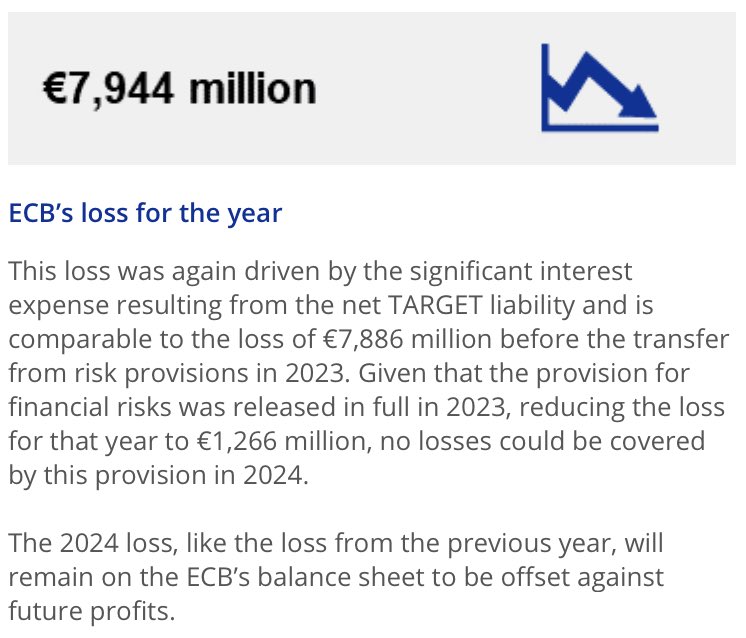
ECB recorded an €8 billion loss in 2024 - what happens in that case?
that's a balance sheet question. to understand what happens we need to look into the operational or "business" model of the European Central Bank
this is nothing unusual though - many governments do this, and it's mostly towards stabilizing the exchange rate with USD
to a large extent this is a result US dollar's reserve currency status and its dominance in use for all sorts of financial transactions
🇯🇵 Yen's exchange rate stabilization is a responsibility of the Minister of Finance (MoF)
MoF is also the holder of Japan's international reserves - not the Bank of Japan
so in Japan the government has significant responsibility for USD/JPY
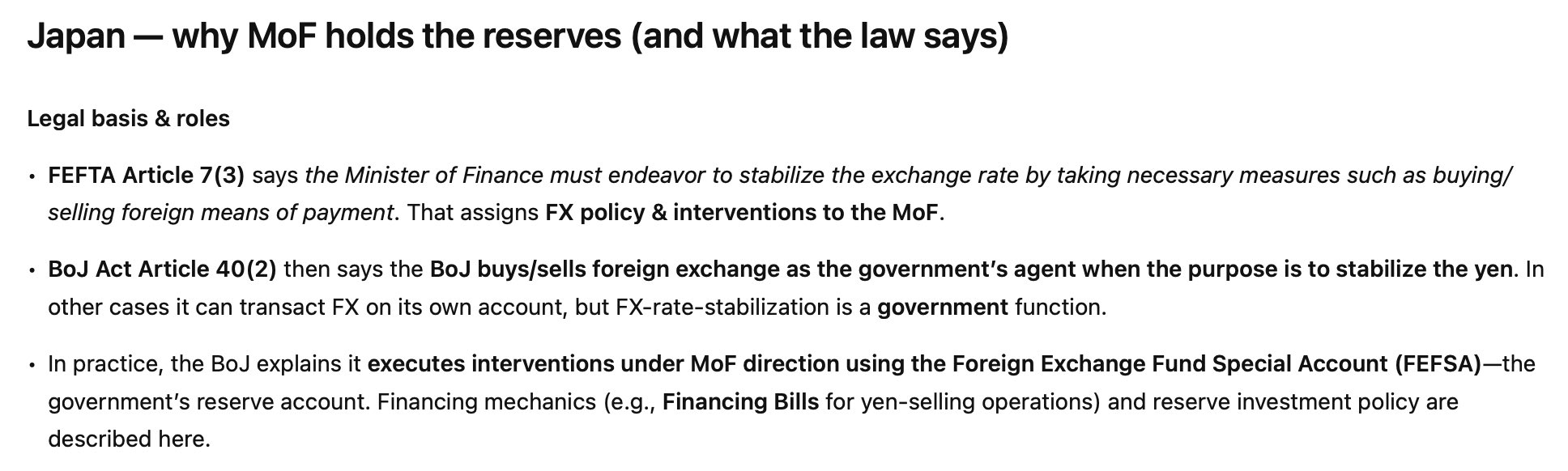
🇯🇵 Yen's exchange rate stabilization is a responsibility of the Minister of Finance (MoF)
MoF is also the holder of Japan's international reserves - not the Bank of Japan
so in Japan the government has significant responsibility for USD/JPY
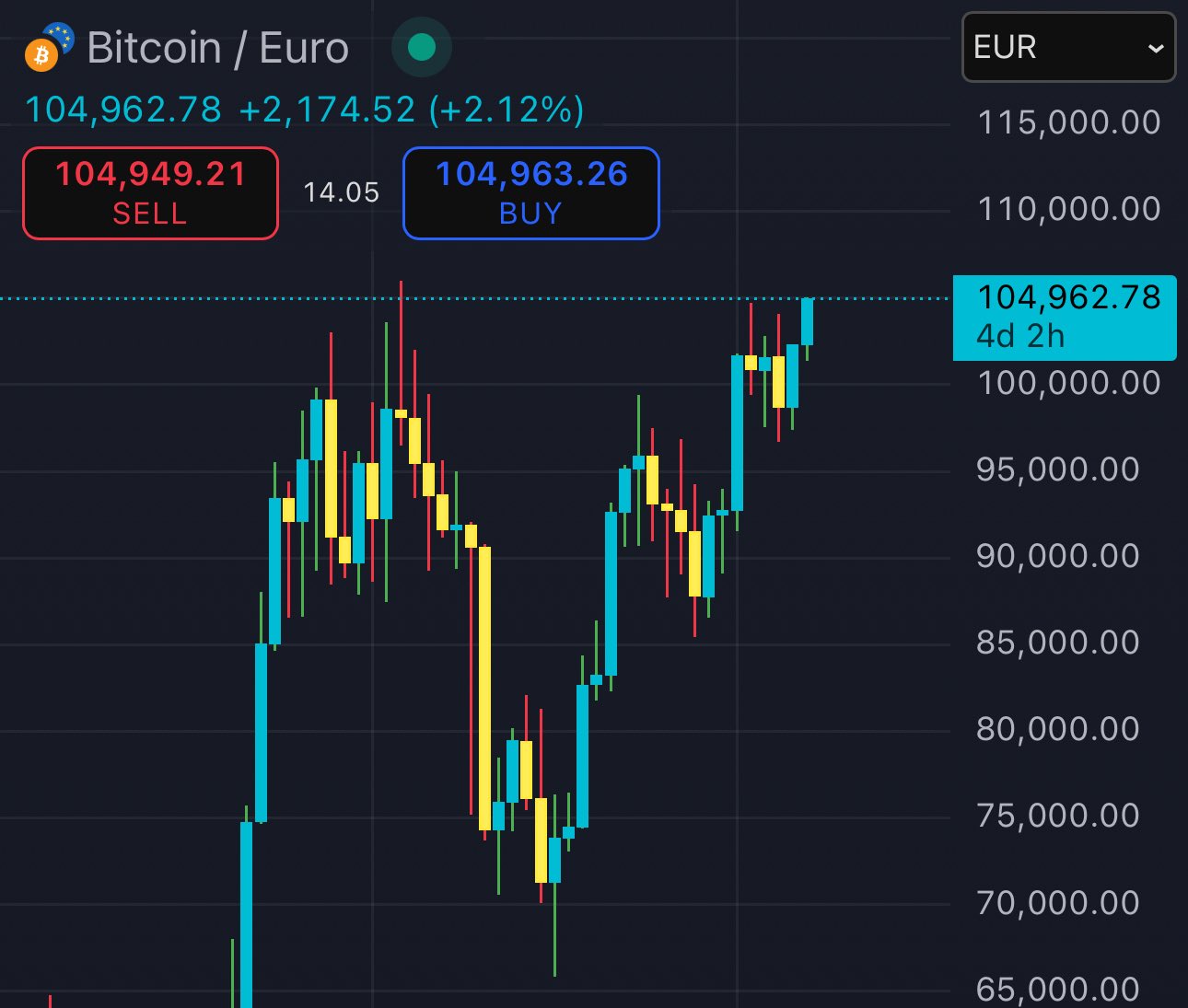
and there it is - a new BTC all time high in Euro 🇪🇺🥳
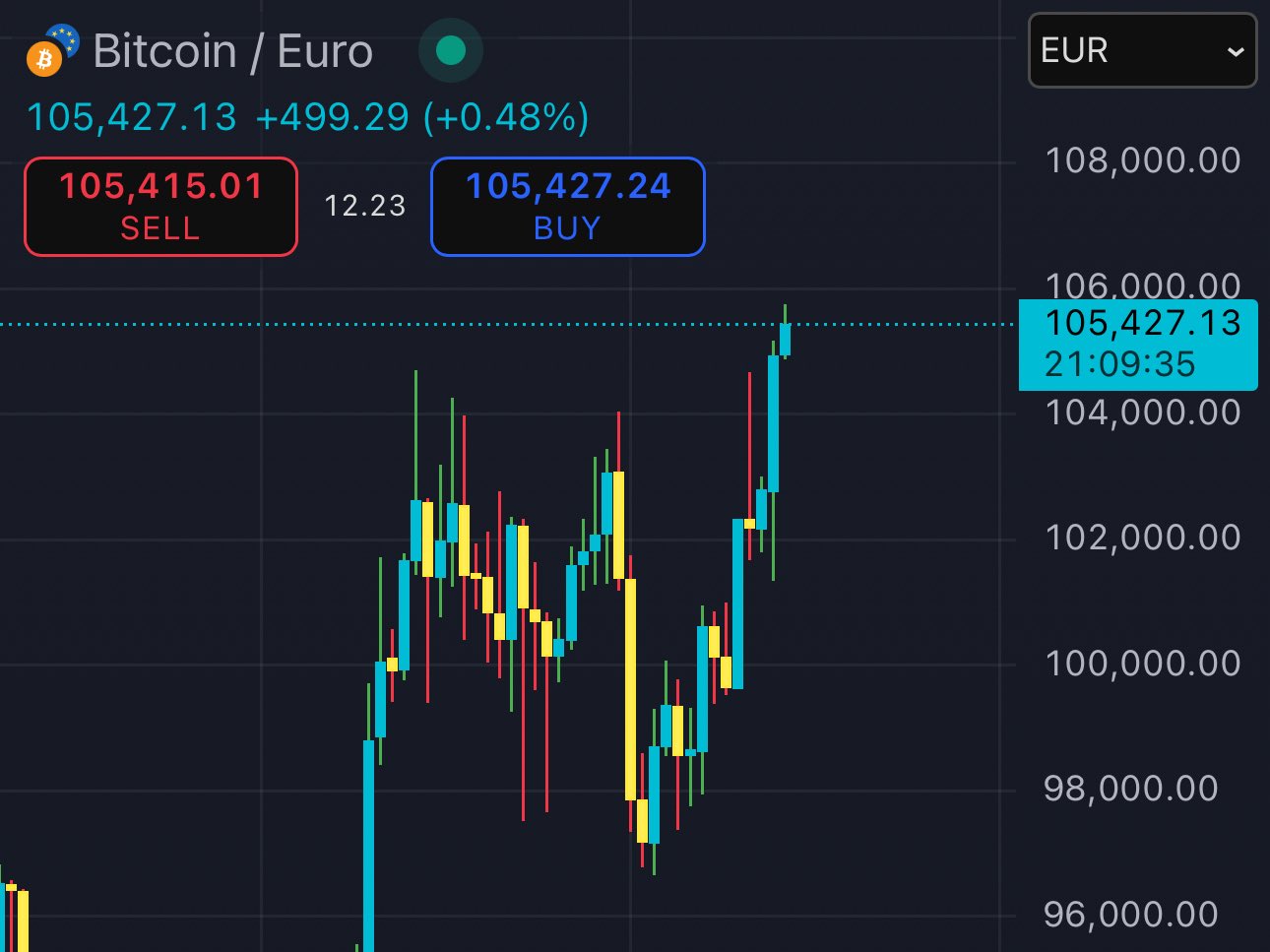
and soon the Eurozone will join the new BTC all time high party 🇪🇺🥳
Bitcoin still hasn't seen a new high in EUR since January 2025
this happened to due the relative appreciation apprtetiation of Euro against US dollar