Global liquidity indicators & flows
Short-form analysis of TGA, RRP, money aggregates, credit growth and cross-border USD flows that drive risk assets.

central bank liquidity injection includes direct & indirect QE, interest rates & policies
end result is the same - more liquidity/cash in the system
this means inflation & gold up
at least short-term: equities up, crypto up
using FED's SRF for liquidity means cash/liqudity is scarce
there is a lot of short-term debt to be refinanced or default
default is not an option. thus, expect liquidity injections from the central bank
using FED's SRF for liquidity means cash/liqudity is scarce
there is a lot of short-term debt to be refinanced or default
default is not an option. thus, expect liquidity injections from the central bank
repo funding rates are predictors within this global, multi-factor liquidity context
you can use them to understand liquidity flows in the near future
this is also because repo markets are short-term debt instruments - so the signal is also more short-term
repo funding rates are predictors within this global, multi-factor liquidity context
you can use them to understand liquidity flows in the near future
this is also because repo markets are short-term debt instruments - so the signal is also more short-term
regarding liquidity flows - repo markets are just one of the sources
so it's more useful when you combine it with others, such as the central bank policies, how much short-term debt is maturing, and the overall leverage level
regarding liquidity flows - repo markets are just one of the sources
so it's more useful when you combine it with others, such as the central bank policies, how much short-term debt is maturing, and the overall leverage level
if regulatory ratios are breached, they must be restored
there is only so much a dealer/market maker can do
so you can deduce their next action with a high degree of certainty
then, deduce its implication on the liquidity flow & into which sector the funds are flowing
if regulatory ratios are breached, they must be restored
there is only so much a dealer/market maker can do
so you can deduce their next action with a high degree of certainty
then, deduce its implication on the liquidity flow & into which sector the funds are flowing
so the market operations of dealers/market-markers is quite predictable
you just have to look at their business & regulatory model - from there it's almost plain math under regulatory constraints
in a monthly maturity/tenor timescale - the repo funding rate has very direct effects
this makes sense - if your bond is maturing in ≈1 month, every day is significant
so you see more immediate effects from federal reserve's SRF operations / repo funding fee increases
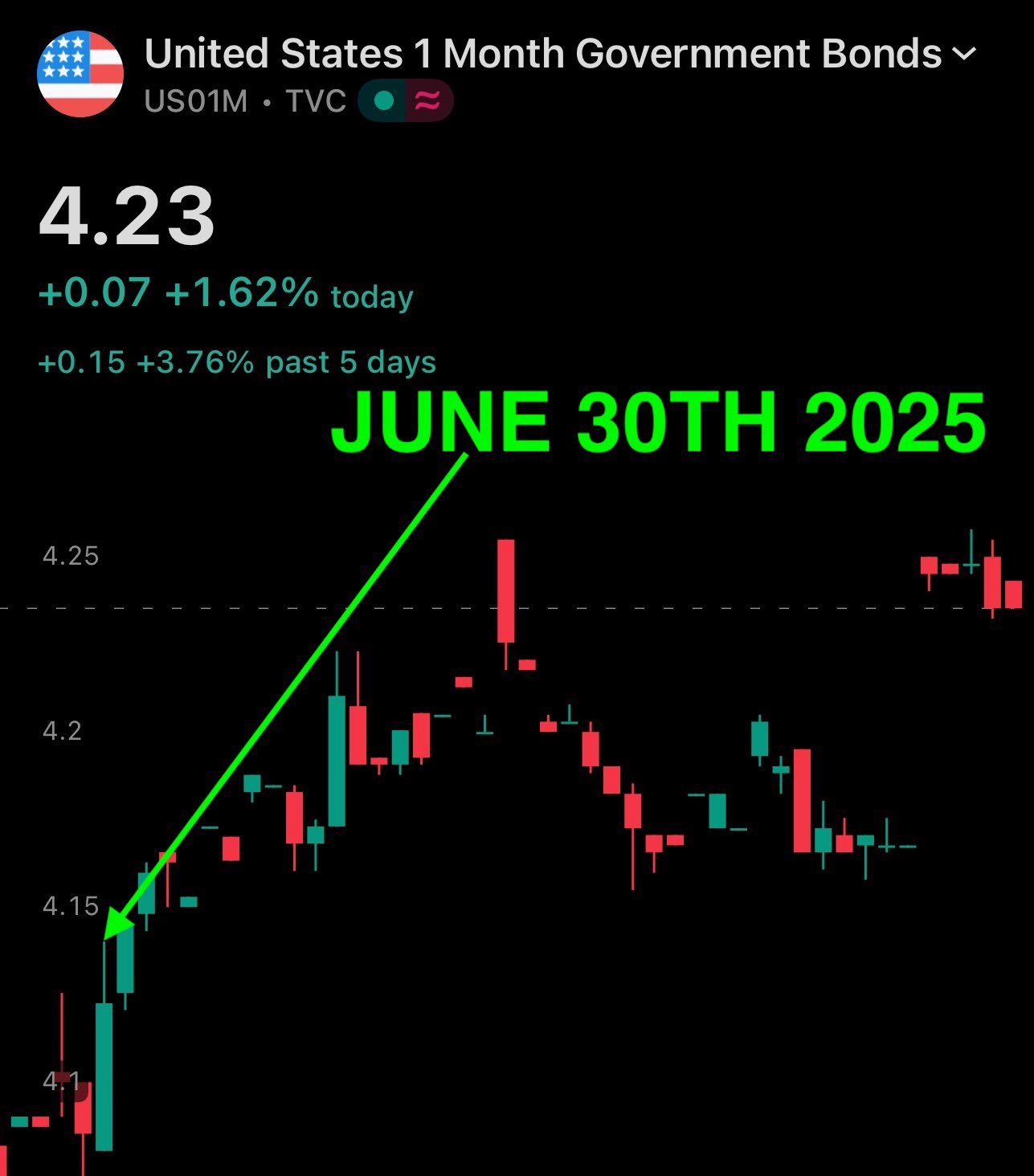
shorter-term US bonds yields react IMMEDIATELY to repo funding rate
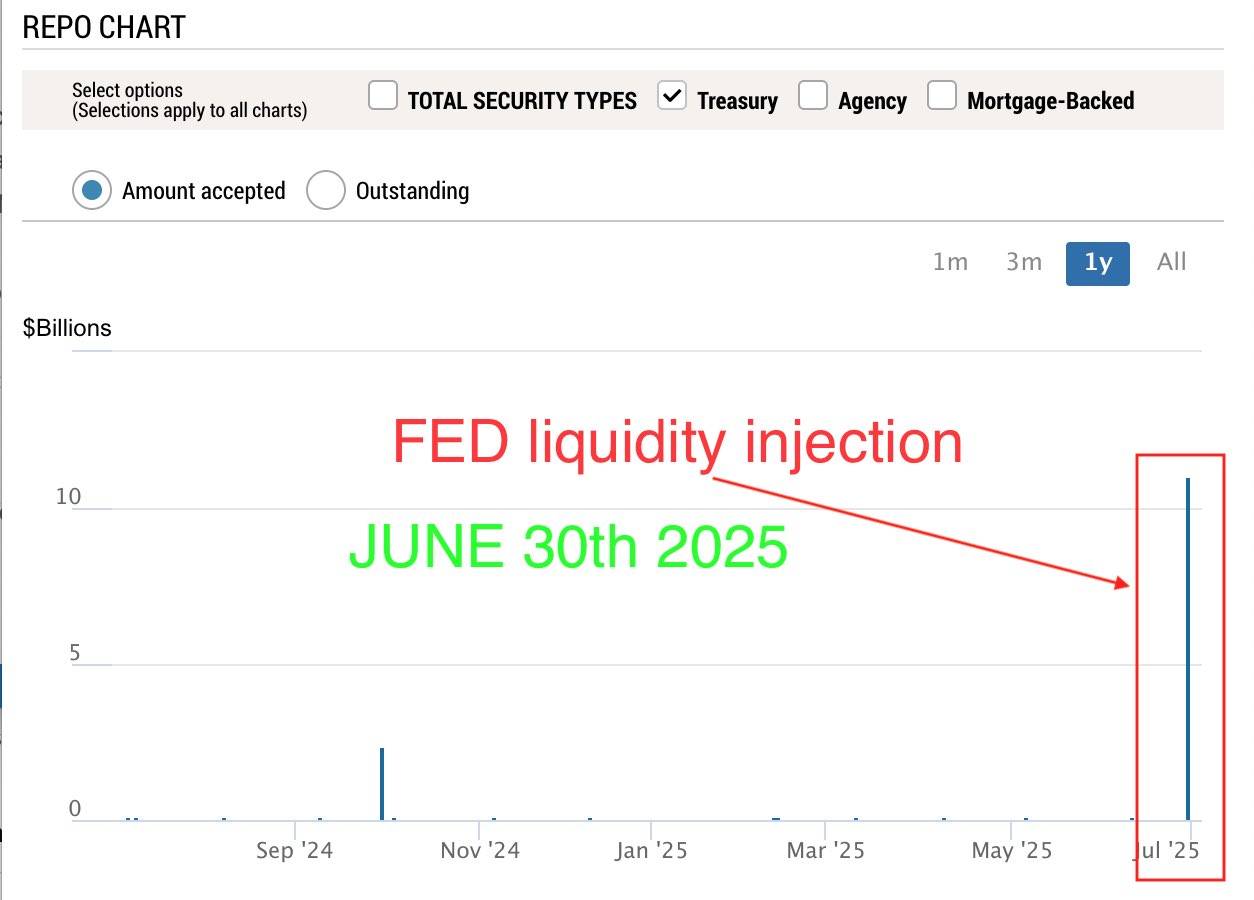
notice the huge green candle on June 30th - the same day of FED's SRF $11B volume
June 30th is when the FED SRF volume recorded ≈$11B
this is a 1 month treasury bill ⬇️
in practice, FED's SRF is used when there is a scarcity of liquidity/cash
the market has US bonds & needs cash, so lenders increase rates
SRF sets a daily rate. if that rate is smaller than in the smaller repo market - the dealers instead borrow USD directly from the FED
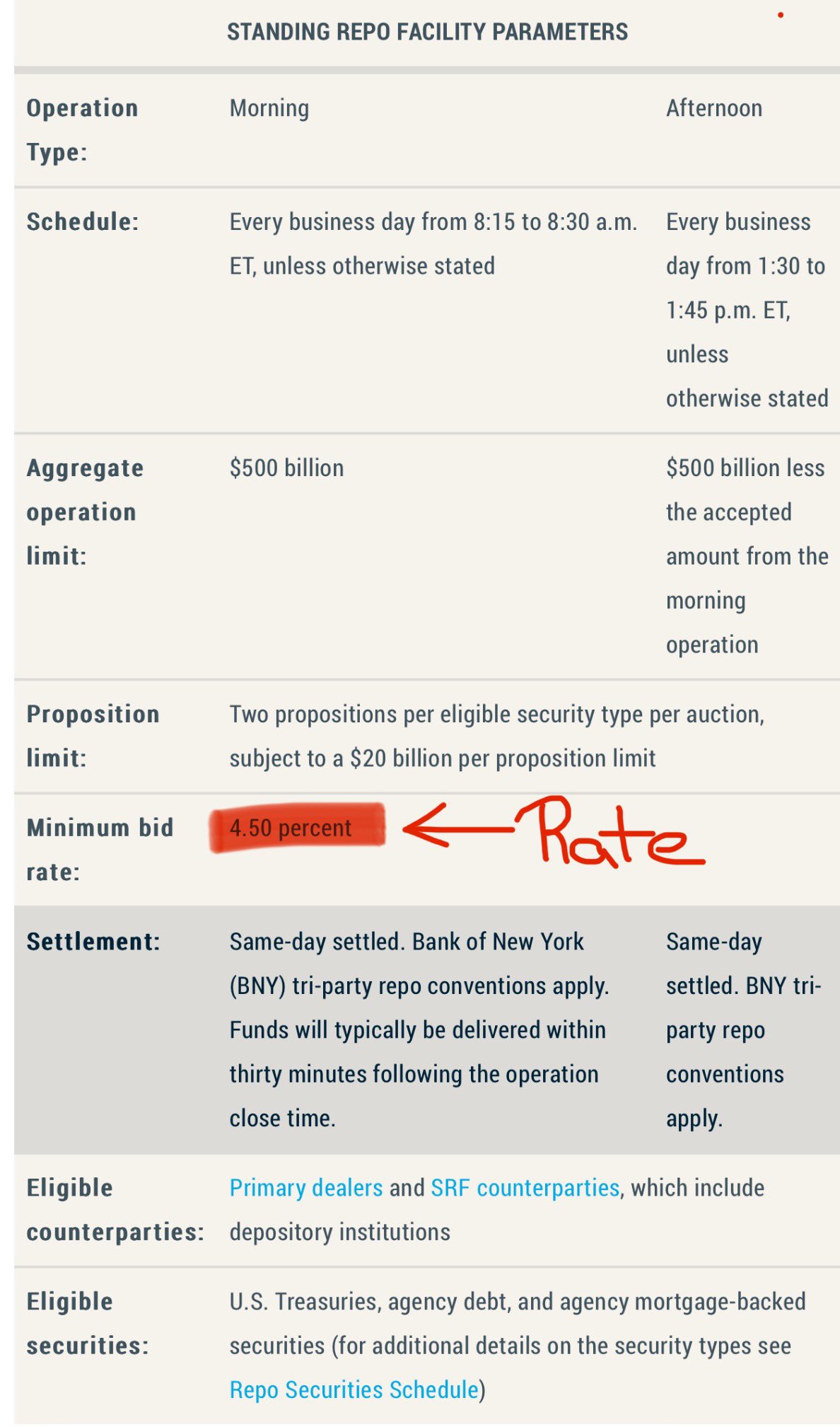
with SRF the FED sets an upper limit on repo market rates
most of the collateral is US Treasury bonds
this exerts downward pressure on bond yields - by preventing sell-offs
🚨FED just injected $11B of liquidity
👉 TL;DR: interest rate cuts & QE incoming
$11B is insignificant - but it's an early sign: there is a lack of liquidity/cash
if undressed, will lead to systemic defaults. existing debt needs to be refinanced
the fix/what's next? see TL;DR
ex: in the 1980's US fought high inflation by raising interest rates towards ≈20%
if the FED did that today - the global financial markets, alongside the US would be destroyed. there wouldn't be enough liquidity to refinance the debt
using historical behavior can be a great alpha - but you should probably focus on the patterns from this century
perpetually low ≈0% interest rates have been a norm only post ≈2009 (but the bubble started before)
so you want to look at the behavior in that environment
this new liquidity will reach financial markets first, before reaching the "real economy"
equity, cryptocurrencies all go up in prices. bubble further fueled. you know what (eventually) happens to all bubbles
Gold & Co. is a great hedge
once FED lowers interest rates, it's likely to put downward pressure on yields - assuming term premia doesn't increase by more
in the end, the yields will be higher than in the last 20 years, for the same FED funds rate
QE/liquidity injections will further devalue USD
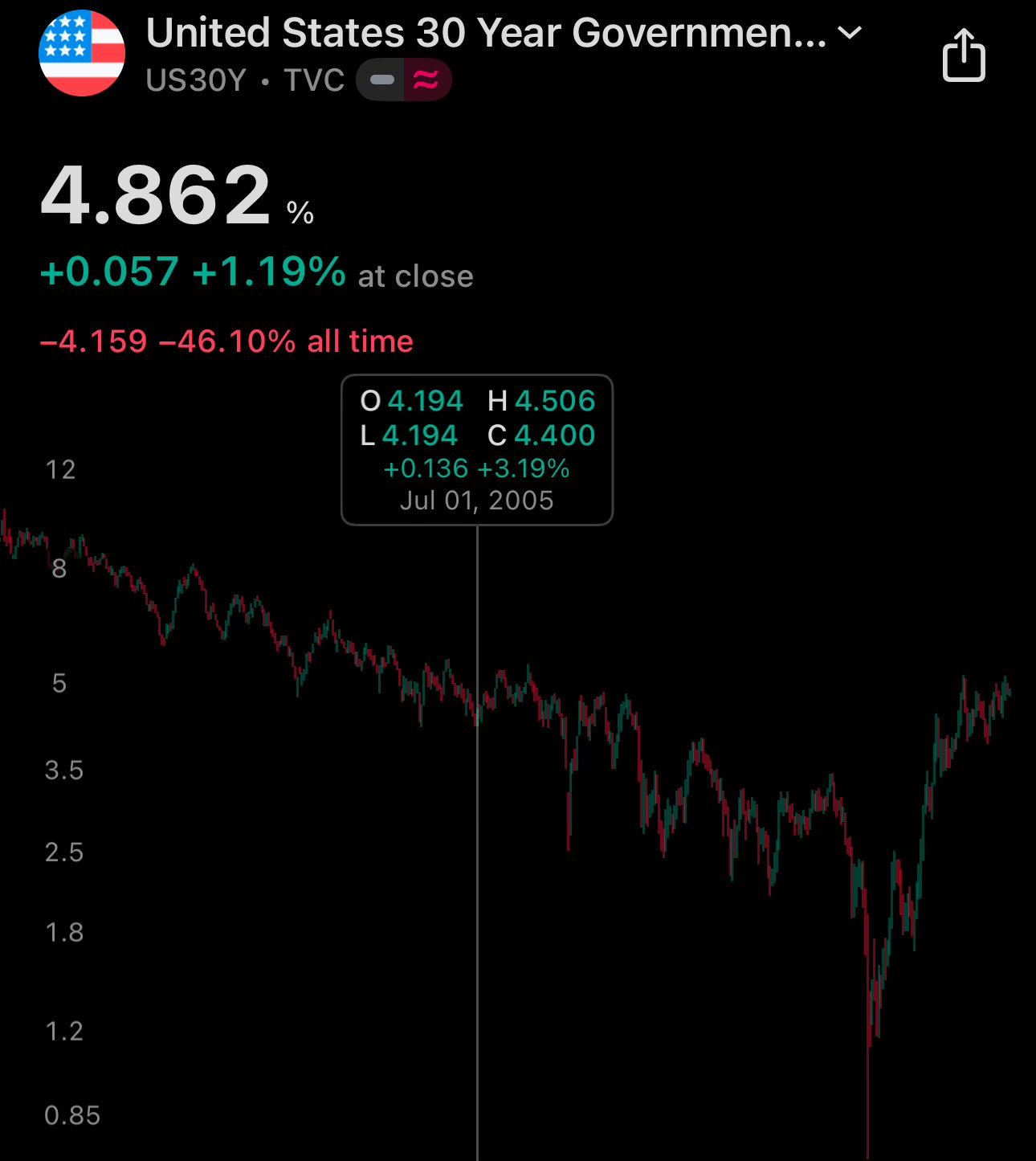
once FED lowers interest rates, it's likely to put downward pressure on yields - assuming term premia doesn't increase by more
in the end, the yields will be higher than in the last 20 years, for the same FED funds rate
QE/liquidity injections will further devalue USD
liquidity abundance leads to the narrowing of spread between riskier and safe assets (mostly government bonds)
safe assets fall in price, with their yields increasing towards the riskier ones
US bond yields are high under tighter monetary conditions - liquidity is pro cyclical
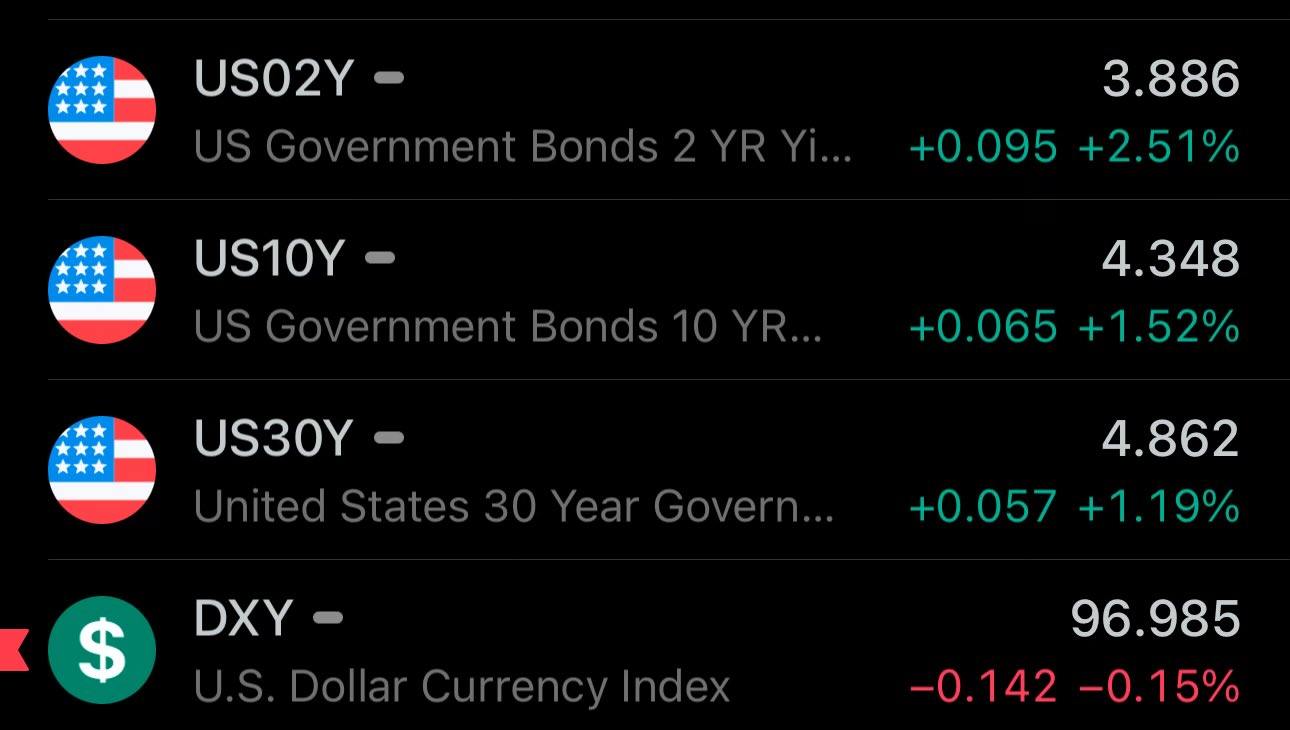
liquidity abundance leads to the narrowing of spread between riskier and safe assets (mostly government bonds)
safe assets fall in price, with their yields increasing towards the riskier ones
US bond yields are high under tighter monetary conditions - liquidity is pro cyclical
the higher use of lower quality collateral has pro-cyclical effects
if the price of collateral falls during economic downturn - you'll get a lot of margin calls & insolvencies. this will further put pressure on short-term funding mechanisms, which already lack HQ collateral
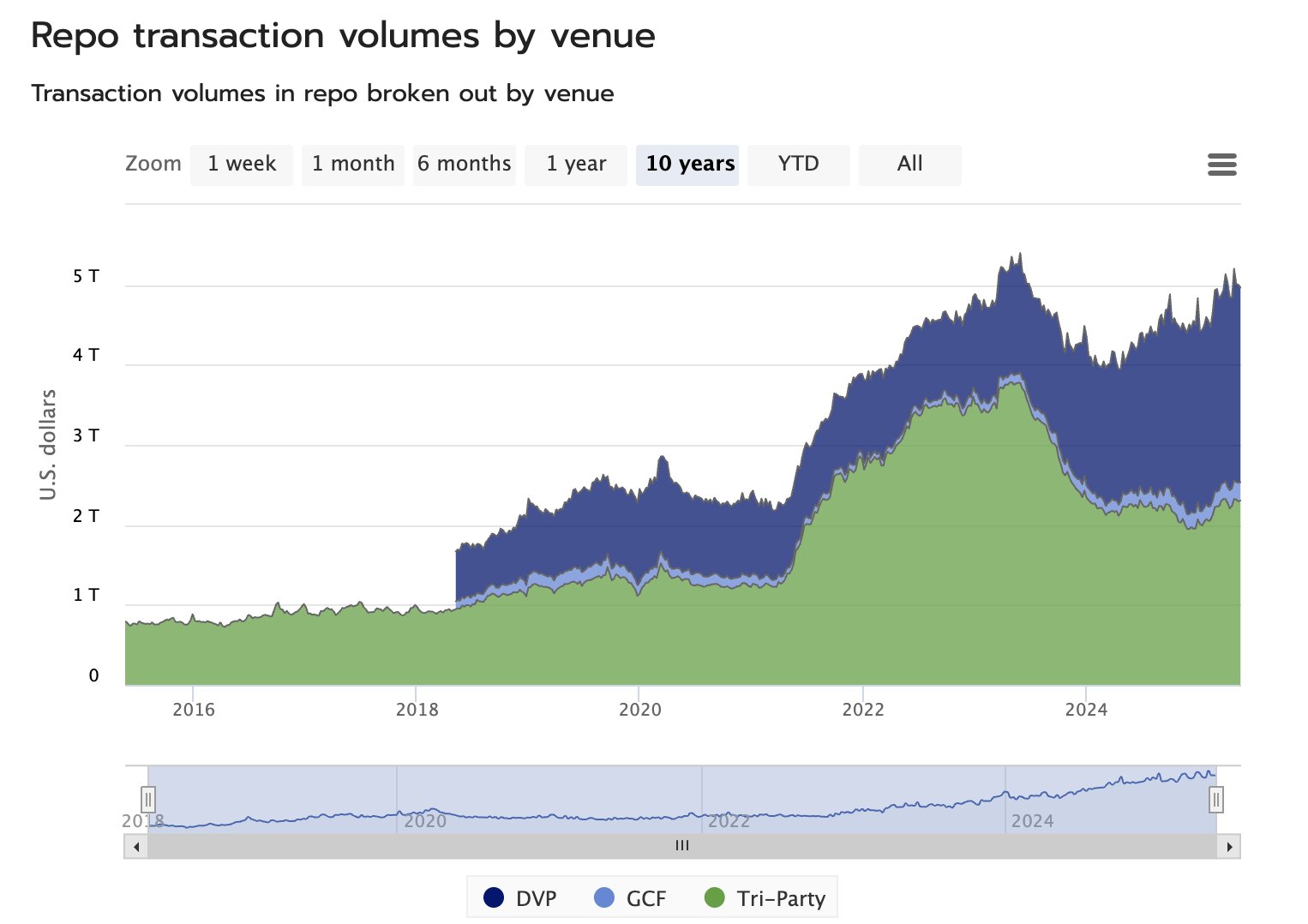
US Treasuries are by far the most popular collateral type in secured short-term funding markets (e.g. the repo market)
outstanding volume of these markets is larger than M2
notice the increase in usage of less safe assets as a collateral
not enough UST for its demand ⬇️
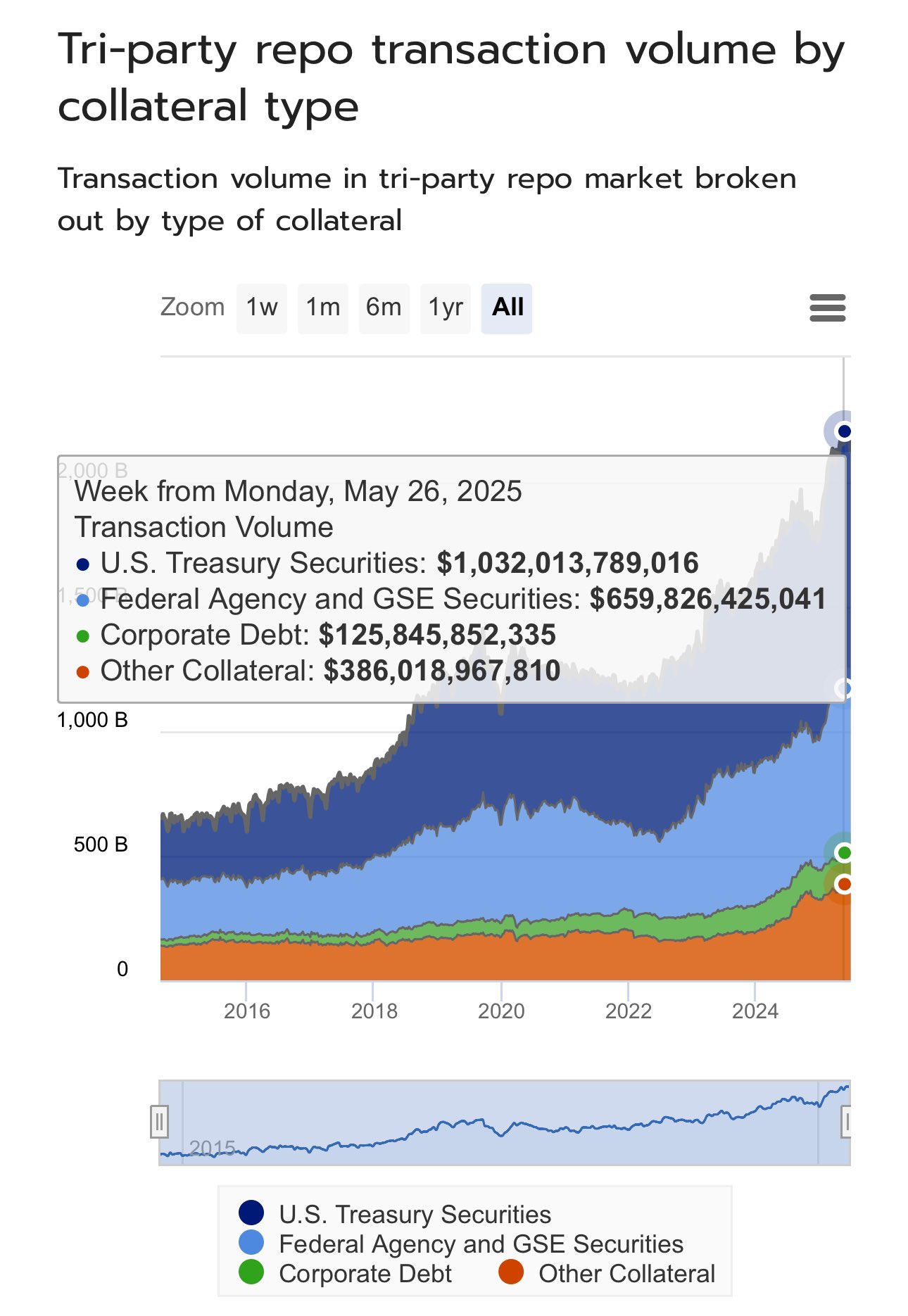
repo markets are HUGE - about the size of USD M2!
they underpin the global financial system
however, there's not many DeFi protocols addressing this part of the market
i may pick it up in the near future
if you're working on something similar - hit me up!
in the end, you get your UST bond back
and it makes sense for you to repurchase the bond (collateral) even if the price falls
as long as the price fall is < ≈haircut (2% in our case)
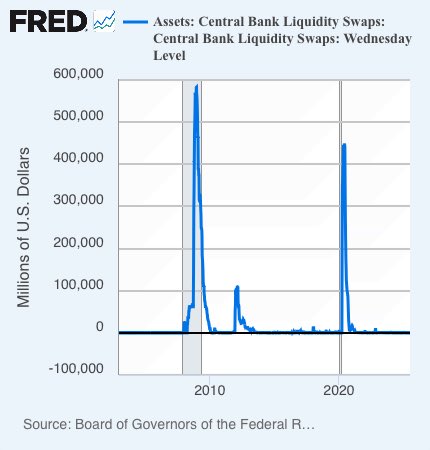
check the correlation between FED swap line volumes and Bitcoin price
large spikes in swap volume trigger an uptrend in Bitcoin
understanding these global liquidity flows helps to visualize them as a part of the larger system and understand where it's likely to move next
new currency in circulation is just one of the side-effects
and that transition is neither direct, nor instant
before these funds effectively become new currency, they flow into financial markets - that's why you see the stock market going up first
the same for risky assets
new currency in circulation is just one of the side-effects
and that transition is neither direct, nor instant
before these funds effectively become new currency, they flow into financial markets - that's why you see the stock market going up first
the same for risky assets
FED swap line operations reach ≈$600 bn
while the swaps are closed/repaid in less than a year, ≈80% of the repayment comes from newly issued wholesale debt
thus, ≈80% of the swap volume eventually becomes new currency in circulation
and then you wonder about inflation 😄
FED swap line operations reach ≈$600 bn
while the swaps are closed/repaid in less than a year, ≈80% of the repayment comes from newly issued wholesale debt
thus, ≈80% of the swap volume eventually becomes new currency in circulation
and then you wonder about inflation 😄
💧FED swap lines = infinite liquidity pool
👉 here's how:
1️⃣ central banks exchange their foreign currency for USD, 7-80 days later, they reverse the exchange at the same rate + fee
2️⃣ central banks then lend these new USD to commercial banks
thus, USD demand is met
💧FED swap lines = infinite liquidity pool
👉 here's how:
1️⃣ central banks exchange their foreign currency for USD, 7-80 days later, they reverse the exchange at the same rate + fee
2️⃣ central banks then lend these new USD to commercial banks
thus, USD demand is met
central bank balance sheets are an underrated resource for understanding the global liquidity moves
if you're following my posts - you already know that
rising US bond yields, ruble & gold
falling USD
i've been warning about it for months
90's style data = massive alpha 😂⬇️
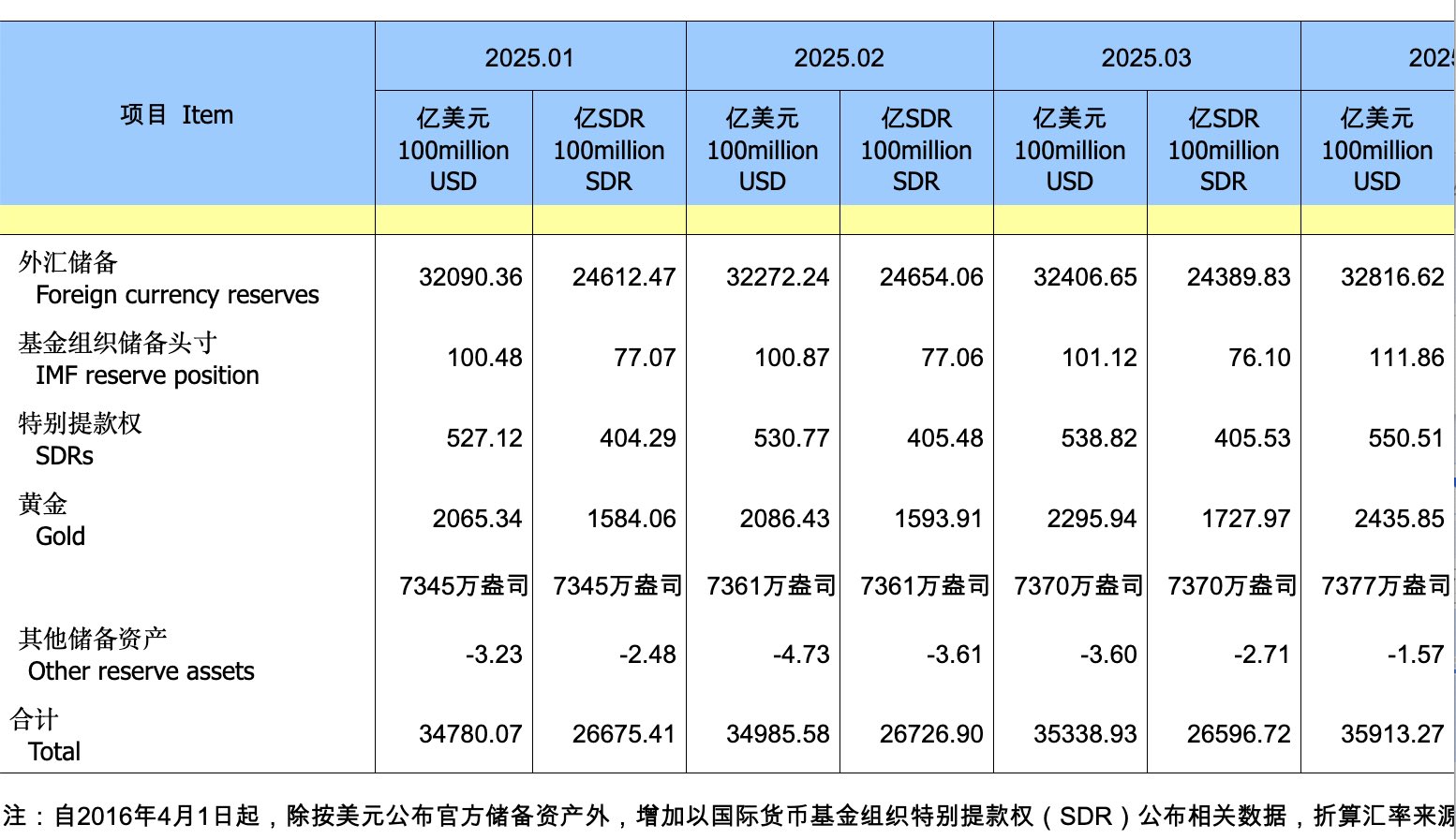
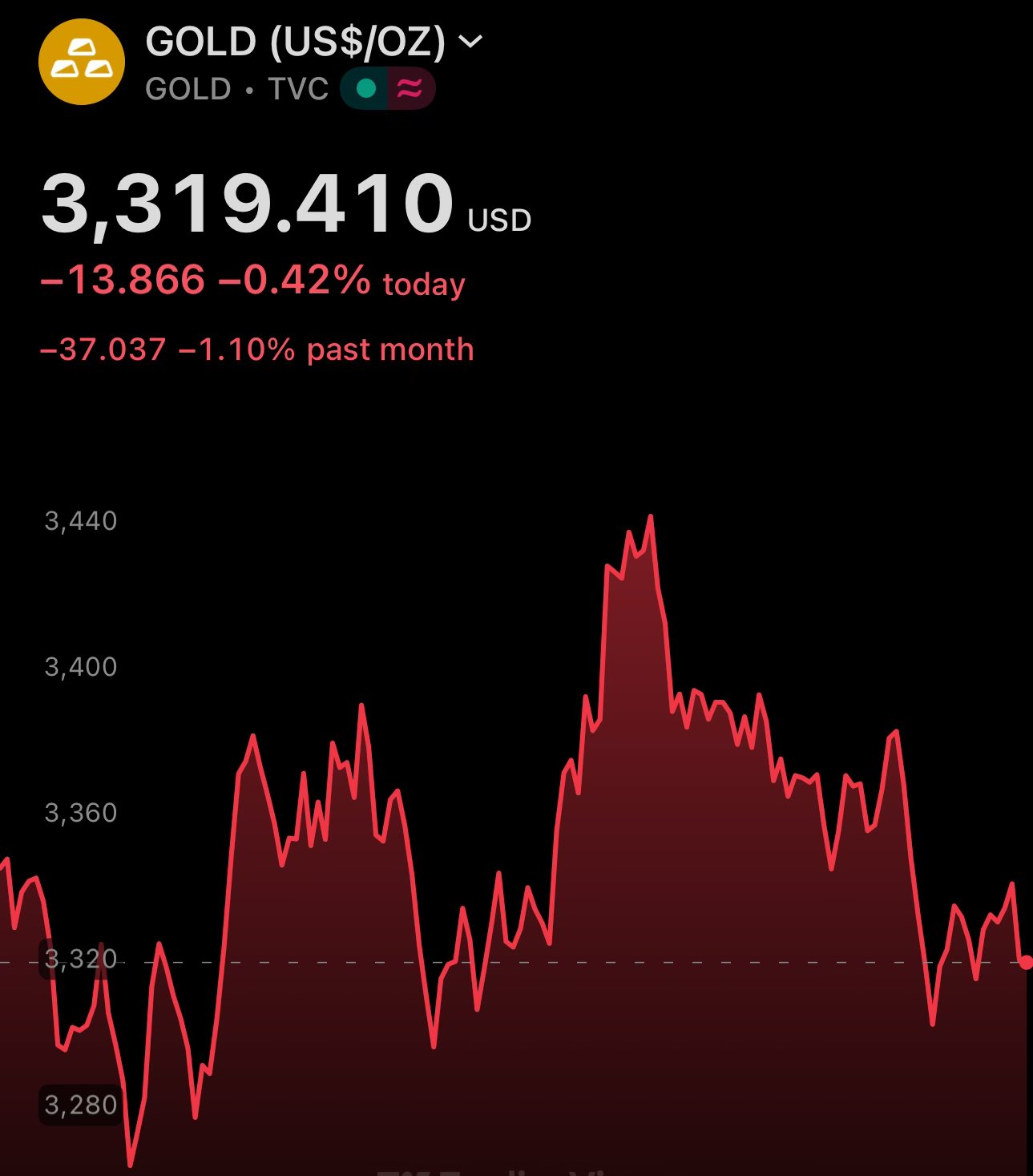
central banks will continue to buy gold
you'll be able to confirm that in their upcoming balance sheets reports. pay special attention to China & Russia
enjoy the dip, because smart money is!
money market funds yield close to the risk free rate (think of FED funds rate in the US, or ECB deposit rate in the EU), while offering less risk due to shorter maturity
essentially, you provide a collateral (highly liquid - usually sovereign debt) and get a loan against it
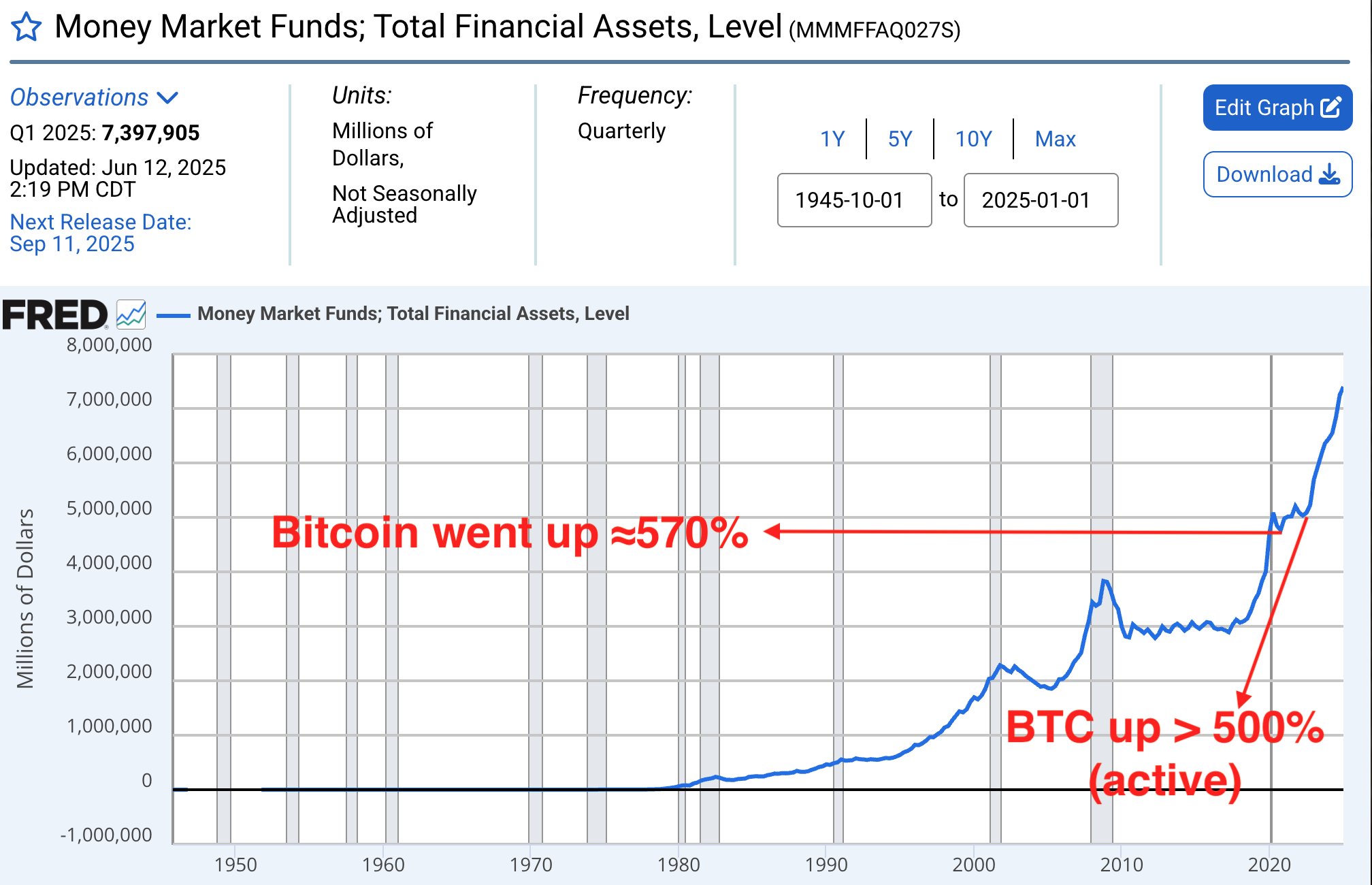
record $7 trillion USD in money market funds (mmf)
this risk-averse liquidity is bound to flow into into other financial assets at some point
mmf consists of short-term collateralized loans - credit that is NOT captured by M2
last two outflows coincided with bitcoin bullrun
record $7 trillion USD in money market funds (mmf)
this risk-averse liquidity is bound to flow into into other financial assets at some point
mmf consists of short-term collateralized loans - credit that is NOT captured by M2
last two outflows coincided with bitcoin bullrun
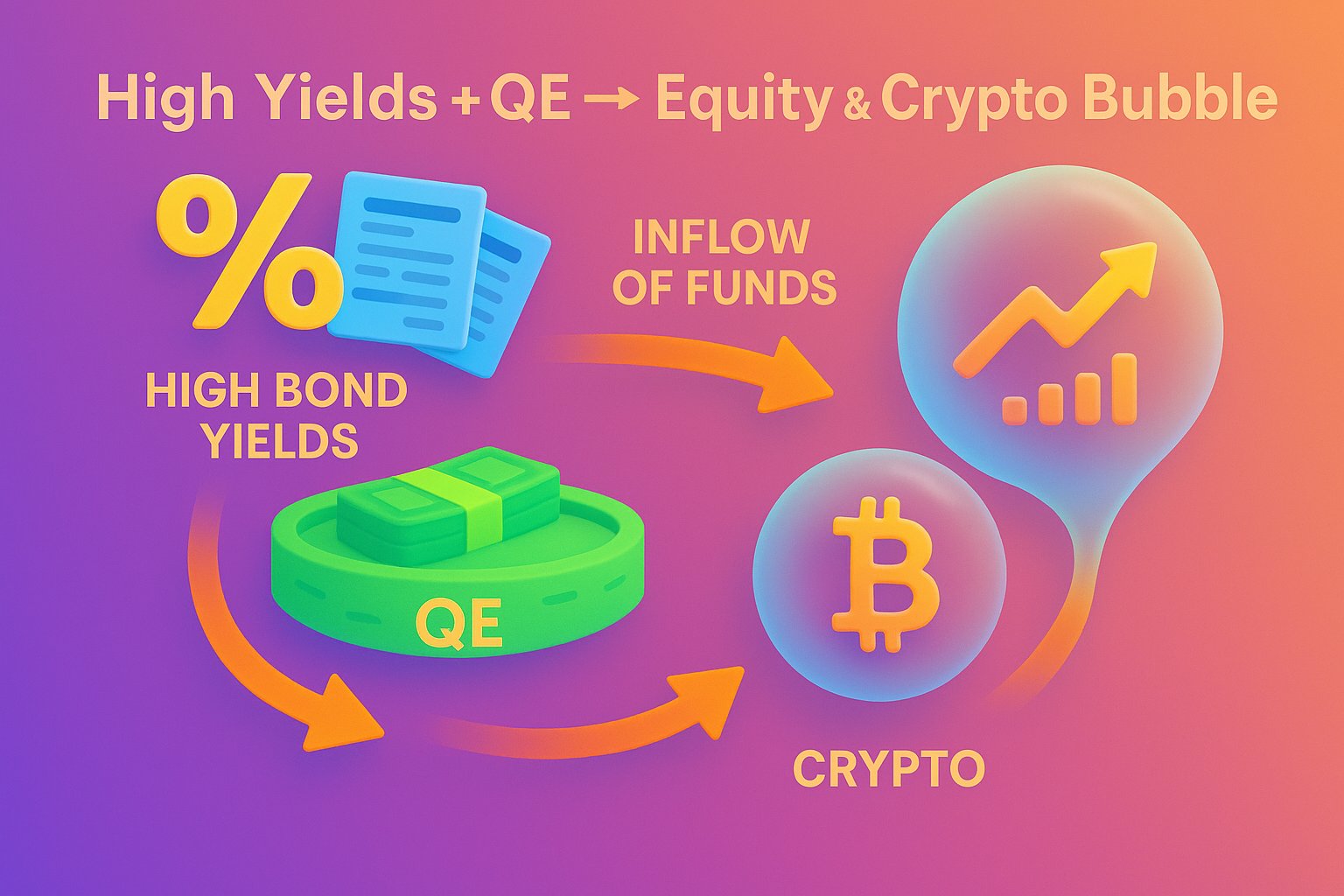
Sustained high bond yields combined with QE will lead to an inflation of equity and risk asset prices
Here's how 👇
1️⃣ High yields = high required base return
2️⃣ Inflow of QE funds into equities & crypto
3️⃣ Equities & cryptocurrency prices increase
Further fuel for the bubble
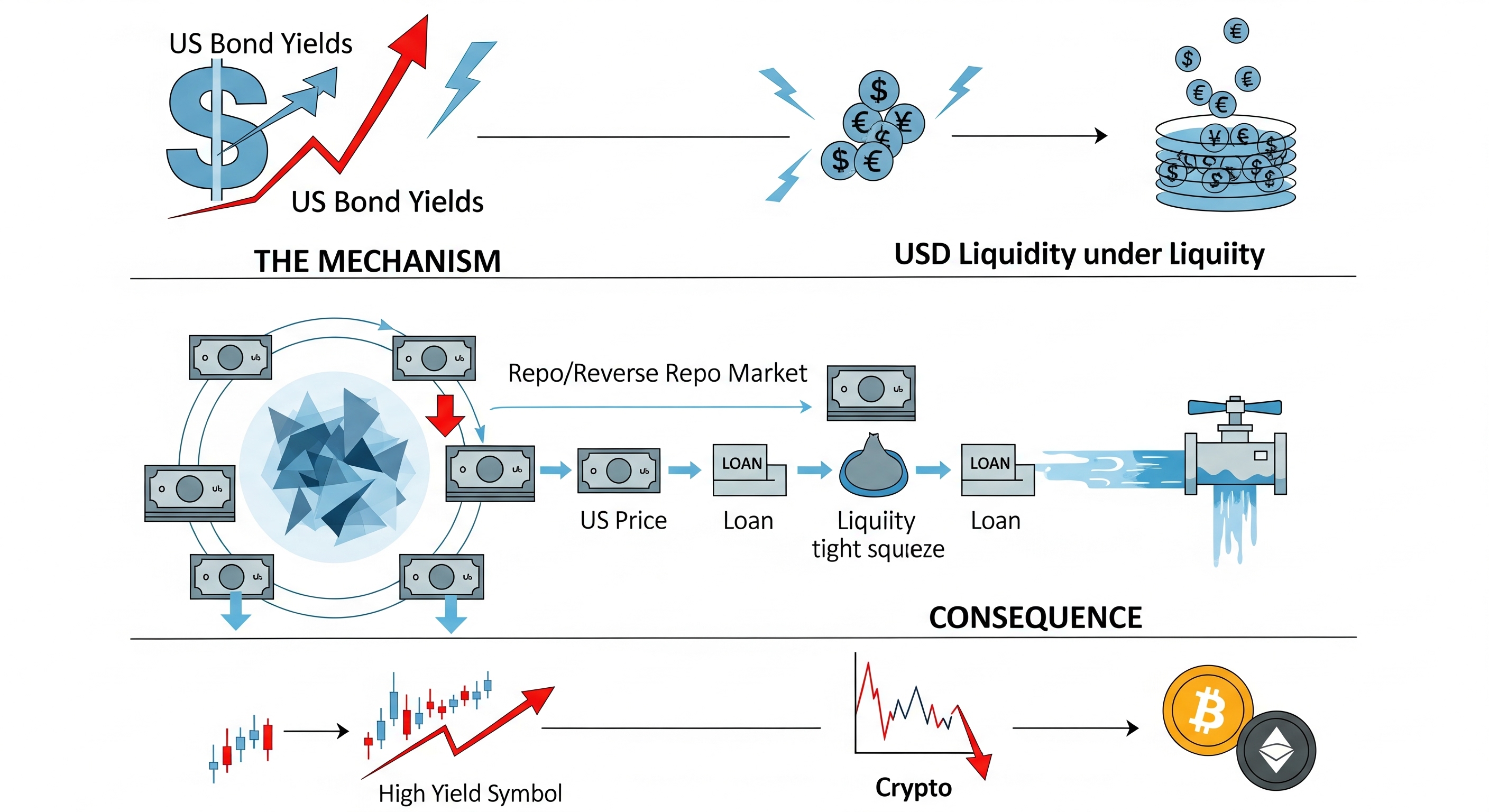
⚡️ US Bond yields directly affect USD liquidity
Here's how 👇
1️⃣ Repo + reverse repo market provides $5 trillion of liquidity
2️⃣ US bonds represent ≈70% of collateral
3️⃣ Lower bond prices means smaller loans, leading to a liquidity squeeze
🏦 Quantitative Easing (QE) by a Central Bank (CB) increase both - its assets & liabilities
👇
QE = CB buys securities from commercial banks
👆
This involves:
1️⃣ Transfer of securities to CB (asset UP)
2️⃣ Credit the bank's reserve account (liability UP)

👉 M2 Supply ≠ Liquidity 👈
M2 is only a part of the total liquidity
🔎 Here's an example:
Repurchase agreements market adds ≈$17T in the form of security-backed short-term credit, thus increasing available currency
M2 does not account for the repo market