Bond Markets Signal An Escalation In Iran War
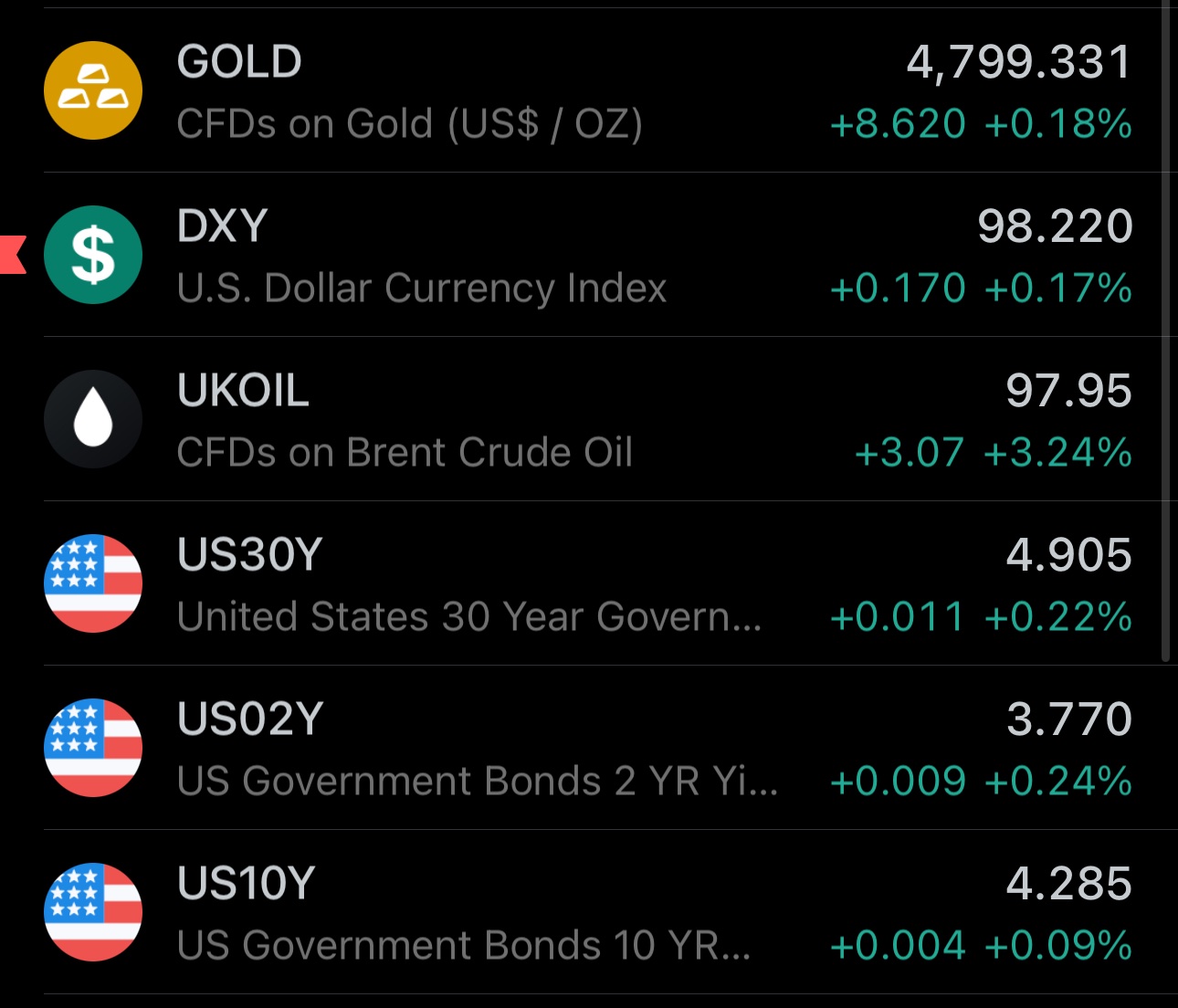
While the majority of mainstream financial analysis seems to be pushing the idea of Iranian conflict coming to an end, using the new all-time highs in S&P 500 as a pretext, the U.S. bond market is communicating a different story.
Not only the yields on US Treasury issued debt securities continue to increase across all tenors, but so is the term premia on that government debt. This means that creditors to the U.S. government are not only requiring higher interest payments, but also a higher premium for longer-tenor instruments. Such moves in the bond market could be indicative of:
(i) increased future financing;
(ii) weakening U.S. dollar;
(iii) reduced demand for U.S. Treasury debt instruments / USD assets;
This is coherent with what would happen under the scenario where U.S. increases their involvement in the Iran war, thus escalating from the current point. Historically, expanding military commitments are almost unanimously associated with increased government/state/empire spending. 15th century Naples financed military campaigns of sovereigns at interest rates that at times reached ≈40%, expressing the high risk of such ventures.
Of course, I'm not suggesting that the mere increase in government debt yields and term premia is an indication of further military escalations between U.S. and Iran, but rather that their increase under the current regime is. Other corroborating factors include:
(i) crude oil still trading above $90/barrel;
(ii) USD weakening against other FX currencies, in spite of raising oil prices;
(iii) gold'd price not increasing significantly, as it likely would, had the war-induced energy crisis would indeed be headed towards a resolution;
These developments are happening while both Iran & U.S. are exercising a military control over the Straight of Hormuz, yielding it to become closed in part. In case this were a sure de-escalation stage, I would expect the bond yields and term premia to be relatively more suppressed, oil price trending down more decisively, and gold closer to/re-testing the $5000/oz price.
Regarding the new all time highs of S&P 500, upward price movements of the U.S. stock market index alone cannot be used as a strong signal against systemic crisis or large market downturns. History is very clear on this, and you don't need to look very far: S&P rallied in 2007, before taking a massive downturn during the 2007-2009 Global Financial Crisis in the U.S. Post-2008 financial regime is significantly more dependent on refinancing capacity, which amplifies volatility.
I am hoping for a fast and lasting peace, as millions are suffering both directly and indirectly. However, taking everything into consideration, in my view, the markets are neither signaling a significant and lasting near-term geopolitical de-escalation in the Iran war, nor an imminent resolution to the energy supply shock it induced.
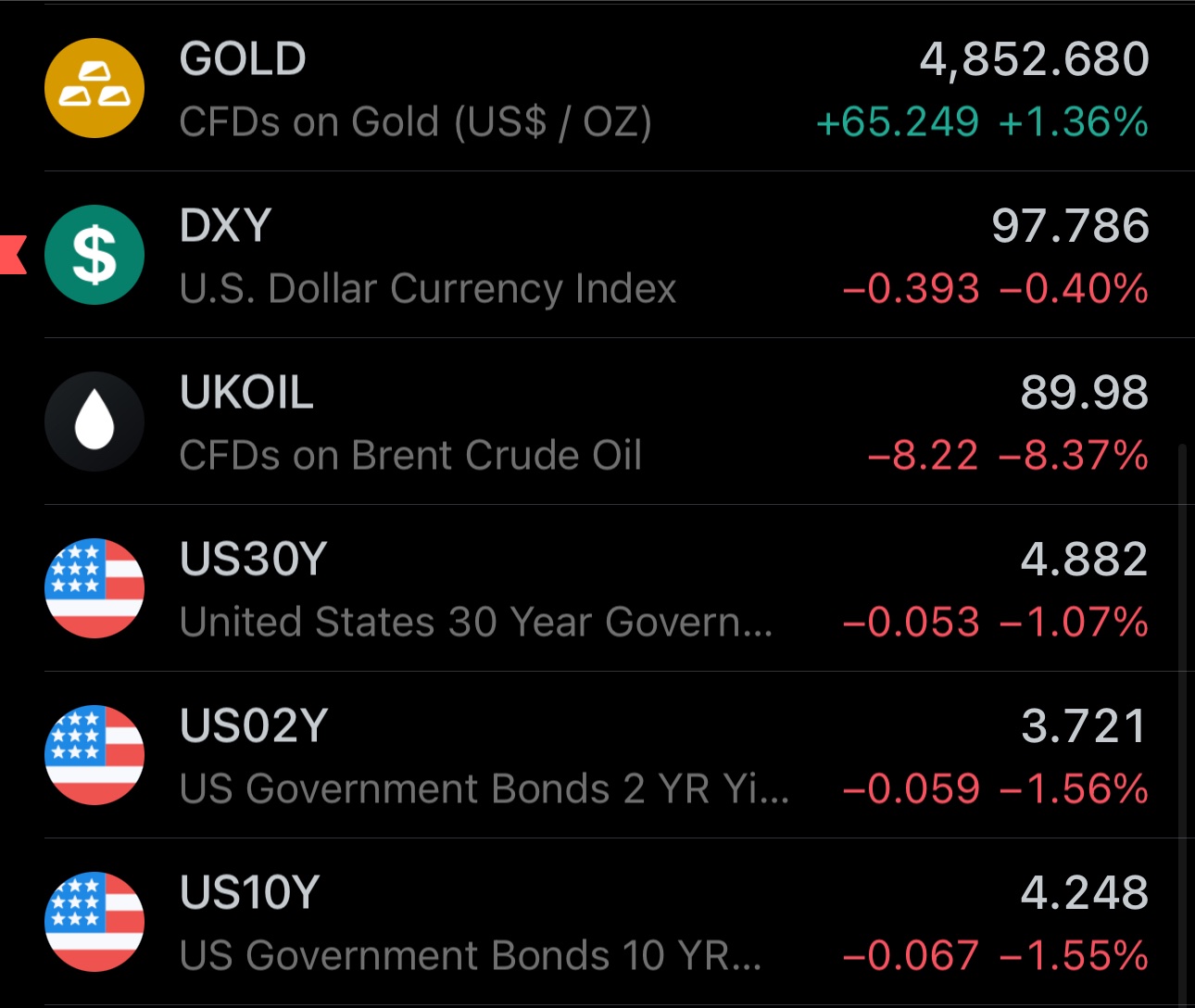
Straight of Hormuz reopens partially and markets signal de-escalation in exactly the same manner I explained in my earlier post:
(i) US Treasury debt yields & term premia go down
(ii) Crude oil price falls significantly
(iii) Gold price continues upward towards re-testing $5000
While these market moves do not constitute a confirmation of an end to the Iran war, nor erase the potential for renewed escalations, the market is coherently signaling a material de-escalation event. However, as I have noted last week -- prepare for a lot of volatility. We'll need to wait at least until the end of Monday for a longer-term confirmation.
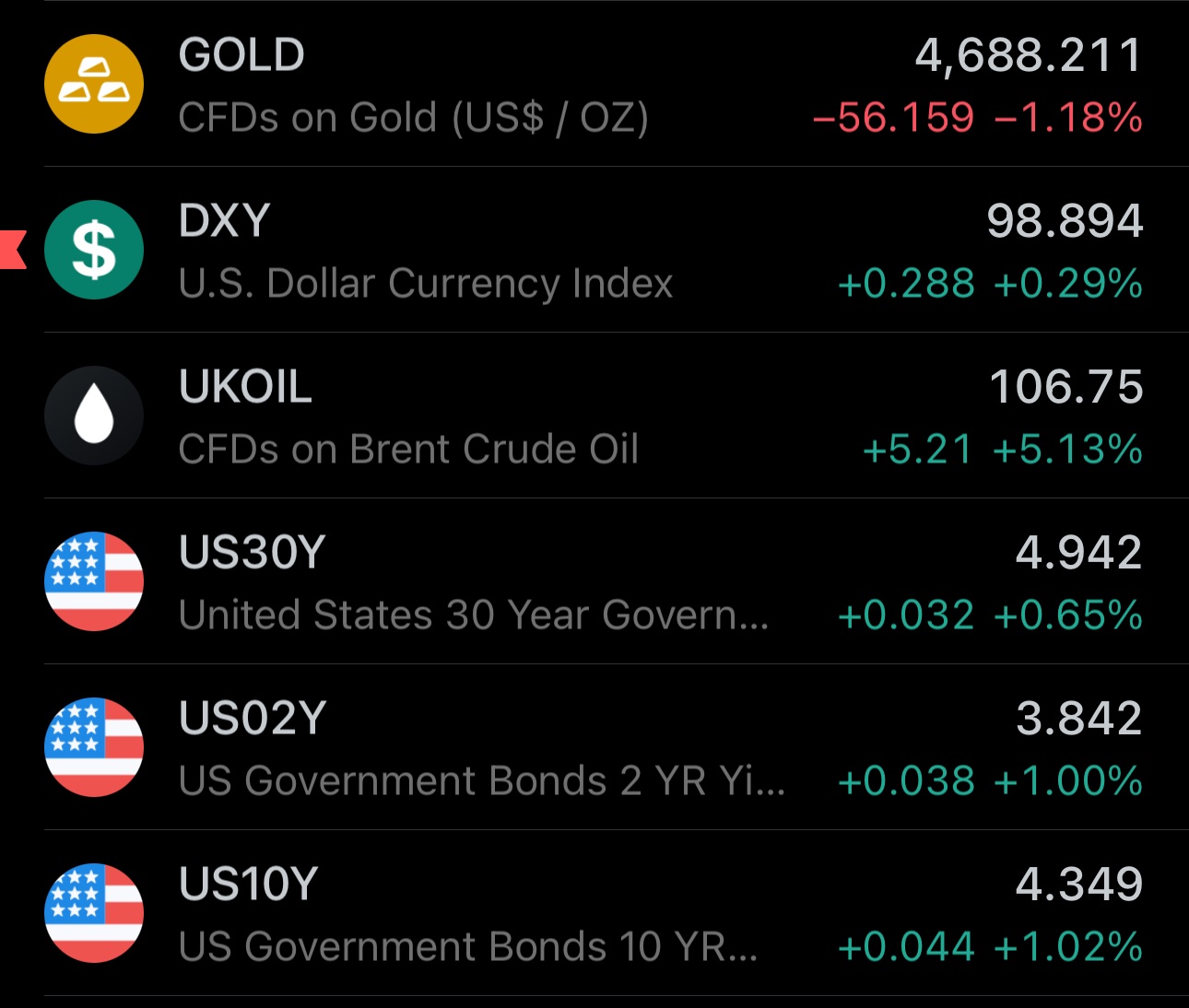
Iran war escalates once again, and the market moves consistently with the framework I outlined in a prior post:
(i) gold price down
(ii) crude oil price up
(iii) US Treasury debt yields up
As I've consistently pointed out, and in spite of contradicting claims by the U.S. Administration and mainstream media -- unfortunately, the Iran conflict is not yet over.
Keep watching the markets for developments -- they're much more accurate in their claims than third-parties.